

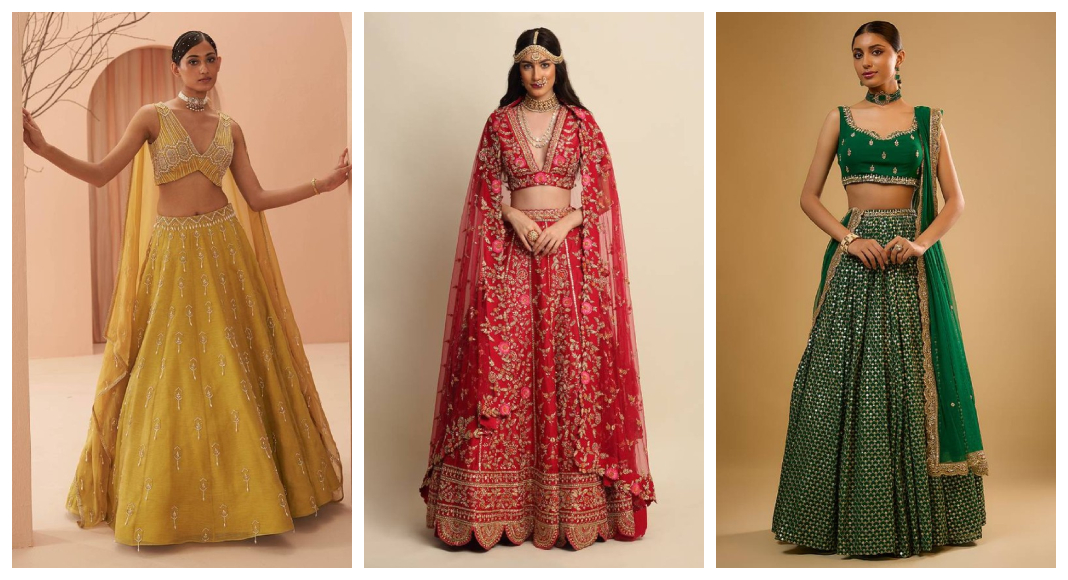
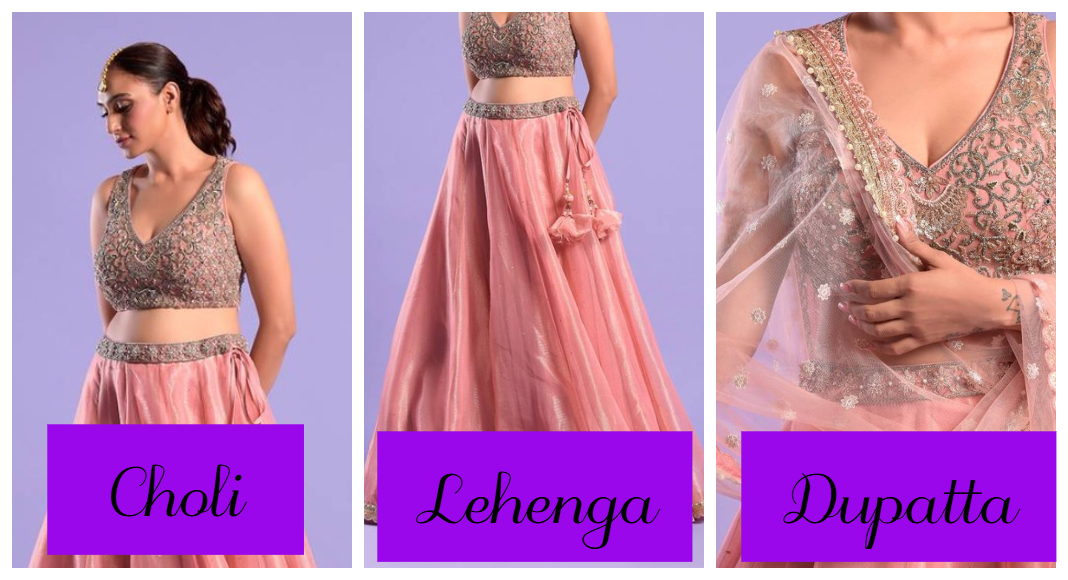
The evolution of the lehenga, which is an essential piece of Indian culture, has been gradual. Its charming look and ethereal design have failed many high-end garment pieces. Talking of its history, well, lehengas are believed to be 1000 years old and were worn mainly by the royalty in medieval India. However, with revolution, it became a part of the wedding culture, thus entering the house of a common man. The design features a choli, a skirt, and a dupatta. These days, brides take two dupattas, one on the shoulder and another on the head. However, lehengas with a single dupatta look great for casual occasions also.
In this blog, we will go deep into the beautiful world of lehengas and walk you through the history and evolution of lehengas. We shall also learn how it has transcended geographical borders to become a global fashion icon. Read along to know everything there is to know about it.
Understanding The Lehenga – The Basics
What is a lehenga has a very simple answer. Well, in layman’s terms, it is a traditional Indian attire that features a skirt, a choli, and a dupatta. The design and pattern vary from region to region. For example, sequin and stone work lehengas are more popular in Northern India. While thread and mirror work define the lehengas of Gujarat and Rajasthan. It is popularly worn during festivals, weddings, and parties.
Lehengas can be anywhere from simple and basic to heavily embroidered and ornate. Some popular fabrics used to craft the lehenga are cotton, silk, georgette, and chiffon. It is widely said that no Indian wedding or festival is complete without the lehenga. However, this attire has come a long way from its humble roots.
Today, the lehenga is seen on international runways and is being adorned by global superstars like Beyoncé and Kim Kardashian.
Breaking Down The Lehenga – Key Elements
- The Lehenga (Skirt): This is one of the most important parts of this ensemble. The craze of this is such that women are ready to splurge lakhs for it. Well, the design is simple, it features a long skirt which goes up to the floor length. It has a flare that comes with different numbers of kalis. The upper part of the lehengas is crafted with fabrics like silk, georgette and even cotton. While, it is stuffed with can can skirts and even cotton lining for the dramatic flare. Further, the drawstring or nada allows for adjustments and comfort.
- The Choli (Blouse): The Choli, or the blouse, is worn on the upper portion of the body. It can be matched or contrasted with the lehenga skirt. The proper fit of the blouse is paramount, as it can play into the overall look and feel of the whole outfit. The cholis come in various designs and styles. Earlier, modest styles were popular. However, in modern times, mid riff baring luxe cholis are common.
- The Dupatta (Scarf): Lastly, the component of the lehenga that completes the look elegantly is the dupatta. This is a decorative veil or drape that is pinned to the shoulder. Its pattern can range from simple designs to highly embroidered and decorative looks.
A Walk Through the History and Evolution of Lehengas
The history of the lehenga is rich and interesting, spanning centuries. Its evolution is also deeply rooted in the culture of the Indian subcontinent. We can trace the fashion steps of the lehenga to Ancient India. During these times, women commonly wore long skirts called Antariya coupled with a waistband and a draped cloth.
The lehenga saw its first major upgrade in the Mughal era, where luxe fabrics such as silk and velvet were introduced. Apart from this, rich embroideries like zari also became commonplace. The lehengas from this period were also known for their rich colors. In this era, pairing the skirt with a fitted choli and a dupatta became popular – laying the foundation for the modern lehenga choli.
During the British Raj, regional styles such as the mirror work, tie and dye, and folk work lehengas emerged. The lehenga became even more structured. Its crescendo multiplied, with it being worn for daily wear as well as festive wear. The silhouette of the lehenga became modest and demure.
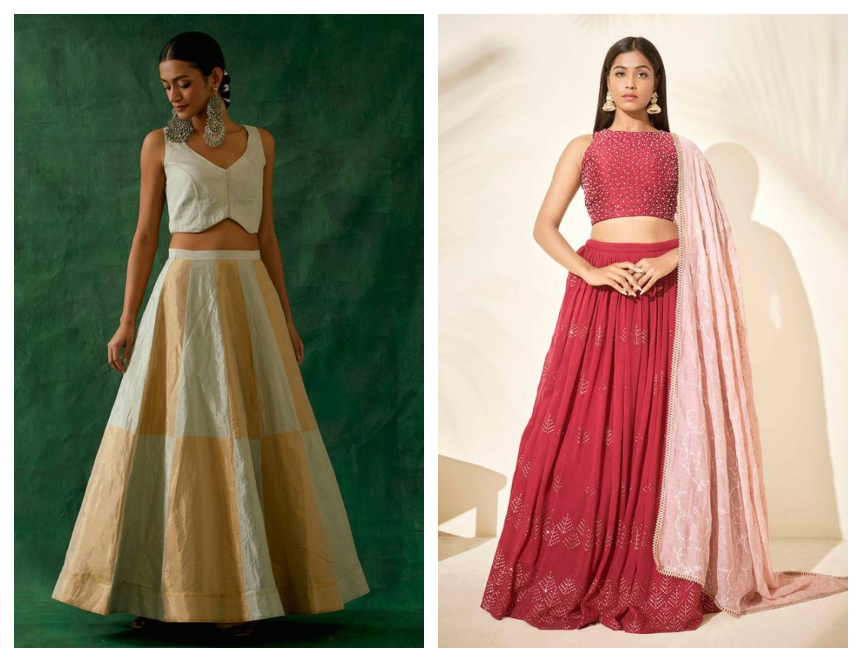
The post-Independence era was all about embracing Handloom fabrics such as Khadi and cotton. This period also gave birth to the concept of the designer lehengas. Many women, especially brides, embraced lehengas in rich fabrics, intricate embroideries, and stylish cuts.
The modern lehenga displays a careful balance of traditional heritage and modern glamor. These amazing features have made it a wedding and festive wear staple.
Lehenga – From Indian Roots To International Runways
In 2026, the lehenga is not just limited to the Indian fashion scene. It has, in fact, taken over the international runways and fashion as well. There are several reasons for this takeover. Some of them include:
- The Bollywood Influence: Lehengas have been featured in Bollywood films for ages now. From Madhuri Dixit’s pink and red lehenga in Hum Aapke Hain Kaun, to Deepika Padukone’s Mughal-inspired lehenga in Bajirao Mastani, women have been forever drawing influence from them. Since these movies are also popular abroad, international audiences are also getting a glimpse of the lehenga and emulating the styles.
- Celebrity Weddings: Who can forget Anushka Sharma’s baby pink wedding lehenga or Priyanka Chopra’s monochrome red bridal lehenga? These high-profile weddings gave rise to several lehenga design and color trends.
- International Runways: The humble lehenga has taken over the international runways of London and Paris fashion weeks as well. Designers like Falguni Shane Peacock, Manish Malhotra and Sabyasachi have all showcased their creations to an international audience.
The Difference Between a Lehenga and a Ghagra Choli
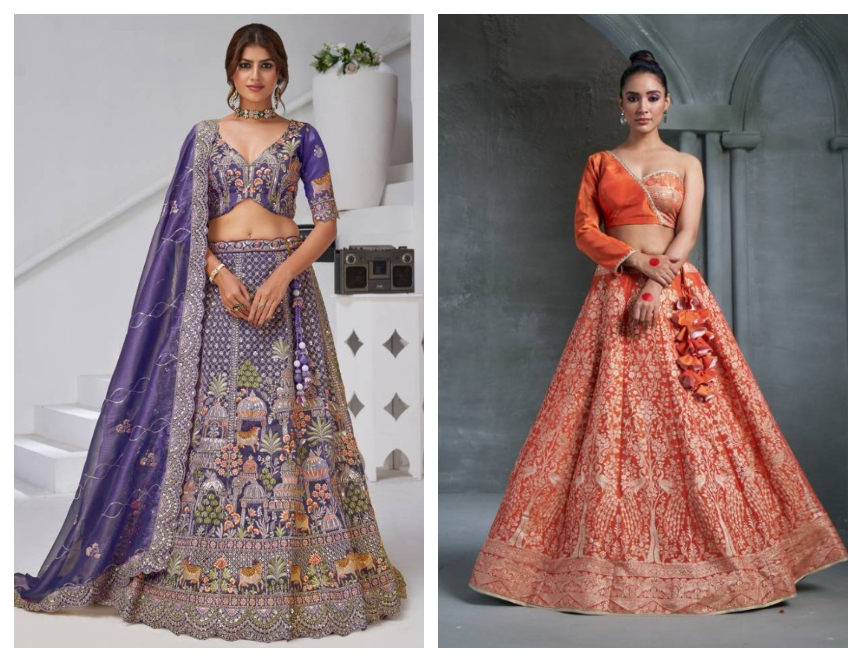
While to a layman, these two garments might look essentially the same, there are key differences between lehenga and ghagra choli. Here’s looking at some of them:
- Lehenga: This ensemble is majorly popular in Northern India and is worn to weddings and festivals. It is heavily embroidered with zari, resham, pearls, sequins, and other embellishments. It also comes with multiple layers and can be extremely flared.
- Ghagra: This attire is traditionally worn in Rajasthan and Gujarat, sometimes as daily wear or during folk dances. It is usually simpler and comes with printed patterns, tie dye, and mirror work. The whole vibe of the ghagra choli outfit is light and casual.
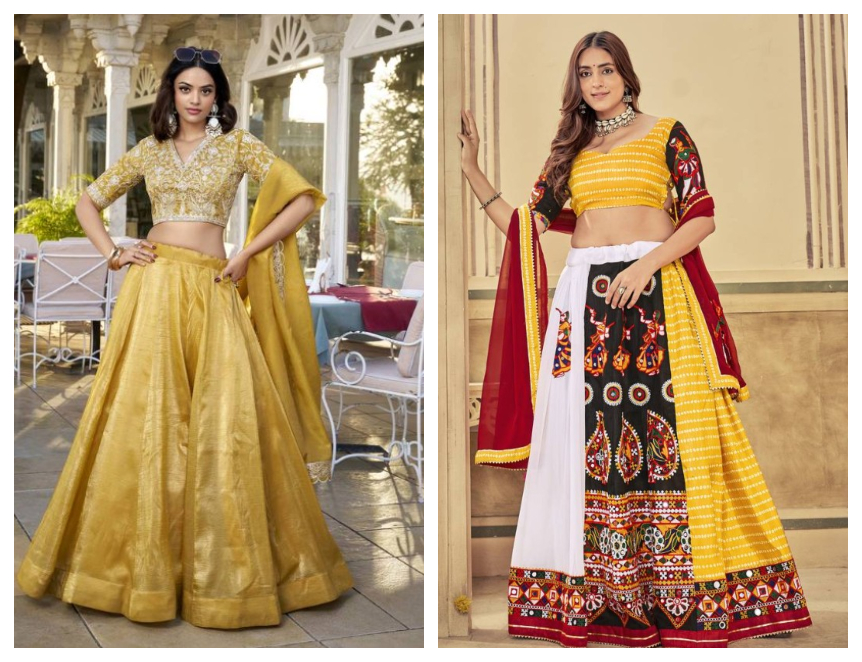
Lehenga Cut Styles That Are Trending in 2026
- A-Line: The silhouette of this style resembles the letter A. It is fitted at the waist and then gracefully flares down towards the floor. Simple and classic, this cut is evergreen.
- Flared: This cut is for the women who love to add drama to their look. It provides maximum flare and is very voluminous – perfect for twirling for Instagram reels.
- Mermaid: This modern style is all the rage right now. It features a skirt that is fitted to the knees and then flares out stylishly. If you want to accentuate your figure, the mermaid-style lehengas are for you.
- Paneled: This lovely cut comprises several vertical panels called Kalis stitched together. Colorful and bright, the paneled lehenga provides a dash of extra volume and panache.

Amazing Regional Styles – Lehengas From Every State
- Rajasthan: Lehengas from Rajasthan are renowned for their bright colors and playful prints. You can often see Gota Pati work as well as Lehriya prints on them. They are often made from cotton or silk – an apt choice for the hot desert climate. Some regional variations include Jaipur style and Bikaner style.
- Gujarat: Gujarati lehengas are celebrated for reflecting the state’s vibrant folk traditions and festive spirit. They are both eye-catching and highly functional. Some popular Gujarati embroidery styles are the Gamthi work that involves small mirrors and colorful thread embroidery, as well as Mirror work (Abhla).
- Punjab: Punjabi lehengas showcase an interesting interplay of bold colors, comfort, and folk inspired designs. The Phulkari-inspired embroidery is a popular adornment. It comprises stunning floral motifs and bright threadwork, looking beyond gorgeous.
- South India: South Indian lehengas have their own distinct style that combines South Indian aesthetics with the classic lehenga silhouette. The most popular garment is a Langa Voni or Pavadai Davani, a two-piece garment that resembles a lehenga dress.
- Uttar Pradesh: This magnificent state is home to the classic lehenga embroidery form of Chikankari. Fine threadwork is done using white or colored threads on the lehengas. This technique uses a variety of stitches, such as taipchi, bakhiya, and hirkka, to achieve the detailed look.
See Also – 17 Stunning Lehenga Styles from Every Indian State You Must Know
Fabulous Lehenga Fabrics that Exude Glamor
- Rich Fabrics: Luxurious fabrics such as raw silk, velvet, and Banarasi brocade have a special charm. These fabrics are opulent and hold heavy embroidery beautifully. This makes them a top pick for bridal and wedding lehengas.
- Lightweight Fabrics: Combine rich luxury with ease of movement by choosing a lightweight lehenga fabric like georgette, chiffon, and crepe. These fabrics not only look glamorous, but they are also easy to carry – perfect for festivals or parties where you will be on your feet a lot.
- Trendy Fabrics: Stay on top of trends by picking out one of 2026’s most talked-about fabrics. Fabrics like organza, net, and tissue are all the rage currently. Choose a lehenga dress in one of these fabrics and be the most stylish person in the room for the evening.
See Also – Top Lehenga Fabrics You Should Know Before Buying
Luxurious Embroidery Styles That Add Shine
- Zardozi: This embroidery style involves making intricate patterns using gold or silver threads. Its emergence can be traced back to Persia; however, it was popularized during the Mughal era. Motifs such as floral, Paisley, and geometric designs are popular.
- Mirror Work: Tiny mirrors are stitched into the fabric of the lehenga in this embroidery style. The mirrors reflect light with every movement, turning your lehenga into a visual masterpiece.
- Chikankari: Originating from Lucknow, this embroidery is extremely beloved. Chikankari lehengas feature intricate patterns using white or colored threads. It involves a multitude of hand stitches like the taipchi, bakhiya, phanda, and hirkka to give you a culturally rich look.
- Resham: The Resham embroidery is truly one of a kind. It makes use of vibrant and colorful silk threads to engrave embroidery in styles such as Zardozi, Phulkari, and Kutch work. Popular for bridal and festive lehengas, the elegance of this embroidery is unparalleled.
See Also – Embroidery Styles that Bring Every Lehenga Choli to Life
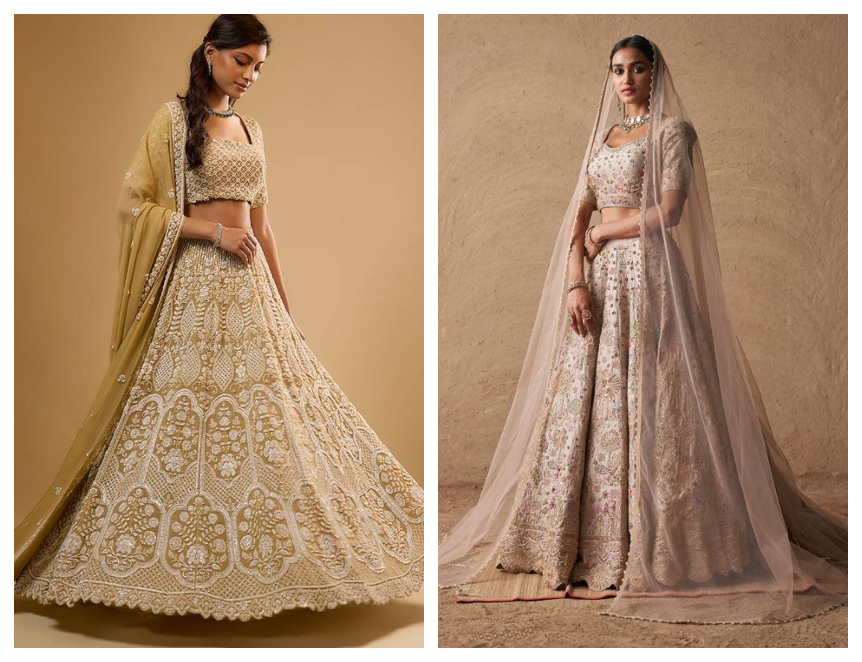
Elegant Choli Designs That Are Trending in 2026
- By Necklines: Necklines are having a major moment in 2026. Gone are the days when necklines used to be simple and unassuming. Styles such as sweetheart, plunging V-neck, and high-neck halter cholis are shining this year.
- By Sleeves: The choli sleeves also have a major upgrade this year. Trends such as dramatic cape sleeves, romantic puff sleeves, and sleeveless corset styles are becoming the norm in choli fashion.
- By Back Designs: The back of the choli is an important yet often overlooked part of the choli. However, in 2026, this narrative is changing, and we are seeing the fashion touch even on the backs. Think amazing styles like Deep dori backs, latkans, and sheer lace details – Stylish and elegant.
See Also – Striking Choli Blouse Designs to Rock with Your Lehenga
Lehenga Colors That Are Dominating 2026 Trends
- Dreamy Pastels: Soft and romantic pastel shades are all the rage now. Hues like baby pink, powder pink, baby blue, and peach fuzz are the talk of the town.
- Rustic Earthy Tones: Earthy tones are another color palette that is a favorite this year. Shades like terracotta, burnt orange, olive, beige, and cream are garnering much love.
- The Classics: The shades of red, pink, and ivory are considered classic for a reason – they never go out of style. 2026 has witnessed the resurgence of these evergreen shades in the wedding and festive scene.
See Also – Exploring The Trendiest Lehenga Colors That Are a Must-Have
A Complete Guide on Choosing a Lehenga According To Your Body Type
- Pear Shape: Women with pear-shaped bodies have wide hips and a defined waist. The goal is to add volume to the upper part of your body while balancing the lower half. A line or high-waist lehengas work like a charm for these body types. You can also go for a flared circular lehenga in soft fabrics.
- Apple Shape: Apple shape bodied women are heavier on the top half of the body, with an accentuated bust and slim legs. High-waisted lehengas and panelled lehengas are a perfect fit for this body type. Absolutely avoid low-waisted lehengas and tiny crop tops that expose your midriff.
- Petite Shape: For petite women, looking taller is the goal. This can be achieved by wearing medium flared lehengas, short and fitted blouses, as well as lehengas with vertical embroideries.
- Hour Glass Shape: Women with this body type are truly blessed, as all lehenga types look good on them. They can pick choices such as fitted or mid-waist lehengas, structured blouses, and full flared lehengas.
See Also – How to Choose a Lehenga That Flatters Your Body
Lehenga Dupatta Draping Styles That You Should Know About
- The Classic Shoulder Drape: This draping style involves draping the dupatta over one shoulder. It is then pleated in the front for a classic and evergreen look.
- The Butterfly Drape: This style showcases thin pleats that sit low on the waist. It exudes a sleek and feminine silhouette.
- The Double Dupatta: A popular bridal style, this look involves two dupattas. One dupatta is draped across the shoulder, and the other sits over the head – extremely chic and wedding-appropriate.
See Also – 15 Draping Styles That Instantly Elevate Your Lehenga Look
Lehenga Outfits That Suit Every Occasion
- Mehendi: The vibe of the mehendi is fun and colorful. Vibrant lehengas in yellow and green suit the occasion the best. Pair with some floral jewelry for added panache.
- Haldi: Haldi calls for lightweight lehengas that are easy to move in. Go for georgette or chiffon haldi lehengas that exude glamor while ensuring ease of movement.
- Sangeet: Shimmering mirror work or sequined sangeet lehengas are ideal for this event. Metallic colors, such as gold, silver, and copper, look best on the dance floor.
- The Wedding Day: Heavily embroidered lehengas in red or pastel pink are the classic choice. However, if you want to try something different, then navy blue, lavender, and mint green are some choices you should explore.
- Reception: At the reception, you can let your hair down and experiment with your wedding choices. Indo-western looks like lehenga gowns, cape-style lehengas, and jacket lehengas in jewel tones are popular.
- Festivals: Festivals are all about colors, celebrations, and all-around merriment. Lehengas that perfectly match the festive spirit include ones with traditional prints and lightweight fabrics such as cotton. Pairing these looks with oxidized jewelry adds an extra dash of style to your look.
See Also – Unique Lehenga Choli Ideas for Different Occasions
Tips for Accessorizing Your Lehenga like a Pro
- Jewelry: Your jewelry can make or break your lehenga look, hence choose it with care. For weddings, you can opt for Polki, Kundan, or temple jewelry, depending on your vibe. If you are dressing up for a festive occasion, then go with statement Jhumkas, choker necklaces, and a delicate maang tikka.
- Footwear: Wedding events and festivals require you to be on your feet for long hours. Hence, you need to be comfortable without compromising on style. If you want to tie into your ethnic look, then embellished juttis are the best pick. However, if you want to try something contemporary, then embroidered wedges and heels are an option as well.
- Potli Bags: No lehenga is complete without a stylish bag. It not only looks chic but is a practical way to carry your essentials. Go for embellished potli bags with mirror work or sequins. A pro tip – match the design and color of the bag to the embroidery of your lehenga.
How To Store and Clean Your Lehenga With Care
- Store it the right way: Storing your lehenga carefully ensures its longevity. Store flat in a cotton or muslin bag to preserve the embroidery. If you are hanging your lehenga, ensure you only use padded hangers.
- Clean with Caution: Heavily embroidered lehengas, like wedding or bridal lehengas, must only be dry cleaned. Light cotton or linen lehengas can be washed at home, but only a mild detergent should be used.
- Pest Control: Wrap neem leaves in a tissue and place them in the lehenga bag. Cloves, black peppercorns, and bay leaves can also be used. You can also use silica gel, as it absorbs moisture and prevents fungus. Place 2-3 bags with your lehenga and replace them every few months.