

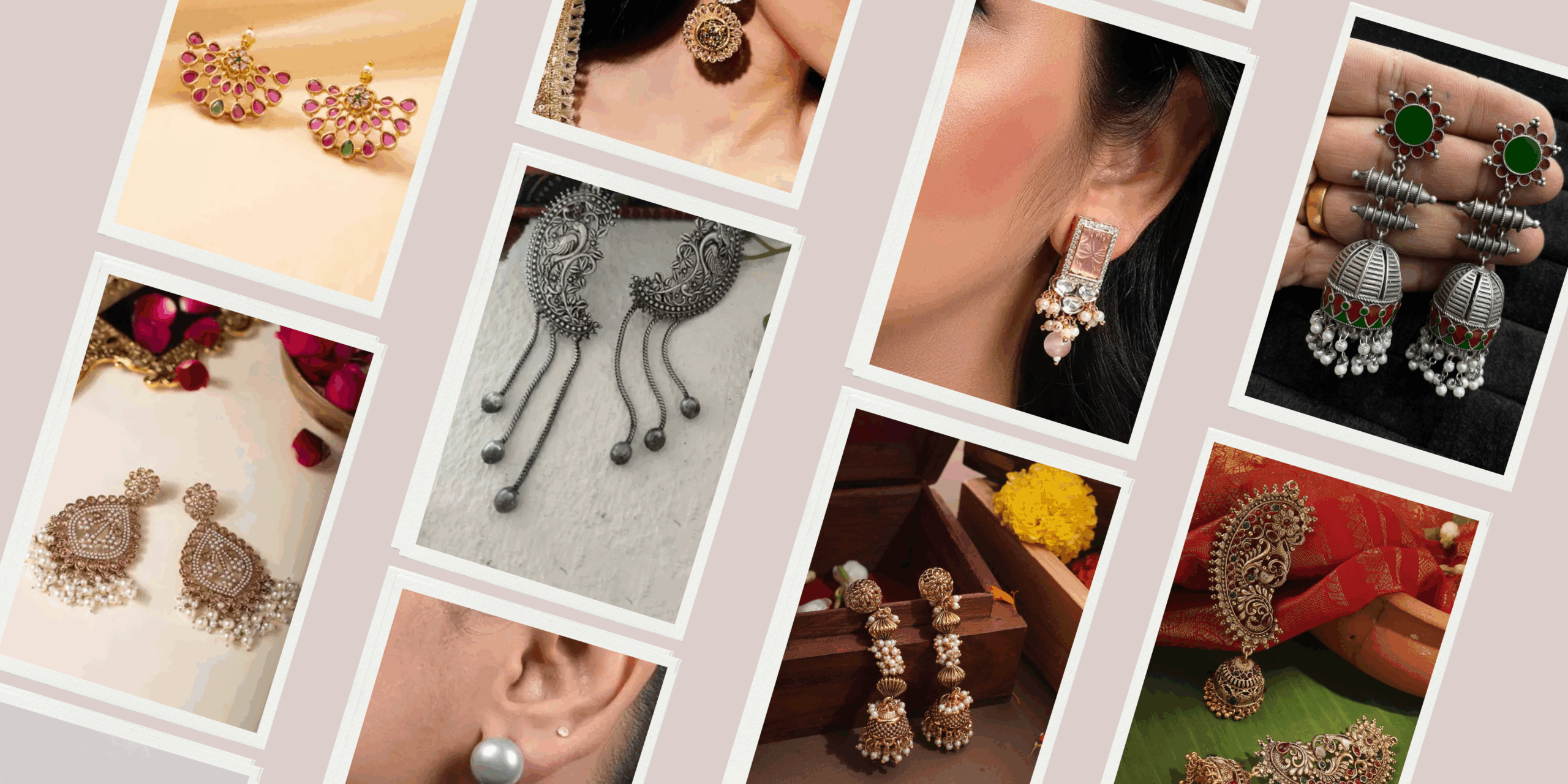
In India, earrings are not something that you wear to look good; they are a part of your daily life, tradition and personal identity. From little girls wearing tiny gold studs to brides wearing heavy jhumka earrings, you stay with them at every stage of life. They are often the first piece of jewellery that you ever own and the one you keep wearing forever.
Earrings are also symbols of beauty and femininity. In many Indian cultures, women feel incomplete without something adorning their ears. Beyond beauty, earrings also show marital status, family traditions and even social position. Gold earrings often represent prosperity, while certain styles are linked to marriage and maturity.
Across India, no matter the region, earrings are the most commonly worn jewellery. Even women who do not wear necklaces or bangles usually wear earrings. This is because they are comfortable and easy to match with any outfit, from saris to kurtis, even to western wear.
With time, Indian earrings have completely changed in style, but their importance has never faded. What started as simple gold and silver pieces in ancient times has now grown into a huge world of bridal, festive and fashion earrings. Yet the emotional connection to earrings remains just as strong.
Why are Earrings Special?
In most Indian families, a girl’s ears are pierced when she’s very young. It is often done during a small ceremony with prayers and blessings. From that day, earrings became a permanent part of your life just like your smile. A lot of women say they feel incomplete without earrings, even if they are wearing simple clothes. A small pair of studs makes them feel dressed and confident.
Earrings framed the face. They highlight your eyes, the smile and the cheekbones. That is why Indian women have always used earrings to enhance their natural beauty. In many traditions, earrings are also seen as a symbol of womanhood. When you start wearing earrings regularly, it shows that you are growing into a young woman.
In many parts of India, married women are expected to wear earrings, especially gold earrings. They are believed to bring good luck, health and prosperity to your family. Gold earrings are also part of your personal health. They are often gifted by your parents or in-laws and kept as a form of security.
Spectacular Origins Of Earrings
Indian earrings did not start with fashion; they started with cultural beliefs and craftsmanship.
Earrings in ancient India
Archaeologists have found paintings of women wearing earrings in the Indus Valley civilization. This shows that even thousands of years ago, people in India decorated their ears. These earrings were made from clay shells and simple metals. They were not only decorative but also believed to protect the body from negative energy.
Mentions in scriptures and temples
In the Vedas and temples, cultural gods and goddesses are shown wearing beautiful earrings. These designs later inspired real jewellery. Temples in South India especially showed detailed ear jewellery worn by deities. This is where temple earrings and jhumkas got their inspiration.
The Royal and Mughal Influence
The earrings of Indian kings and Queens were large and made of gold, pearls and gemstones. During the Mughal time, jewellery became more detailed and artistic. Long drops and stone-filled earrings became really prominent. These royal designs are still loved by brides today.
Colonial and modern changes
During British rule, diamonds and Western styles became really prominent. With time, Indian designers started making these traditional designs. Today, you can find earrings that look ancient but are light and modern, perfect for today’s lifestyle.
Fabulous Indian Earring Styles at a Glance
Indian earrings come in so many styles that there is something for every woman. Each style adds its own charm to your face and matches the different outfits and occasions. From daily wear to wedding looks, every woman can find an earring style that feels just right to her.
Stud earrings
They are small and sit closely on your ears. They are extremely comfortable, which is why you can wear them every single day without even thinking about them. Gold and diamond studs are especially prominent because they match almost every outfit. In South India, temple-style studs often show goddesses or sacred symbols. These give you a stylish look and also have a spiritual and traditional meaning.
Jhumka earrings
They are the heart of Indian jewellery. The bell-shaped design moves gently when you walk, making them look lively and beautiful. Light jumkha earrings are great for daily wear, while heavy ones are saved for weddings and special events. They look stunning with lehengas and even simple kurtis. A single pair of jhumkas can instantly make your outfit feel festive and traditional.
Chandbali earrings
They have a half-moon shape and are inspired by Mughal jewellery. They give a soft and royal look to your face. These earrings are perfect for you if you like to look graceful without wearing any heavy jewellery. If you are a bride or a wedding guest, you can love these Chandbalis because they make your face glow and also blend beautifully with lehengas and anarkalis.
Drop earrings
Drop earrings hang straight down from the ear and look very classy. They are simple yet stylish, which makes them perfect for office wear and even everyday use. Even a plain kurti looks better when you pair it with a nice pair of drop earrings. Bridal drop earrings are usually decorated with pearls and gold work. These give you a royal and elegant look without feeling too heavy on your ears.
Hoop earrings
Indian hoop earrings are thicker and more traditional than Western hoops. Gold hoops are often worn by married women and are considered a sign of elegance. Oxidized silver hoops are loved by younger women because they look trendy and ethnic at the same time. You can wear them with cotton saris and Indo-Western outfits.
Kaan phool and Ear cuffs
They cover a large part of the ear and look like floral jewellery. They are prominent in South Indian bridal jewellery and look classy. You can wear ear cuffs if you want to make your entire ear look beautifully decorated as a bride. They also added a dramatic and royal feel to your bridal face.
Long statement earrings
Long statement earrings are designed to stand out. They fall below the jawline and instantly draw attention to your face. These earrings are perfect for weddings, parties and evening events. Today, even lightweight versions are available, so you can enjoy the dramatic look without feeling uncomfortable or tired during the celebrations.
Regional Earrings Variations Across India
India is full of cultures, and each region has its own jewellery style. Earrings change in shape and design depending on where they come from. This diversity is what makes Indian earrings so special.
South Indian earrings
They are heavy and full of spiritual designs. Often, they feature goddess temple patterns and red and green stones that make them look rich and divine. The earrings look especially beautiful with silk sarees and bridal outfits, giving you a powerful and graceful appearance.
North Indian earrings
In North India, kundan earrings are very popular. They are lightweight but look royal and elegant because of the stonework. You can wear them with your bridal lehengas or bridal outfits, making them perfect for weddings and big celebrations.
Rajasthani earrings
Rajasthan is famous for its colourful Meenakari jewellery. These earrings are bright and full of personality. Generally, they use floral and peacock designs with beautiful enamel work. They can add a joyful and festive feel to your outfit, especially when you pair them with traditional outfits.
Maharashtrian earrings
Bugadi Earrings are worn on the upper ear and are a unique part of Maharashtrian jewellery. They might be small, but they hold deep cultural meaning, and a lot of women proudly wear them. Traditional gold earrings are also very important in Maharashtrian bridal jewellery, symbolizing stability.
Bengali earrings
Bengali earrings are usually made of gold and have soft, elegant designs. They might look really simple, but they carry deep emotional and cultural value. You can wear these earrings during weddings or Durga Puja. Here, tradition and grace are equally important.
Gujarati and tribal earrings
Gujarati earrings often use mirror work and oxidized silver, giving you a lively and folk art look. They are bright and full of character. Tribal earrings are chunky and powerful. They reflect India’s deep connection to nature and cultural roots.
Why are earrings so important for brides?
Bridal earrings are not just jewelry; they shape your entire wedding look. They bring attention to your face and help you balance all the bridal ornaments. Without the right earrings, a bridal outfit can feel unfinished. Earrings can highlight your eyes, smile and face shape. They also help create harmony between heavy necklaces and jewellery.
Choosing the right bridal earrings
Round faces look beautiful with long or drop earrings because they make the face appear slim. If you have a long face, then you can go for jhumkas or chandbalis that add softness. The hairstyle also matters. If your hair is tied up, you can go for heavy earrings, while open hair looks better with lighter designs.
Matching earrings with bridal outfits
Bridal sarees look stunning with temple earrings and jhumkas. If you are wearing a lehenga choli, then you can go for Chandbalis or long earrings. Anarkalis and gowns look best with drop earrings or polki styles that keep your look balanced and classy.
What are Indian Earrings Made Of?
The material of your earring decides how it looks, how it feels, and how much it costs. Different materials are used for different needs, from daily wear to bridal jewellery.
- Gold and silver: Gold is considered pure and valuable. It is widely used for traditional and bridal earrings because it never goes out of style. Silver is more affordable and has a soft, classic beauty. You can generally use it in daily wear and temple jewellery.
- Stones and pearls: Kundan and pearls are used to make earrings that look rich and elegant. They reflect light beautifully and add a royal touch. The materials are especially prominent in wedding and festive jewellery.
- Oxidized and fashion jewellery: Oxidized and artificial earrings are perfect for daily or casual wear. They are light, trendy and also easy on the pocket. They allow you to enjoy a lot of styles without worrying about the cost or damage.
Beautiful Earrings for Every Occasion
Different moments in life need different earrings. Choosing the right pair helps you look more confident and well-dressed. From a normal work day to a big wedding, there is always an earring that fits the moment.
- Daily wear earrings: Small studs, tiny hoops and light drop earrings are perfect for everyday use. They are comfortable and very easy to match with any outfit. They can help you add a soft beauty without feeling heavy or distracting.
- Festival Earrings: Jhumka and chandballis are perfect for festivals. They bring a joyful, traditional and colourful touch to your ethnic clothes. They make simple outfits look festive and even bright.
- Wedding and party earrings: Long, stone-studded or heavy earrings are just perfect for celebrations. They help you stand out and even feel special. The earrings are made to sparkle and catch attention.
- Temple visit earrings: Simple gold or temple-style earrings are perfect for religious occasions. They look respectful and traditional. They match well with ethnic wear.
How to choose earrings based on your face shape:
Your face shape plays a very important role in how earrings look on you. The right style highlights your features while the wrong one can make your face look very heavy or unbalanced.
Best earrings for a round shape:If you have a round shape, you already look fuller, so long and slim earrings work best. Drop earrings and straight line designs help make the face look longer and more balanced. You must avoid very round or wide earrings because they make the face look rounder.
Best earrings for ovals faces: Oval faces are lucky because almost every earring style suits them. Studs or long earrings all look beautiful on this face shape. If you have an oval shape, you can easily experiment with heavy or trendy earrings without worrying too much about balance.
Best earrings for heart-shaped faces: If you have a heart-shaped face, then you are wider at the forehead and narrower at the chin. Earrings that are wider at the bottom, like jhumkas, help balance your face. You need to avoid very thin or pointed earrings because they make your chin look sharper.
Best earrings for square faces: Square faces have strong jaw lines, so soft and curved earrings work best. Round jhumkas or Oval drop earrings make your face look softer. Avoid very sharp or square-shaped earrings because they make the jawline look even stronger.
How to Style Indian Earrings with Outfits?
Styling earrings is not about matching colours. It is all about matching the mood of your outfit and the kind of look you want to create. When your earrings are styled well, they make your whole outfit look complete.
Style earrings with saris: Sarees look best with traditional earrings like jhumka or temple earrings, as the styles match the elegance and flow of your sari beautifully. If you are wearing a silk sari, gold or temple earrings work. For lighter saris, you can go for small drop earrings.
Styling earrings with lehengas: Lehengas are festive and bold, so earrings should also stand out. Polki and long statement earrings stand out and match really well with heavy bridal or party lehengas. If your lehenga blouse is heavily embroidered, you can choose slightly lighter earrings to keep the look balanced.
Earrings with Indo-Western outfits: Indoor western outfits look best with oxidized minimal ethnic earrings. The styles keep your look modern while still adding an Indian touch. Long earrings also work well with fusion styles because they give a stylish and trendy appearance.
Pairing earrings with hairstyles: If your hair is tied up, heavy earrings look stunning. They stand out clearly and frame your face well. If your hair is open, lighter earrings or long, slim designs work better so that the look does not get crowded
Traditional vs Modern Indian Earrings
Indian earrings come in both old-style traditional designs and new modern styles. Both have their own unique beauty and purpose. Knowing the difference makes it easy for you to choose the right style for different occasions. You can also mix both to create your own unique look.
- Traditional designs and their charm: Traditional earnings like temple earrings and kundan designs are rich in colour. They are inspired by gods and royal jewellery. These earrings are perfect for weddings and festivals.
- Contemporary and modern styles: Modern earrings focus on lighter weight and simpler shapes. They are very easy to wear, and they also match well with everyday outfits. These styles are prominent for you if you are a working woman and you look forward to comfort and style.
- Fusion earrings for the modern woman: Fusion earrings mix traditional elements with modern designs. For example, a jhumka with a sleek metal finish. These earrings are perfect for you if you want a cultural look with a fashionable twist.
- Minimal vs heavy earrings: Minimal earrings are light and perfect for daily wear. Heavy earrings are bold and designed for your special occasion. Having both styles in your jewellery box makes it very easy for you for any situation.
How to Pick the Right Indian Earrings?
Choosing earrings is not just about what is trending; it’s also about what feels right and suits your lifestyle. When you choose wisely, you enjoy wearing your jewellery much more.
- Choosing based on your outfit: Your earrings should match the style of your clothes. Heavy embroidered outfits need simple earrings, while simple clothes can handle bold jewellery. You must always let either your outfit or your earrings be the star.
- Choosing based on the occasion: Daily wear needs light and comfortable earrings. Weddings and parties allow you to wear heavier and more decorative styles. Religious or formal events usually look best with traditional and elegant designs.
- Choosing based on comfort and weight: Heavy earrings look really beautiful, but they can hurt if you wear them for too long. Lightweight versions are available in almost every design. You must always check the weight before you buy any earrings.
- Choosing based on metal sensitivity: You might be allergic to certain metals. If your ears itch or turn red, you can choose gold, silver or high-quality plated jewellery. Comfort is very important.
Amazing Tips to Care Your Indian earrings
Good jewellery lasts for many years if you take care of it properly. Simple cleaning and storage habits can keep your earrings looking new.
- Storing gold earrings properly: Gold earrings should be kept in soft cloth or separate boxes to avoid scratches. They should not rub against each other.
- Cleaning kundan jewellery: Kundan jewellery should be cleaned gently with a soft cloth. Water and chemicals can damage your earrings and the foil. It is always advised to wipe them after every use and store them carefully.
- Preventing tarnish in silver jewellery: Silver can turn dark with time. Keeping it in an airtight bag helps reduce tarnish. Occasionally, cleaning with a silver cloth brings back its shine.
- Latest trends in Indian earrings: Earring trends keep changing, but Indian jewellery always stays close to its roots. Modern trends are all about mixing comfort and tradition.
- Lightweight bridal earrings:Today, as a bride, you might want heavy-looking earrings that are actually light. This allows you to enjoy your wedding without pain. Designers are also creating airy versions of jhumka for comfort.
- Pearl earrings are making a comeback: Pearls are back in fashion. They look soft, elegant, and evergreen. They suit both traditional and modern outfits really well.
- Temple jewellery trend: Temple earrings with goddess and floral designs are becoming popular all over again. Connect beauty with spirituality.
- Minimal ethnic earrings:Small ethnic studs, tiny jhumkas and simple drop earrings are trending for everyday wear. They give you a traditional touch without looking really heavy.
Frequently Asked Questions
What are the popular types of traditional Indian earring styles?
Traditional Indian earrings come in many popular styles. Some of the most prominent ones include temple earrings and polki. These styles have been worn for centuries and are still popular today because they reflect Indian culture and craftsmanship.
Which earrings work best for Indian wedding functions?
For Indian weddings, rich and decorative earrings are the best choice. Kundan and temple-style gold earrings are perfect because they match the overall look of your bridal outfit. The earrings also add elegance and make your face look brighter in wedding photos.
What earrings go well with traditional saris?
Sarees look most beautiful when you pair them with classical Indian earrings. These designs complement the drape and grace of your saree and make the outfit feel complete. For light saris, small drop earrings are also very elegant.
Are Jhumka Earrings popular across India?
Yes, they are worn and loved in every part of India. From South Indian temple styles to North Indian bridal looks, these appear in many forms. Even though the design might change from region to region, the popularity stays the same everywhere.
What type of earrings do Indian brides usually choose?
Most Indian brides prefer statement earrings like heavy gold Jhumkas, polki earrings, and temple-style designs. These earrings balance heavy bridal jewellery and also highlight your face. They also give a rich and graceful finish to your wedding look.