

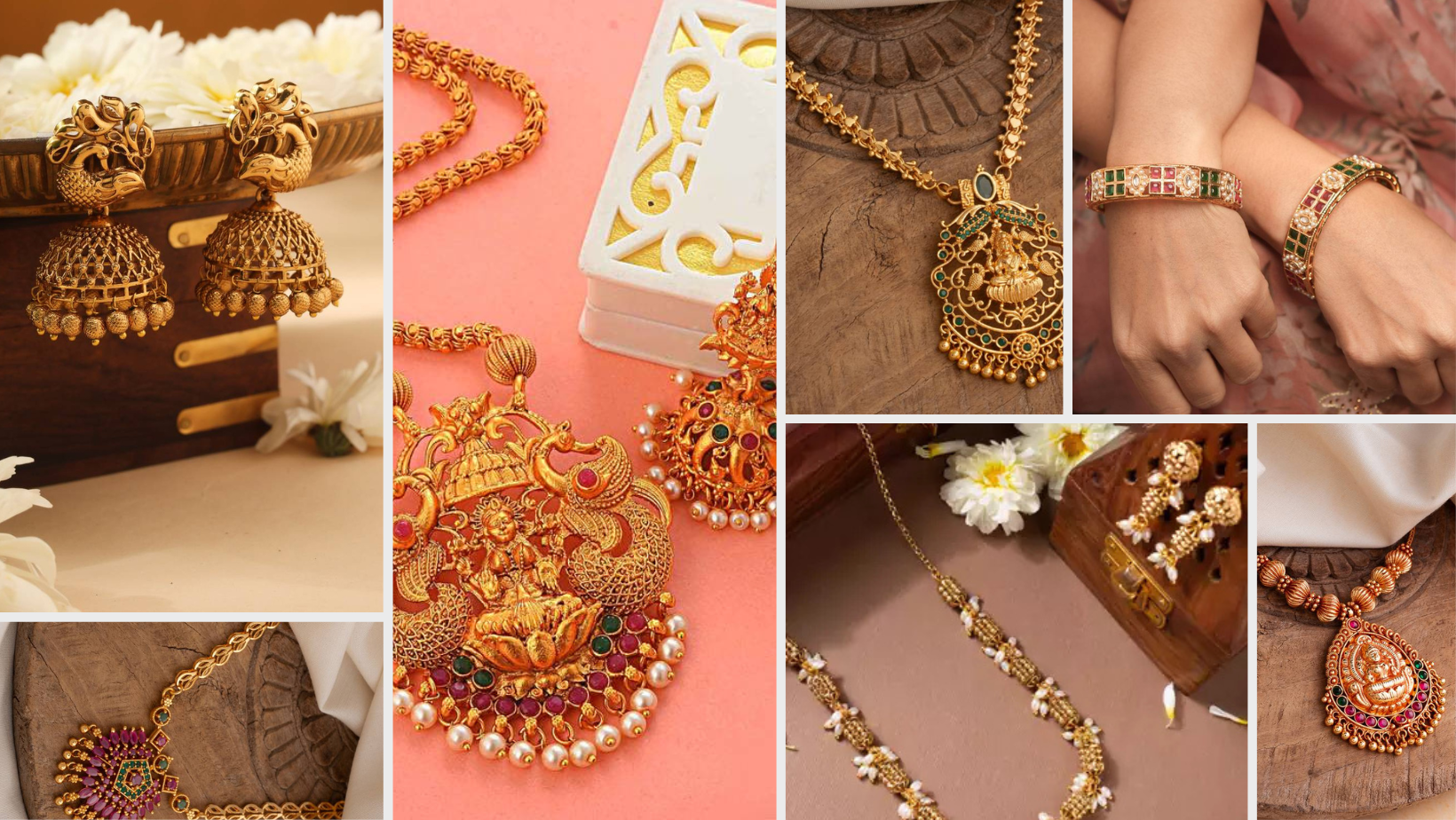
When you think of South Indian jewelry and it’s the first thing that comes to your mind is rich gold, detailed designs and a strong connection to tradition. The jewellery style is not just about beauty; it carries history, devotion and culture in every piece.
South Indian jewellery is mainly known for its high gold purity, usually 22 karat gold. This gives the jewellery its deep yellow glow, which instantly stands out. Unlike lightweight fashion jewelry the pieces feel grand and timeless. What makes it truly special is its temple-inspired craftsmanship. Many designs are inspired by Gods, goddesses, flowers, peacocks, and even sacred symbols. You can often see Lakshmi elements, lotus patterns and delicate carvings that look almost like miniature sculptures.
You might notice that South Indian jewellery looks quite different from North Indian styles. While North Indian jewellery often features diamonds and kundan, South Indian jewellery tends to focus more on solid gold and traditional patterns. It’s richer, heavier and designed to make a strong statement.
Beyond fashion, the jewellery holds deep cultural and religious value. You can wear it during weddings, temple visits, festivals and important family rituals. For many families, these ornaments are passed down through generations, making them emotional heirlooms rather than just accessories. In this guide to South Indian jewellery, we will discuss history, types, styling tips and more. Stick to this and read this complete blog.
History Of South Indian Jewellery – A Journey Through Time
The story of South Indian jewellery goes back thousands of years, starting with ancient Dravidian civilisations. Early ornaments were created to reflect devotion, status and prosperity. Gold was considered sacred and was closely linked to divine blessings. During powerful dynasties like the Pandiyas and cholas the jewellery craftsmanship reached extraordinary levels. Kings and Queens sponsored skilled artisans who created detailed ornaments for temples and royal families.
Temples played a very important role in shaping jewellery designs. Jewels were often crafted for idols of gods and goddesses. With time, the temple ornaments inspired human jewelry giving birth to what you call now temple jewellery.
As tradition evolved, the design slowly moved from temple idols to bridal wear. Heavy necklaces, armlets and long harams became essential parts of the South Indian bride’s look. Jewellery was seen as a symbol of wealth and marital prosperity.
During the colonial times jewelry styles saw some changes. European influencers introduced new techniques and lighter patterns. But the core identity of South Indian jewellery remained intact. Today, you can see a beautiful blend of old and new. Traditional designs are still handcrafted, but they are now adapted to modern styles that suit modern lifestyles and everyday wear.
Even today, a lot of artisans continue to follow techniques passed down through generations, keeping the heritage alive.
The spiritual meaning behind South Indian jewellery
In South India, jewellery is not only valued for its beauty, but it holds emotional, cultural and spiritual value that has been followed for generations. Jewellery is seen as a strong symbol of prosperity and divine grace. Wearing gold is believed to invite positive energy into your home. That’s why gold jewellery is often gifted during important moments like weddings or housewarming ceremonies. There is also a deep connection between jewellery and Hindu rituals. From weddings and temple visits to festivals like Diwali and Navratri, gold ornaments are a very important part of traditional dressing. A bride is often considered incomplete without her jewelry as it represents protection and marital happiness.
Many designs are directly inspired by goddesses, which is why temple jewellery looks so powerful and divine. Classical dancers like Bharatnatyam performers also wear traditional jewellery to reflect strength and devotion. Jewellery plays a very important role in samskaras, which are Hindu life rituals. From naming ceremonies to marriage, gold is gifted as a sign of good fortune.
Exploring the different styles of South Indian jewellery
Temple-inspired gold ornaments
Temple-inspired gold ornaments are one of the oldest jewellery styles in South India. It originally decorated temple idols and was later adapted for people. The pieces are known for their bold designs. You can see carvings of goddess Lakshmi, peacocks, lotuses, and mythical creatures. Temple jewellery is usually made using gold and finished with precious stones like rubies and emeralds. As a bride, you can wear heavier versions for weddings, while classical dancers use lighter but equally real designs.
Traditional coin jewellery styles
Coin jewelry also known as kasu jewelry has been worn for centuries. It became prominent during ancient times when gold coins were stitched together to form necklaces. The most famous piece is the kasu malai, which uses small gold coins and is adorned with goddess Lakshmi. The coins symbolise fertility and abundance. Wearing coin jewellery is believed to attract blessings and financial stability, which is the only reason why you can see a lot of brides wear it.
Antique finish jewellery designs
Antique jewellery is known for its heritage look. Instead of shiny Polish, it features an oxidised gold finish that highlights the delicate carvings. What defines antique South Indian jewellery is its handcrafted feel and temple-style detailing. It looks vintage and extremely royal. In the past few years, antique jewellery has made a strong comeback in bridal fashion.
Pure gold jewellery traditions
South India is famous for its love for 22 karat gold jewellery. High-purity gold is preferred because it holds long-term value. Traditional gold jewellery includes heavy necklaces, waist belts, bangles and long harams. Modern designs focus on lighter styles that are very easy to wear every day. Today, you can find both heavy-weight bridal jewellery and lightweight gold ornaments that blend tradition and comfort.
Modern diamond and Polki creations
As fashion evolved, South Indian jewellery also welcomed modern touches. Diamond temple jewellery is now widely popular, especially for weddings and receptions. Uncut diamonds, originally prominent in North India, have been beautifully blended into South Indian designs. You can expect elegant jewelry that keeps traditional elements but also adds a contemporary sparkle.
Jewellery traditions across India
Every South Indian state has its own jewellery identity. When you look closely, you will notice how designs change slightly from region to region while still keeping the love for gold alive.
The rich jewellery heritage of Tamil Nadu
Tamil Nadu is known for its strong connection with temple jewellery. Most designs are detailed and deeply inspired by gods and goddesses. Popular pieces include the waist belt and armlet. The ornaments are usually heavy and crafted in pure gold. A Tamil bride often wears layered necklaces and temple-style earrings.
Jewellery styles from Andhra Pradesh and Telangana
In Andhra Pradesh and Telangana jewelry is known for its fine craftsmanship, especially Nakshi jewellery. The style features deep carvings and sculptural designs that look almost like miniature temple art. Bridal chokers and beautifully designed waist belts are extremely popular here. The pieces usually feature goddess elements and floral patterns. There is also a strong influence of Kuchipudi dance jewellery.
Royal inspired jewelry of Karnataka
Karnataka jewellery reflects elegance and royal charm. Mysore-style gold jewellery is especially famous for its smooth finish and refined look. Traditional chokers, pearl-based designs are commonly worn. The jewellery is rich but slightly more balanced, not overly heavy. The style is heavily influenced by royal aesthetics from the Mysore Kingdom, which is why the designs feel graceful and polished.
Elegant gold traditions of Kerala
Kerala jewellery is simple, meaningful and also deeply symbolic. The most popular ornament is the kasu necklace made of small gold coins. Another well-known style is Palaka jewellery featuring green leaf-shaped stones that represent prosperity and nature. It is different from other states as Kerala jewellery focuses less on heavy layering and more on clean designs. Even though it looks minimal, every piece carries cultural and spiritual meaning.
Why does jewellery matter so much in South Indian weddings?
In South Indian weddings, jewellery is not just decoration; it is considered Stridhan, meaning wealth gifted to the bride for her security and future. A lot of families follow an heirloom culture where gold jewellery is passed on from mothers and grandmothers. The pieces basically have old emotional value, along with financial value.
Bridal jewellery traditions by state
A Tamilian Brahmin bride usually wears Temple jewellery with layered gold chains and a traditional Oddiyanam. A Telugu bride prefers heavy Nakshi chokers, waist belts, and bold gold necklaces. A Kannada bride generally chooses royal-style Harams featuring pearls and gold combinations. If you’re a Kerala bride, you can keep your look elegant, and it can be paired beautifully with a Kasavu saree.
A traditional South Indian bridal jewellery set
The complete bridal set includes jewellery from head to toe: maang tikka, Netti chutti, earrings, nose ring, chokers, waistbelt, armlets, bangles, anklets and toe rings. Gold weight basically varies depending on the tradition and family custom, but layering multiple necklaces is common. The idea is to create a balanced look where every ornament complements the others.
Jewellery used in classical dance and temple arts
Classical dance is inspired directly by temple designs. Bharatnatyam jewellery is symmetrical and bold, while kuchipudi jewellery looks similar but slightly lighter. Mohiniyattam Jewelry is softer and more minimal. It is different from Bridal jewelry made of pure gold, as dance jewelry is usually crafted using copper alloys and gold polish. Just makes it durable, lightweight, and suitable for long performance.
Symbolism behind traditional South Indian Jewelry designs
When you look at South Indian jewellery, you are not just seeing beautiful patterns; you’re actually seeing symbols filled with meaning. Every element has a story connected to faith and prosperity. One of the most common figures you will notice is goddess Lakshmi. Her image represents wealth, abundance and good fortune. Wearing Lakshmi jewelry is believed to bring prosperity and blessings in your life, which is why it is so popular in bridal customs. The Peacock design stands for beauty and divine protection. It is also linked to Lord Murugan, making it a powerful symbol in South Indian culture.
Floral patterns are widely used because flowers represent purity and positivity. Lotus designs especially symbolise spiritual awakening and feminine strength. You will also find conch and chakra elements, which are sacred symbols of Lord Vishnu. The designs are believed to protect you from negative energy and bring in peace. The famous mango element is a sign of fertility. It also signals prosperity and beginnings, which is why it appears so often in necklaces and earrings. Coin patterns and engravings complete the look, reminding you of ancient gold coins.
The Art of Making South Indian jewellery
Creating South Indian jewellery is a skilled art passed down through generations. Much of this skill is handcrafted, making every piece you make. One of the most famous methods is the Nakshi work, where experts carve detailed designs directly onto gold. The technique gives jewellery its deep temple-like appearance. Traditional hand carving requires patience and precision. A lot of experts spend hours shaping faces and elements using simple tools and years of experience.
Another prominent technique is embossing, where designs are created by pushing metal from the back to create raised patterns. This gives jewelry its bold and three-dimensional look. Stone setting is done carefully using emeralds, pearls and uncut diamonds. The stones are often placed without modern glue using traditional pressure-setting methods. This guide to South Indian Jewellery, lot of designs take inspiration directly from temple sculptures, which is why South Indian jewellery looks so detailed and divine.
Across India, experts work in heritage clusters from Tamil Nadu and Andhra Pradesh to Karnataka, keeping all the centuries-old traditions alive.
How to Style South Indian Jewellery?
South Indian jewellery is rich and full of character. The key to styling it beautifully is balance, letting your jewellery shine without overpowering the outfit.
- Pairing jewellery with traditional attire: When you wear a kanjivaram sari, heavy gold jewellery fits perfectly. As the sari itself is rich, traditional gold enhances its elegance. For Pattu pavadai, especially worn by young girls during weddings or festivals, lighter temple jewellery works best. You can choose from small necklaces and temple earrings. Keep your look graceful and age-appropriate. You can play with layers if you are wearing half sari. A short necklace with a long haram looks beautiful. You can add a waist belt or a flower jewellery for a South Indian finish.
- Wearing traditional jewellery with a modern look: You don’t have to save temple jewellery only for sarees. Today, you can even style it with modern outfits. You can pair temple jewellery with gowns for the reception or pre-wedding events. A bold choker or statement earrings can instantly elevate your simple outfit. If you prefer a subtle look, minimal jewellery trends are perfect. An antique necklace or a pair of statement earrings can give you tradition without any heaviness. You can also try mixing antique gold with diamonds. The fusion style keeps your heritage alive while adding a modern sparkle.
- Choosing jewellery for different occasions: Different occasions call for different jewellery styles, and South Indian jewellery offers something for every moment. For weddings, you can go for heavy layered necklaces, armlets and traditional gold sets. This is the time for you to embrace grandeur. For temple visits, you can choose simple gold chains or small jhumkas. During festivals like Onam, Pongal, or Navratri, medium-weight jewellery works best. Temple necklaces and earrings complement festive silk outfits beautifully for classical dance performances. Jewellery must look bold on stage. Traditional dance sets with matte gold are designed to highlight expressions and movements.
Frequently Asked Questions
- What exactly is temple jewelry?
Temple jewellery is inspired by ornaments made for temple idols. It features antique finishes and traditional craftsmanship.
- Why is most South Indian jewellery made of gold?
Gold is considered sacred and auspicious in South Indian culture. It symbolises purity and long-term security.
- What jewellery does a South Indian bride usually wear?
A bride typically wears a choker or earrings and armlets, besides a waist belt and anklets, all layered beautifully.
- Is temple jewellery always real gold?
Not always. Bridal temple jewellery is made from real gold, while dance jewellery is usually gold-plated for comfort and durability.
- Which state is most famous for temple jewellery?
Tamil Nadu is especially prominent for temple jewellery, though Andhra Pradesh and Karnataka also have strong traditions.
- What is the difference between Kasu malai and Haram?
A Kasu malai is actually made using gold coin designs and has symbolic value. A Haram is a long necklace that might feature different stones and motifs.