

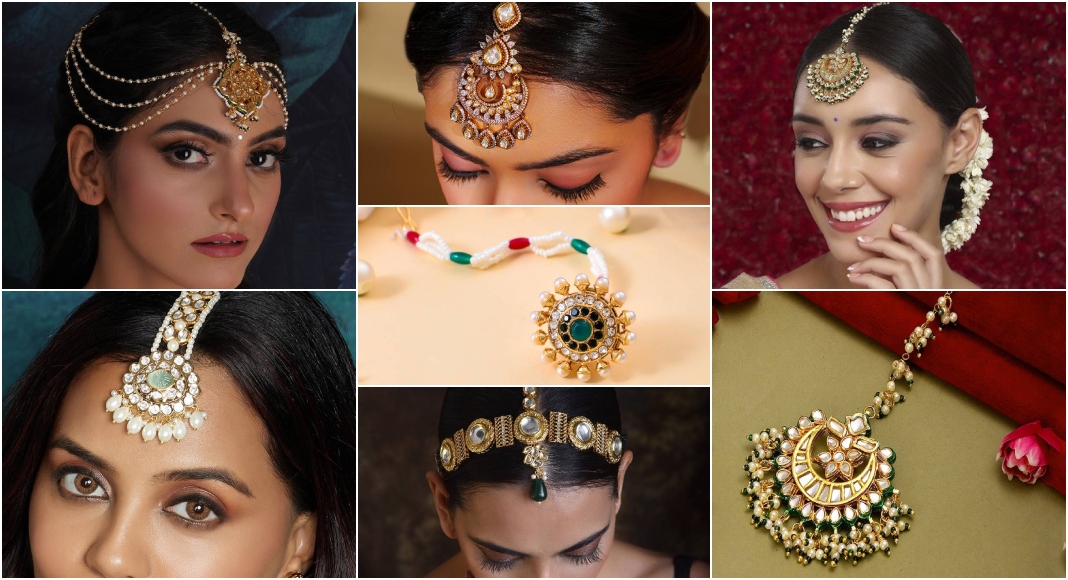
Maang tikka is a traditional and vital part of Indian jewelry, especially in bridal editions. It is worn along the center parting of the hair with the pendant framing the face and resting on the forehead. The piece creates a symmetry that brings together your whole look to be more balanced with all other accessories. Apart from culture, maang tikka has a spiritual angle too. The center parting where the maang tikka rests is believed to align with the ajna chakra or the third eye. The Indian head jewelry is not just limited to this single pendant chain. Matha patti is also one of the head pieces that are prominently worn by Indian women. This ornament extends across your forehead with side chains and layers that enhance the royal feeling.
Tracing the Roots of the Maang Tikka
Maang tikkas have their roots in ancient India with many references found in Vedic traditions and early temple rituals. Back in the days, women adorned their forehead with this accessory as a symbol of protection and spirituality. Even during the Mughal era, maang tikkas existed in the jewelry collection of royal women with some refinement and modifications. It was this time when maang tikkas evolved to become a style statement with addition of gemstones, pearls and more intricate designs. From the temple rituals and courtly settings, maang tikkas became a huge part of bridal fashion and cultural ceremonies for their overall depth. They also served as an important accessory in classical dance forms like Bharatnatyam and Kathak.
Cultural and Spiritual Meaning of the Maang Tikka
The pendant of maang tikka perfectly sits at the centre of your forehead where Ajna chakra exists. This chakra is known to represent clarity of thought, balance and spiritual awareness. Many communities look at maang tikkas as a symbol of grace and femininity. In hindu weddings, it represents prosperity and the beginning of a new phase of life. Beyond weddings, maang tikkas are also worn during festivals like Navratri and Karva chauth. Their religious essence makes them a relevant accessory for all these cultural events and makes you feel more connected to your roots.
Popular Maang Tikka Styles
Maang tikkas come in a wide range of styles and each of them have a different look to offer. These are some popular maang tikka styles that you should definitely know about.
1. Classic Single-Chain Maang Tikka
This style is the most known and widely loved by brides. It comes with detailing and minimalism both at the same time. It’s perfect for the simple bridal looks where you can carry a hint of traditionalism while being comfortable.

2. Double-Chain Maang Tikka
This one is for all the brides who want a royal bridal look. The double-chain style creates a symmetrical look, frames the forehead and keeps the centre pendant balanced. It’s a popular style in North Indian bridal looks.

3. Borla-Inspired Maang Tikka
It’s a round shaped maang tikka which comes from the Rajasthani culture. This maang tikka is crafted with heavy kundan and meenakari work. It’s again a style that you can carry for your bridal look to appear royal and elegant.

4. Crescent-Shaped Maang Tikka
This maang tikka style is inspired by Mughal era jewelry. You can always find them in Hyderabadi and Lucknowi designs. They often come with pearls, emerald or polki detailing and work perfectly for bridal and formal ethnic looks.

5. Pendant-Style Maang Tikka
This style comes with floral, peacock and temple inspired motifs. Modern versions of these maang tikkas are simpler and easier to style. They are great for daytime weddings and festivals. These are a contemporary take on traditional head jewelry.

6. Maang Tikka vs Matha Patti
Maang tikka is a head jewelry that has a single central pendant, while matha patti extends to the sides of your head, framing the forehead. For minimal and festive looks, you should go for maang tikkas. But matha patti works well for royal bridal looks.

Regional Expressions of Maang Tikka Across India
Indian head jewelry changes its appearance every few miles. There are beautiful variations you can find in this category due to regional and cultural differences.
- Rajasthan: Rajasthani maang tikkas are known for their iconic borla designs. The work that you see on these features, meenakari and enamel detailing with gold and red stones dominating the design.
- Punjab: Punjabi bridal looks are completed with large maang tikkas that are often paired with heavy earrings that create a grand bridal appearance.
- Maharashtra: The maang tikka styles in Maharashtra are mostly pearl-based, and they take great inspiration from nath jewelry. You can find gold filigree work in them, which adds extra elegance.
- South India: Every jewelry including the head pieces, in South India comes with a great touch of culture. These maang tikkas feature god motifs and temple designs.
- Hyderabad: Hyderabadi designs reflect strong Nizami influence. They have pearl and emerald detailing, which brings an enchanting vintage aesthetic laced with royalty.
- Bengal: In Bengali culture, you will see maang tikkas that are minimal in looks. They focus mainly on the subtle gold design that gives a bridal feel without being too heavy to carry.
Materials and Craftsmanship Behind Maang Tikka Designs
The beauty of maang tikkas highly depends on their quality and artistic features. Every version of this head jewelry is designed while taking a unique and crafty approach. Here’s a breakdown of some of these designs and materials.
- Gold maang tikkas are crafted with classic artistry. They have patterns like mandalas and many culture-related motifs, which make them perfect for weddings and religious ceremonies.
- Kundan and polki work maang tikkas look great both on lehengas and pastel georgette sarees. Their detailing has grandeur that goes with bridal as well as wedding guest looks.
- Meenakari enamel work brings a touch of vibrancy and fun to maang tikkas. The reversible work makes women love them so much.
- Pearl, rubies and emerald maang tikkas come with both single pendant styles for minimal looks and heavy designs for grand wedding-like events.
- Temple-style maang tikkas are a preferred choice of women in South India because of their culturally rooted designs and spiritual motifs.
The Role of Maang Tikka in Bridal Traditions
A bridal look seems to be incomplete without a maang tikka. It works more than just a decorative piece, it’s something that brings grace and a softer touch to your look.

- North Indian Culture: Maang tikka is a must-have in North Indian weddings. Brides wear them mostly with heavy kundan or polki sets and layered necklaces that add depth.
- South Indian Culture: Bridal maang tikka is styled a bit differently in South Indian culture. The brides instead wear a nethi chutti or temple-inspired forehead ornament.
- Muslim Culture: In the Muslim bridal fashion, you’ll find brides adorning a passa beautifully on the side of their heads. This is a classic must-have piece for every Muslim bride.
- Sikh Culture: Sikh brides often wear lighter maang tikkas or matha pattis to avoid overpowering the dupatta.
- Symbol of Completeness: Maang tikkas are something that adds much more depth to your bridal look. Although it’s an additional ornament, it totally turns your whole look in a traditionally rich manner.
- Daytime Weddings: If your wedding is taking place during the day, you should go for maang tikkas made of pearls, flowers and in pastel shades.
- Night Weddings: For the evening wedding, you should pick from heavier ranges like kundan, polki or gemstone that add a bit of drama and sparkle.
How to Pick the Perfect Maang Tikka
Choosing the perfect maang tikka is not a big deal. It’s all about balance and proportion that beautify your features and not overpower them.
- Based on Face Shape: Oval face is a versatile shape that can carry all the styles. Round-faced women can go for elongated or teardrop options. While square faces suit softer designs.
- Based on Hairstyle: If you are going with centre-partitioned hair, you should get classic maang tikkas. With buns, you can try out layered styles or heavier tikkas.
- Based on Outfit: Get kundan and polki design maang tikkas for lehengas. But if you’re wearing a saree, you should go for traditional or pearl designs. You can even style lightweight maang tikkas with your Anarkalis.
Modern Styling Ideas and Trending Maang Tikka Designs
The new generation is totally changing the way maang tikkas are worn. The styles you see today are the redefined versions of the classic pieces. All these ornaments are beautified with a touch of individual styling preference. You can find many options varying from simplistic to heavy ones. The minimal designs are quite trending these days due to comfort and aesthetic preferences.
- Floral: Floral maang tikkas are loved for pre-wedding festivities like haldi or mehendi. They add a beautiful pop of color and make your look vibrant.
- Pastel: Pastel maang tikkas are an option for women who love minimalism. These maang tikkas are ideally the best for daytime weddings. But you can also style them for evenings as they look lovely in bright lights.
- Layered: Maang tikkas or mathapattis are the classic pieces which are being loved by the brides these days. They bring a lovely old-school aesthetic to your bridal look.
Maang Tikka with Fusion Outfits
Fusion outfits are embracing head ornaments like never before. These headpieces add more of a fashion icon vibe to the trending fusion outfits. This versatility of maang tikkas is making them globally famous.
Celebrity and Influencer Styling Cues
Celebs and influencers are shaping these trends big time. You can spot many famous icons adorning these headpieces, from red carpets to bridal editorials. These styling cues are inspiring and bring more fresh styling tips.
Maang Tikka Compared to Other Head Ornaments
Maang tikka is a very recognised head ornament in Indian culture. But it is not the only one, there are many other variations you can find.
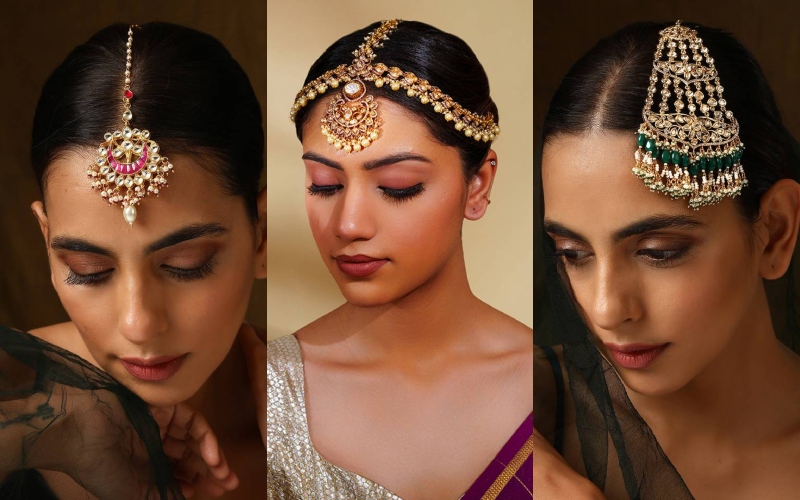
Maang Tikka vs Matha Patti
A maang tikka is just a single pendant that sits along the hair parting. Whereas a matha patti frames the upper part of your forehead, making you look more royal. Matha pattis are often chosen for bridal wear, while maang tikkas can work for pre-wedding events or festive times.
Maang Tikka vs Passa
These ornaments are often confused, but there is a major difference. While maang tikka is something that you adorn on the centre of your head, Passa is styled on the side of the head. Passa is associated with Mughal and Hyderabadi bridal looks.
When to Wear Each
- A maang tikka is great for parties and festivals.
- Matha Patti creates a dramatic and royal look for weddings.
- Passa is perfect for the times when you want a heritage-inspired look.
Regional Preferences
- Maang tikkas and matha pattis are a top choice in North India.
- Hyderabadi and Lucknowi bridal styles lean more towards passas.
- Rajasthani bridal fashion is more about detailed forehead ornaments.
Occasions Perfect for Wearing a Maang Tikka
If you think maang tikka is something you can only wear to weddings, it’s not. This piece of jewelry can be styled for many occasions.
- Weddings and Receptions: Maang tikkas complete your bridal look, whether you’re wearing a lehenga or a saree.
- Festivals: Times like Diwali, Navratri and Karva Chauth are great to flaunt beautiful lightweight maang tikkas that add a festive spark.
- Engagements and Pre-Wedding Ceremonies: Many floral versions of maang tikkas perfectly align with the pre-wedding fun vibes.
- Classical Dance Performances: Many traditional variations of maang tikkas are used by Bharatnatyam and Kathak dancers as head adornments.
Caring for Your Maang Tikka
If you have kundan or polki maang tikkas, gently dry wipe them with a soft cloth. Avoid using any liquid substance.
- Store these pieces in a fabric-lined box to make sure they don’t tangle or break.
- Do not press any heavy jewelry on top of these.
- Use padded pouches or single small hard cases in case you’re packing.
FAQs
1. What is the significance of wearing a maang tikka?
It symbolises balance, wisdom, and spiritual awareness while completing traditional bridal styling.
2. Can unmarried women wear a maang tikka?
Yes, unmarried women can wear maang tikkas for festivals, weddings, and special occasions.
3. What is the difference between maang tikka and passa?
A maang tikka is worn at the center of the forehead, while a passa is styled on one side of the head.
4. Which maang tikka suits a round face?
Elongated or teardrop-shaped maang tikkas suit round face shapes best.
5. Is maang tikka compulsory for brides?
No, it is not compulsory, but it is traditionally considered an important bridal accessory.
6. Can maang tikka be worn with a saree?
Yes, maang tikkas pair beautifully with sarees for weddings and festive occasions.