

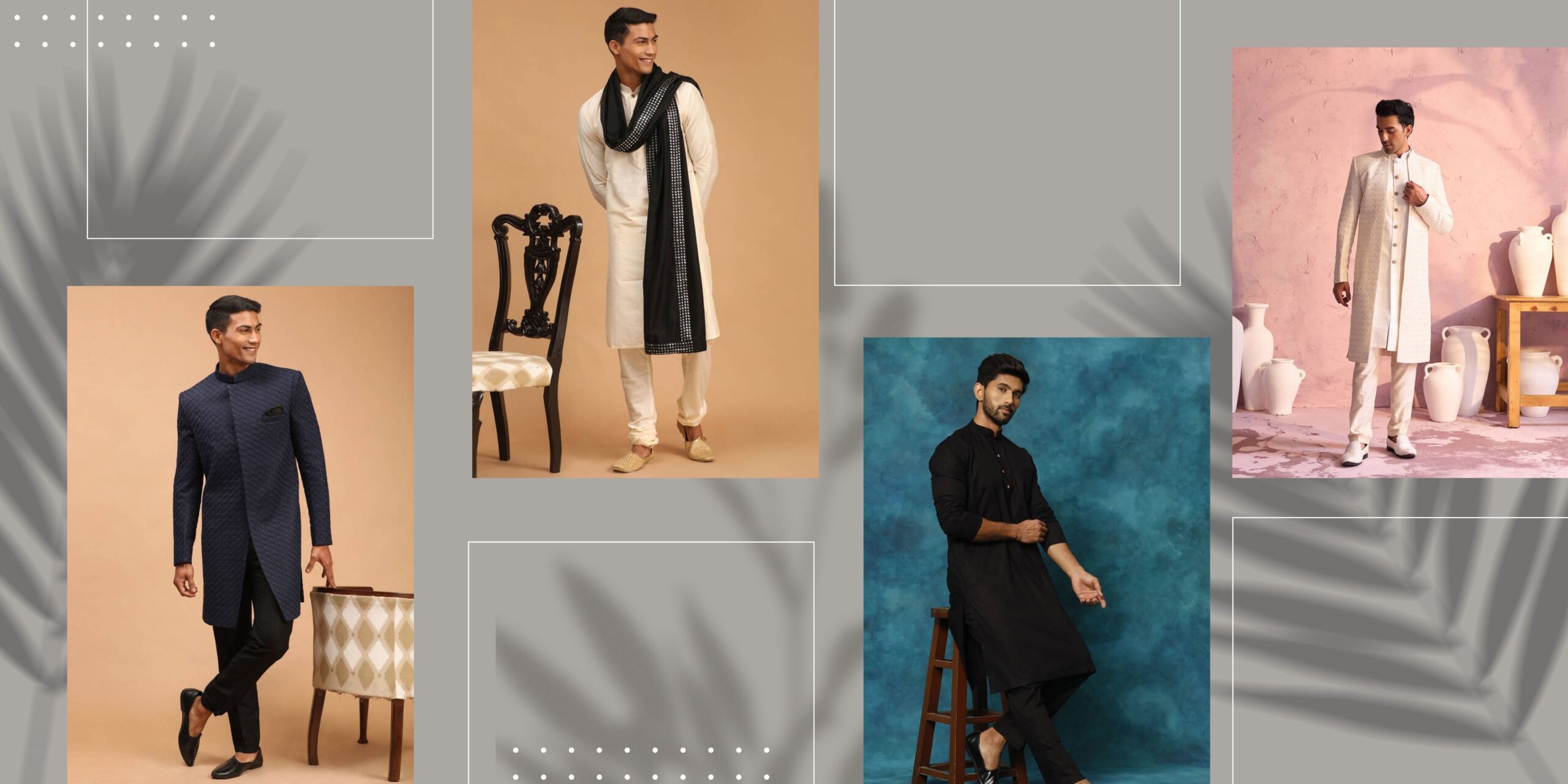
What you wear says more than you think —especially when it reflects your faith, modesty, and culture. From Friday prayers to Eid celebrations, muslim dress for men carries meaning far beyond style. Whether you are a Muslim man looking to upgrade his style or just a curious reader wanting to learn more about Islamic clothing for men, you are at the right place. This blog provides a clear and informative overview of Muslim men clothing. Understanding these garments in detail will give you the confidence and poise to carry them gracefully in adherence to the rules of modesty. Some popular garments that we will talk about are Thobes, Kurtas, Jubbas, Kufis, and much more. So read along to know all about the different styles of Islamic men’s clothing in detail.
- Thobe/ Thawb – Stylish Long Robes
The Thobe, also known as Thawb or Dishdasha, is a classic Muslim garment that is a beacon of simplicity and elegance. It comes with a minimalistic design that comprises long sleeves and a high neckline– embodying the values of modesty and humility. These robes appear simplistic at first glance, but are a product of fine craftsmanship and detailed design. This alluring garment comes from the Middle East and has now spread all across the world. It also comes in various types, such as the Saudi Thobe, Emirati Thobe, Omani Thobe, and many more.
- Jubba – Classical Overgarments
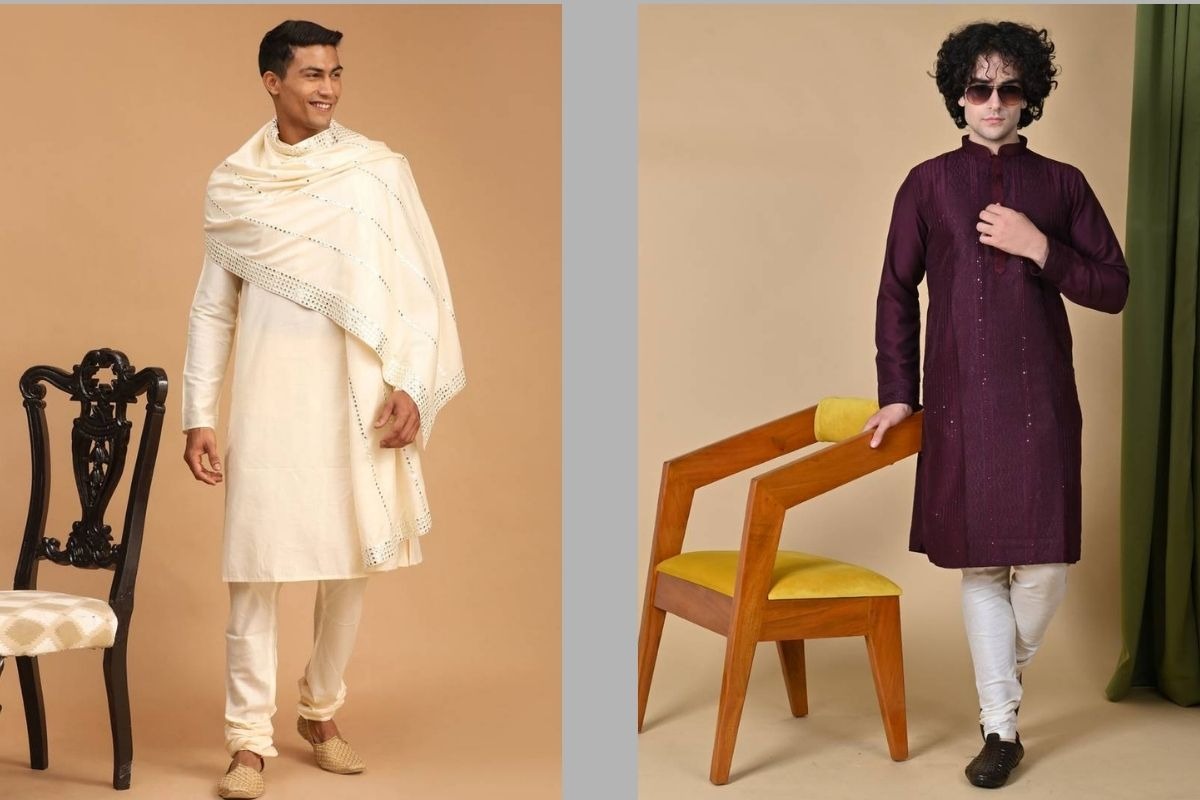
More formal than a Thobe, this mens islamic clothing, is also a long robe. However, it is traditionally worn over clothes. It is the garment of choice for prayers, Friday mosque visits, or special events. It is a decorated attire that comes with buttons, collars, and fancy designs. You can also find ornate Jubbas constructed out of shiny fabrics and gold threads. Encompassing the values of respect and tradition, the Jubba effortlessly blends culture and class.
- Kurta – Shirt Style Tunic
The Kurta, especially worn with a pajama, is probably the most popular clothing for men in Islam. The Kurta is nothing but a long shirt, and pajamas are loose trousers. It can be worn for daily wear as well as for special occasions. They come in simple designs, which can be worn casually, as well as embroidered versions that are perfect for special events like weddings and Eid. Their loose-fitting design makes them a practical and comfortable attire. The kurta is also a significant reflection of South Asian Muslim culture.
- Sirwal/ Pants – Contemporary Bottoms
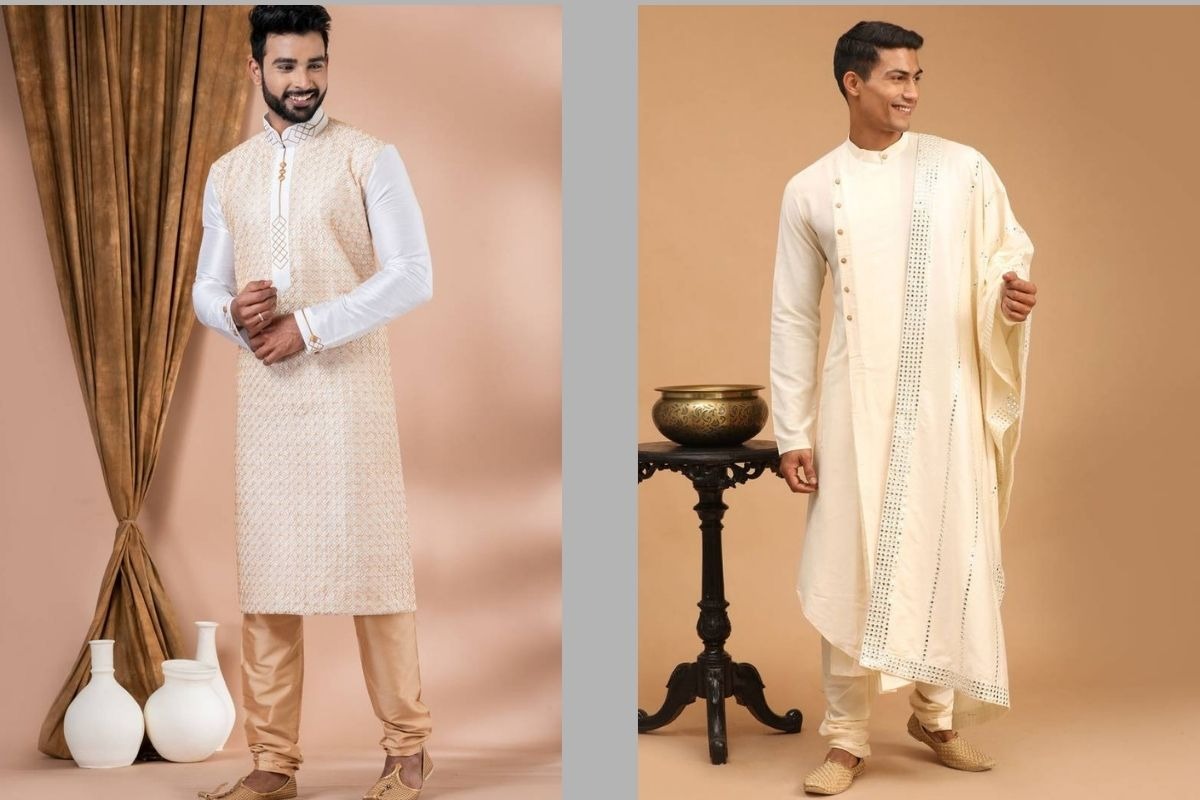
The Sirwal, also known as harem pants, are a type of traditional, loose-fitting trousers that are baggy around the thighs but taper towards the ankles. They originated from central Asia and are now worn by Muslim men all across the world. For durability, the Siwarl is constructed out of sturdy fabrics such as cotton. Linen and polyester. Often, the cuffs of these pants are decorated with embroidery. Furthermore, they are cinched at the waist with a drawstring. They are a unisex garment that is a part of everyday Islamic clothing. The Sirwal comes in two types– long and short. The short Sirwal is popular in Saudi Arabia, whereas the men of Western regions wear long Sirwal.
- Kufi and Other Headwear – Completing The Look
Islamic men’s clothing is incomplete without headwear. These come in many forms, such as the Kufi, turban, and Keffiyeh. The Keffiyeh is a chequered scarf made out of cotton and features red or black checks on a white base. It originated in the Arab world and is wrapped around the head and secured without any pins. The African countries have adapted the kufi, which is a knitted hat that is worn for religious purposes. Turbans are a part of Muslim men fashion that are found across the Middle East and South Asia. They come in countless styles and often denote ethnicities, religious sects, and social status.
- Bisht – Formal Ceremonial Robes
Muslim traditional clothing also includes the Bisht, which is a traditional outerwear popular in the Arab world. It is usually worn over a Thobe. Islamic wedding outfits for men comprise the Bisht as well. It is a sign of prestige and is worn on special occasions such as weddings or Eid. The Bisht is the garment of choice for officials and clergy such as tribal chiefs, kings, and imams. It is also considered to be a status garment and is associated with royalty, religious positions, and wealth. This attire usually comes in black, beige, brown, cream, or grey in color. The outerwear is made from camel’s hair and goat’s wool, and hence provides comfort and durability.
- Styling Islamic Wear – Accessories and Footwear
- Waistcoats and Vests: These are commonly added to Islamic men’s clothing for style and structure. For example, a neat Thobe with a waistcoat will make the perfect Eid clothing for men.
- Watches and Jewelry: Stainless steel and leather-strapped watches are popular. Silver rings are also used to elevate the look. However, gold for men is forbidden in Islam.
- Fragrances: Alcohol free perfumes and scented oils can be used for a fresh appearance.
- Footwear: Arabic sandals, Babauche (African slippers), Leather loafers, and casual shoes can all be paired with men’s Islamic outfits for a polished look. However, for Hajj and Umrah, sandals and slippers that leave the ankles and top of the foot uncovered are mandatory.
- Islamic Men’s Clothing– Regional Variations
As Islam spread across the world, the Muslim men’s outfits absorbed the regional practices of different Islamic countries. It also adapted to suit regional weather and climatic patterns. Here are some stunning regional variations in Muslim men’s clothing:
- The Middle East: In the Middle Eastern countries like Saudi Arabia, Oman, the UAE, and Iran, garments such as Thobe, Bhist, and Jubbas are popular. You can also see regional variations like the Saudi Thobe and Omani Dishdasha. In Yemen, trousers are swapped for an Izar wrap. Keffiyeh and Shemagh are also wardrobe staples.
- South Asia: South Asian men’s Islamic clothing is vibrant and colorful, and reflects the rich culture of the region. Salwar kameez, which is a tunic and trousers, is the preferred clothing choice for men. Apart from that, the Sadri or men’s waistcoat is worn on formal occasions. Prayer caps and turbans are also commonplace.
- Africa: In Africa, most men choose to dress up in Macawii sarongs, which are plaid sarongs. Friday prayers call for Khamees shirts. Older scholars opt to drape a stripped fiqi shawal over their shoulders. In the desert country of Morocco, the Djellaba is commonly worn. The Africans choose to accessorize with Babouche Slippers.
Thus, the world of Islamic clothing is vast and varied. It is not only reflective of the style of various Muslim regions in the world, but also upholds the prime principle of modesty and culture of this beautiful religion. From casual Thobes and Kurtas to ceremonial Bishts and Jubbas, the selection is vast. Pick an outfit that is not only stylish but also exemplifies your inner faith and individuality.