

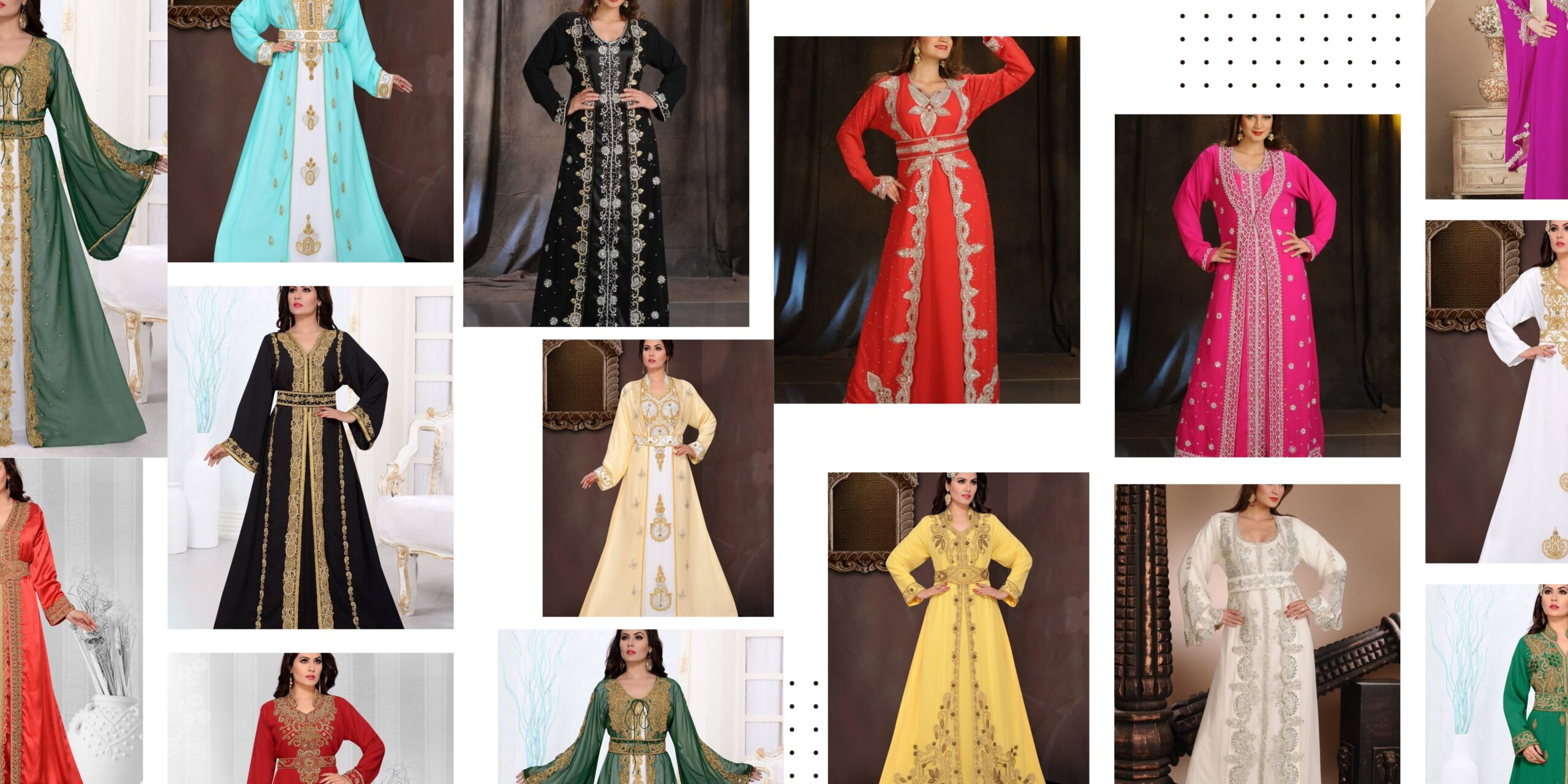
The Moroccan kaftan isn’t just a piece of clothing – it’s a reflection of history, identity, and personal expression. For generations, it has held a special place in Moroccan culture, quietly evolving while still holding onto its roots. What makes it truly remarkable is how naturally it blends tradition with modern style. It doesn’t feel outdated, and it doesn’t feel forced into trendiness either. It simply adapts.
Centuries ago, the kaftan was linked to royalty and prestige, especially within the Ottoman world. When it arrived in Morocco, it didn’t stay the same for long. Moroccan artisans reshaped it, adding their own techniques, fabrics, and decorative details. Over time, it became something uniquely Moroccan – recognizable, symbolic, and deeply meaningful.
Even today, the kaftan remains grounded in modesty and cultural values, yet it never feels plain. The richness of the fabrics, the care put into the embroidery, and the thoughtful use of color all give it a presence that’s hard to ignore. It carries elegance in a quiet, confident way.
What’s beautiful about the Moroccan kaftan is that it tells a story without saying a word. Every thread, every stitched pattern, every carefully chosen shade reflects heritage passed down through generations. At the same time, modern designers continue to reinterpret it, making it lighter, simpler, or more experimental depending on the moment.
In many ways, the kaftan represents balance – between past and present, tradition and innovation, modesty and glamour. That balance is what has allowed it to remain relevant for so long. It’s not just surviving through history; it’s moving with it.
Moroccan Kaftans — The Origins
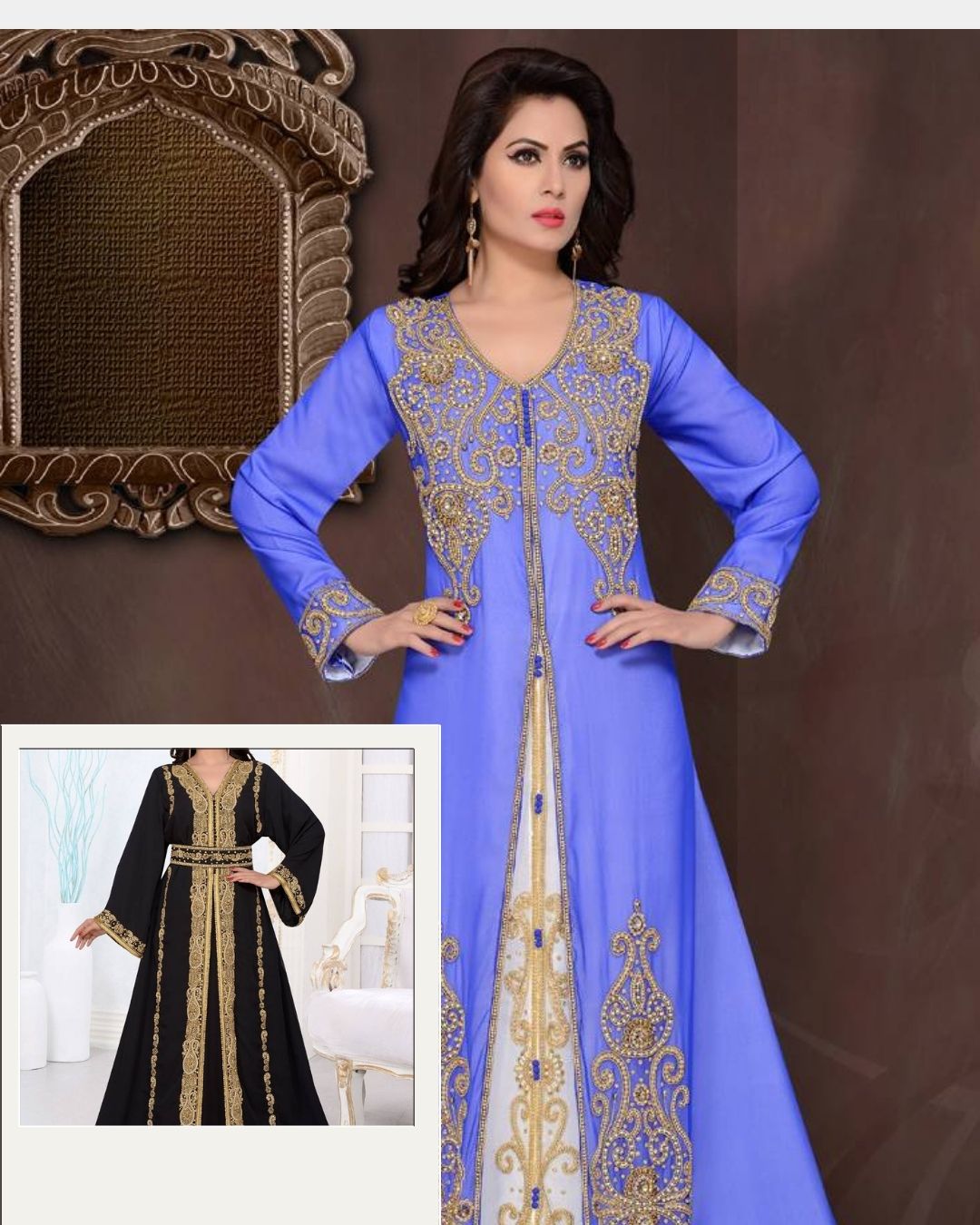
The kaftan dress began as a long, flowing, robe-like garment worn by royalty and the elite of the Ottoman Empire. In the 16th century, when Morocco formed diplomatic connections with the Ottoman world, the kaftan made its way into Moroccan society. Rather than simply adopting it, Moroccans redefined the garment, infusing it with their own cultural identity and craftsmanship. Sultan Ahmed al Mansour played a key role in popularizing this Islamic dress, and during his reign, the garment was often referred to as Al-Mansouria in his honor.
By the 17th century, Moroccan women had embraced the kaftan, crafting it from luxurious fabrics and adorning it with intricate embroidery. Over time, each region of Morocco added its own distinctive flair, further enriching the garment’s diversity. Today, it is often said that there are as many caftan designs as there are regions in Morocco. Among the most well-known regional styles are Chamali, Fez, and Rbati. Interestingly, the earliest versions of the kaftan were unisex, worn by both men and women. It was not until the late 19th century that the garment became exclusively associated with women. Today, the Moroccan kaftan stands as a proud symbol of Moroccan heritage, transcending borders and gracing women across the Middle East, Africa, Asia, and Europe.
Traditional Fabrics of Moroccan Kaftans
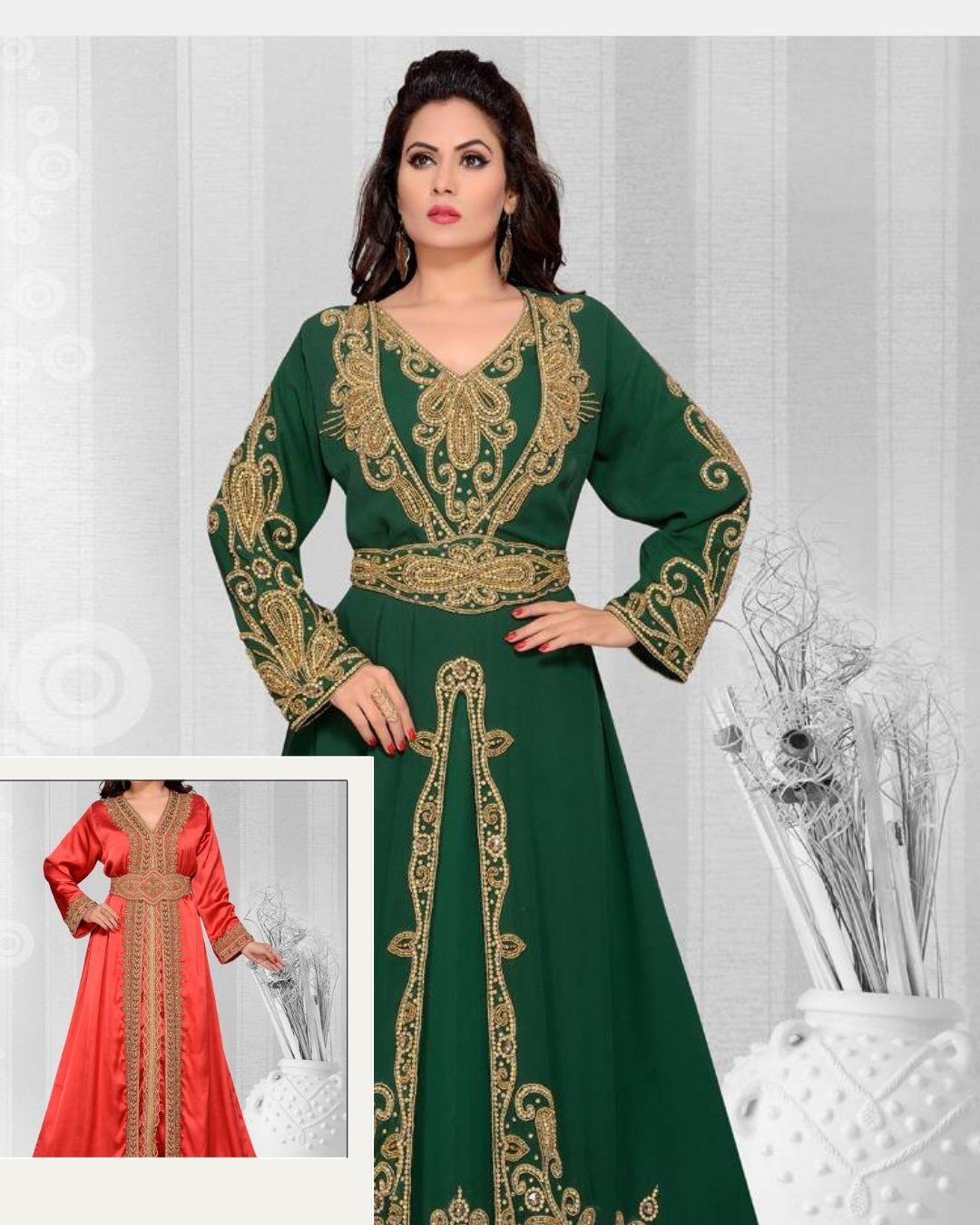
Moroccan kaftan dresses are easily distinguishable by their luxurious fabrics and embellishments. Here are some common fabrics used to craft the Moroccan caftan dress:
- Silk: The silk fabric easily elevates the kaftan and makes it more polished and sophisticated. Silk kaftan is inherently luxurious and very lightweight. It boasts a smooth texture and a graceful drape that flows beautifully with every step that you take.
- Velvet: Velvet is elegance redefined. This plush fabric is known for its soft texture and regal appearance. It also has excellent insulation properties, making it a top pick for kaftans worn in cold climates.
- Brocade: This stunning fabric is popular because of its rich texture, weight, and ability to hold embroidery well. Typically worn to special occasions like weddings and festive events, kaftans crafted from brocade feature raised patterns woven with gold or silver metallic threads.
- Satin: Another elegant fabric that you can go for is satin. Its beautiful sheen and supple texture are truly beautiful to look at. Satin is used for both modern and traditional designs alike.
The Art of Sfifa, Aakad, and Hand Embroidery
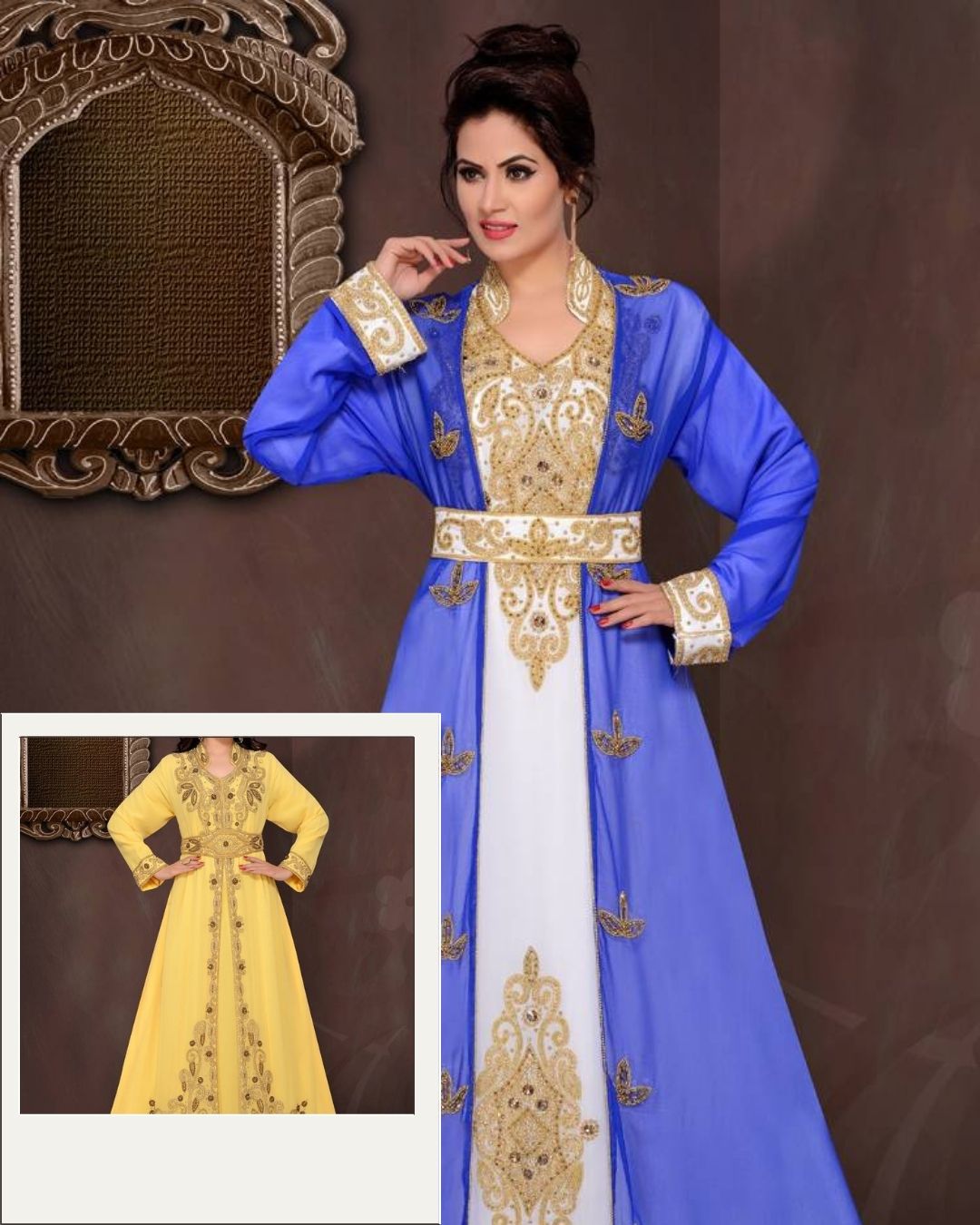
An authentic handmade kaftan can be easily identified by its Sfifa (braided embroidery) and Aakad (Hand-knotted buttons). So let’s get to know these elements in detail:
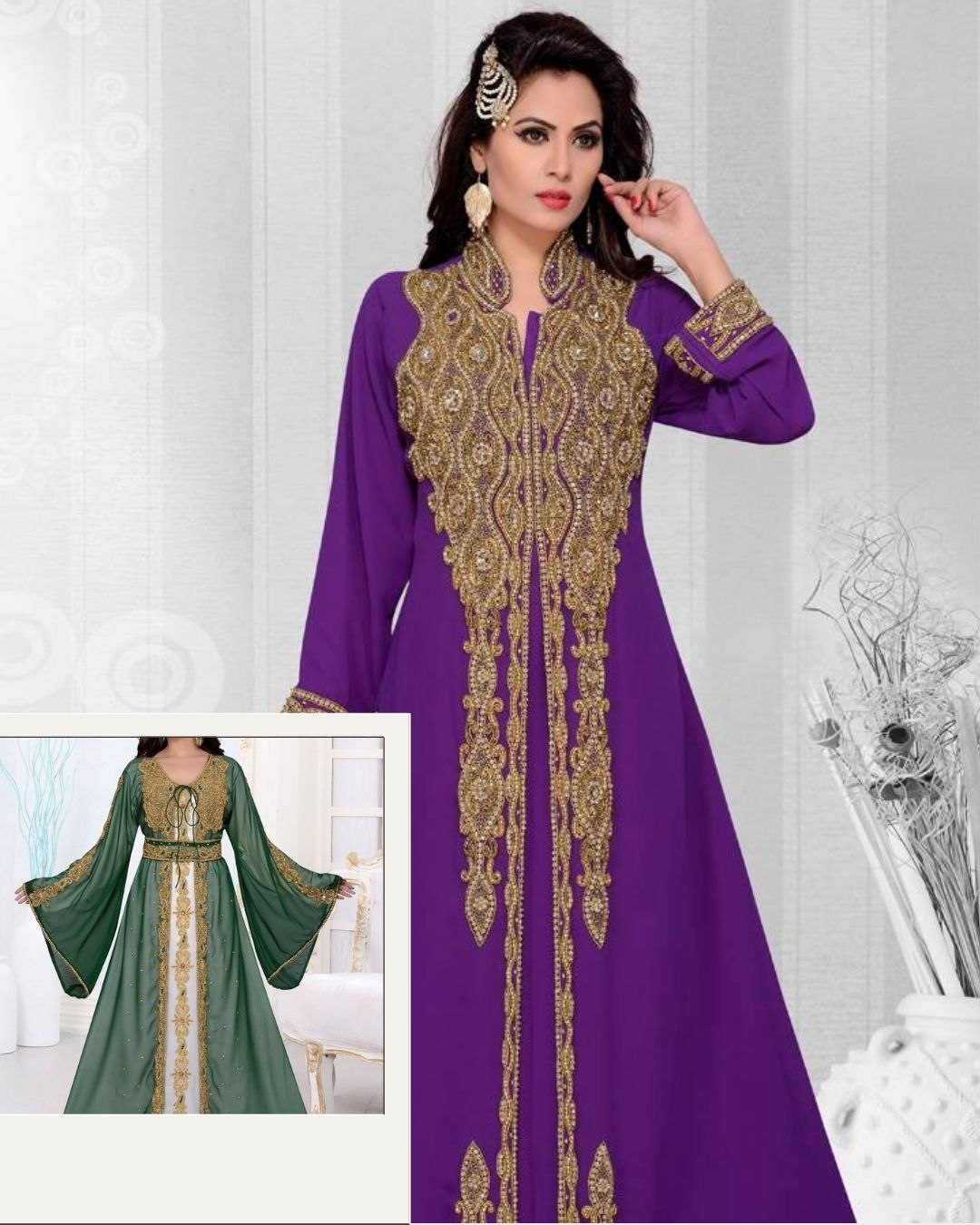
- Sfifa: This is the ornamental braid band that finishes the edges of the garment. Handmade sfifa is created using silk, gold, or silver threads and is sewn directly onto the fabric. It helps add weight and structure to Moroccan dresses. It also ensures that the kaftan drapes properly.
- Aakad: These are signature knots or buttons that close the front of the Moroccan dress. The process of knotting these buttons is intricate, with each button hand-rolled and knotted by a skilled artisan. The Aakads are firm to the touch and are placed extremely close to each other.
- Hand Embroidery: Hand embroidery on a Moroccan kaftan is incredibly detailed and labour-intensive. It is called Tarz and features intricate symmetrical, geometrical, and floral patterns. It is crafted by skilled artisans (Maalems) using gold/silver threads (Squalli) or silk.
Regional Influences On The Moroccan Kaftan
The Moroccan kaftan has been influenced over the centuries by the Andalusian, Arab, Amazigh, and Ottoman traditions. However, regions of Morocco have also had quite an impact on the kaftan dress. Here are some regional kaftan styles that you should know about.
- Fez: Also known as the Fassi style kaftans, these garments are known for incorporating metallic (Saqly) threads and detailed handiwork like the Tarz Fassi. These kaftans are historically known for their high-quality craftsmanship. They incorporate luxurious fabrics and intricate embroidery.
- Tetouan: The Tetouan kaftan is a part of the Chamali (Northern) style and is heavily influenced by the Andalusian, Spanish-Jewish, and Ottoman cultures. This Moroccan dress is characterized by a unique, shorter silhouette. It also features intricate and heavy embroidery called Berberisca.
- Marrakech: The Berber influence is vividly present in this caftan style. It comes in earthy tones, geometric patterns, and simpler cuts. It is decorated with hand-stitched embroidery like the Sfifa and Aakad. Rich fabrics such as velvet and silk are prevalent.
Color Symbolism in Traditional Kaftans
The color symbolism in kaftans has a deep cultural and historical significance. They are a vivid expression of status, emotions, and heritage. Here are some key Moroccan kaftan colors:
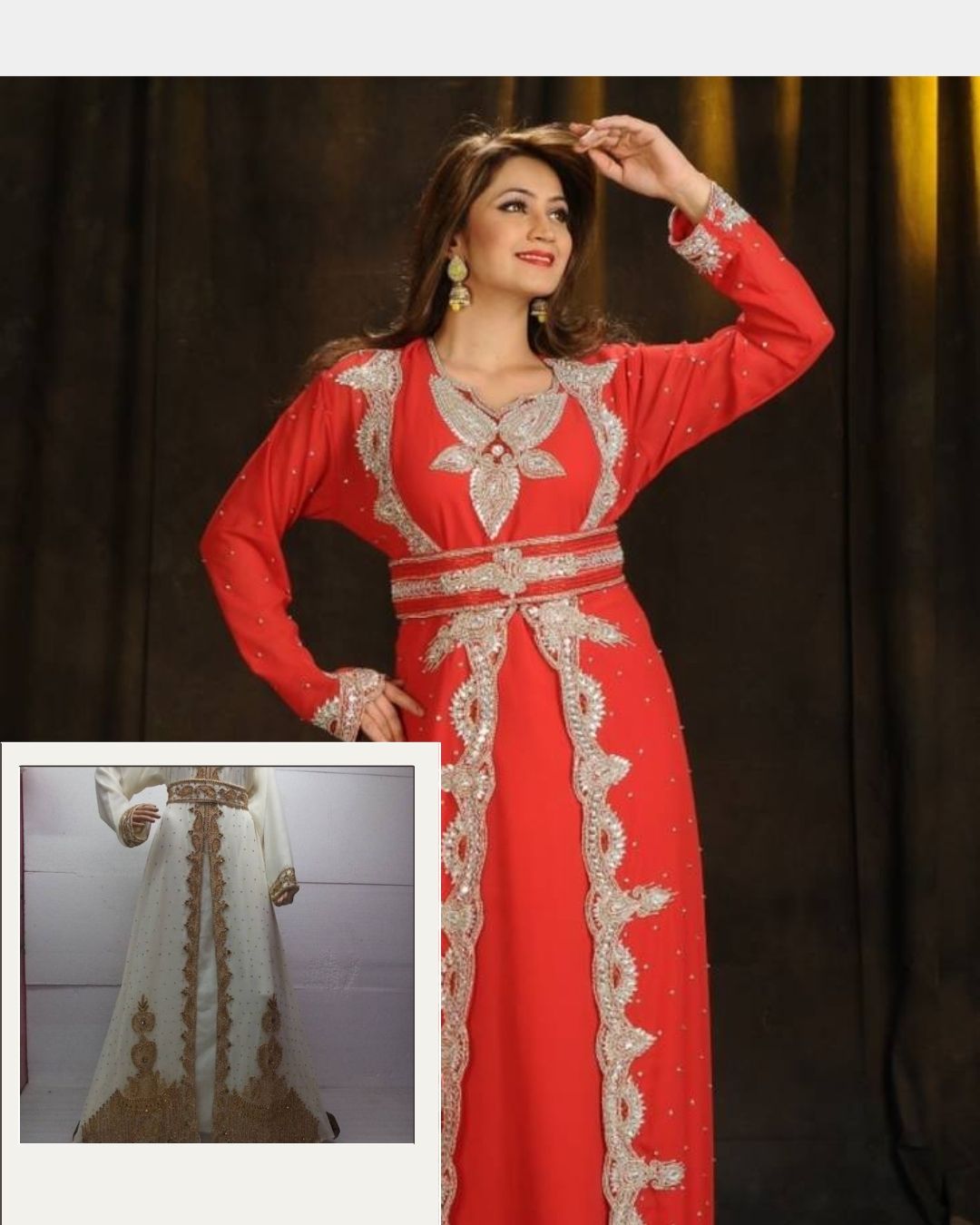
- Red: Historically, in the Ottoman Empire, red was associated with sovereignty, power, and the sultan. The color retains its power to this day and often represents passion, love, joy, and strength. It is a top bridal pick as well as signifies fertility, marital bliss, and prosperity.
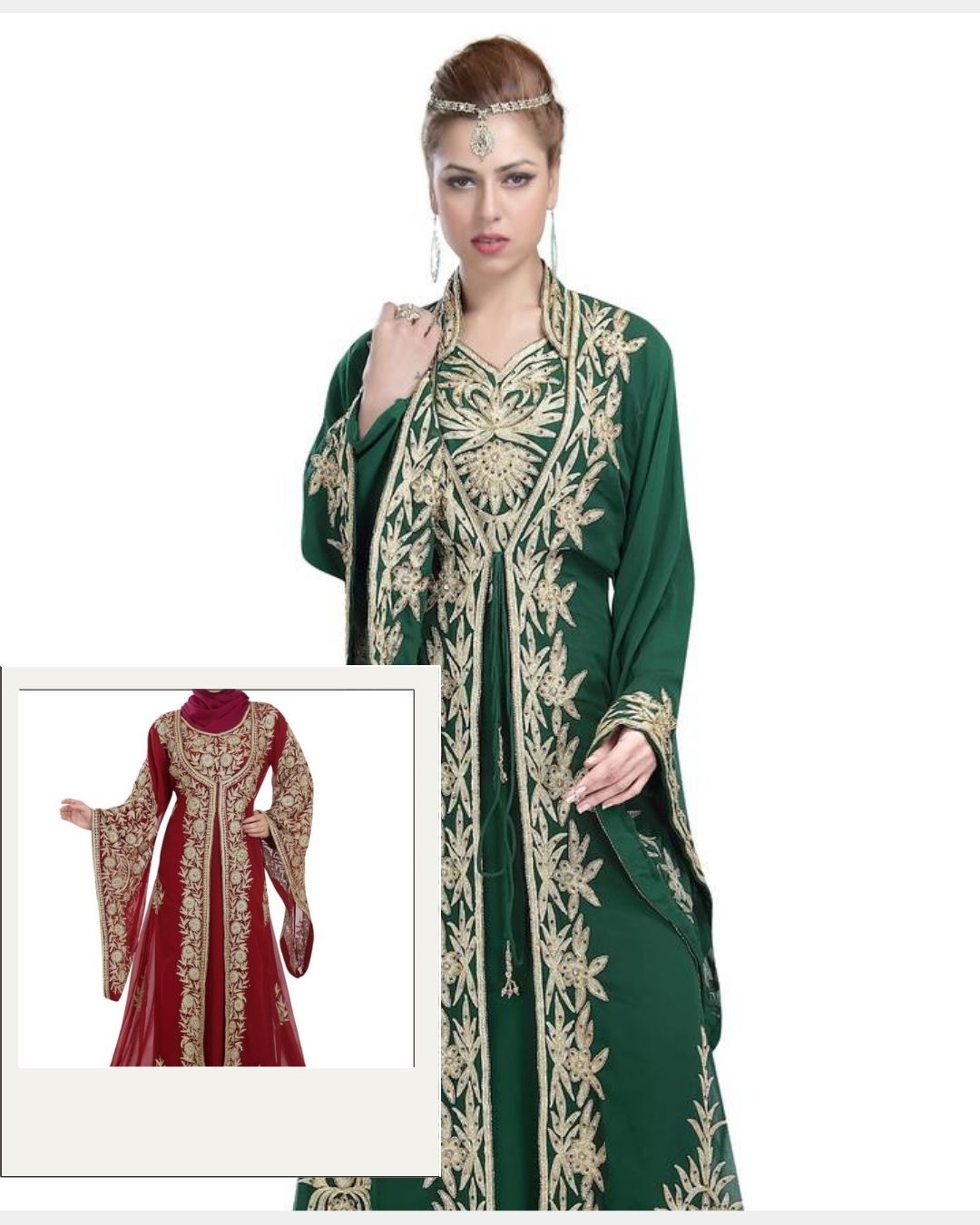
- Green: Green kaftans are strongly connected to Islam, representing paradise, fertility, and growth. It also symbolizes nature, prosperity, and harmony, and is often picked for Eid dressing.
- White: White stands for purity, cleanliness, and innocence. White kaftan dress are often worn for Friday prayers in Morocco as well as during Hajj. This color signifies new beginnings and peace.
- Gold: This hue represents wealth, prosperity, and opulence. It also signifies happiness and spiritual knowledge. Gold is often used in the embroidery of the kaftan to denote luxury and status.
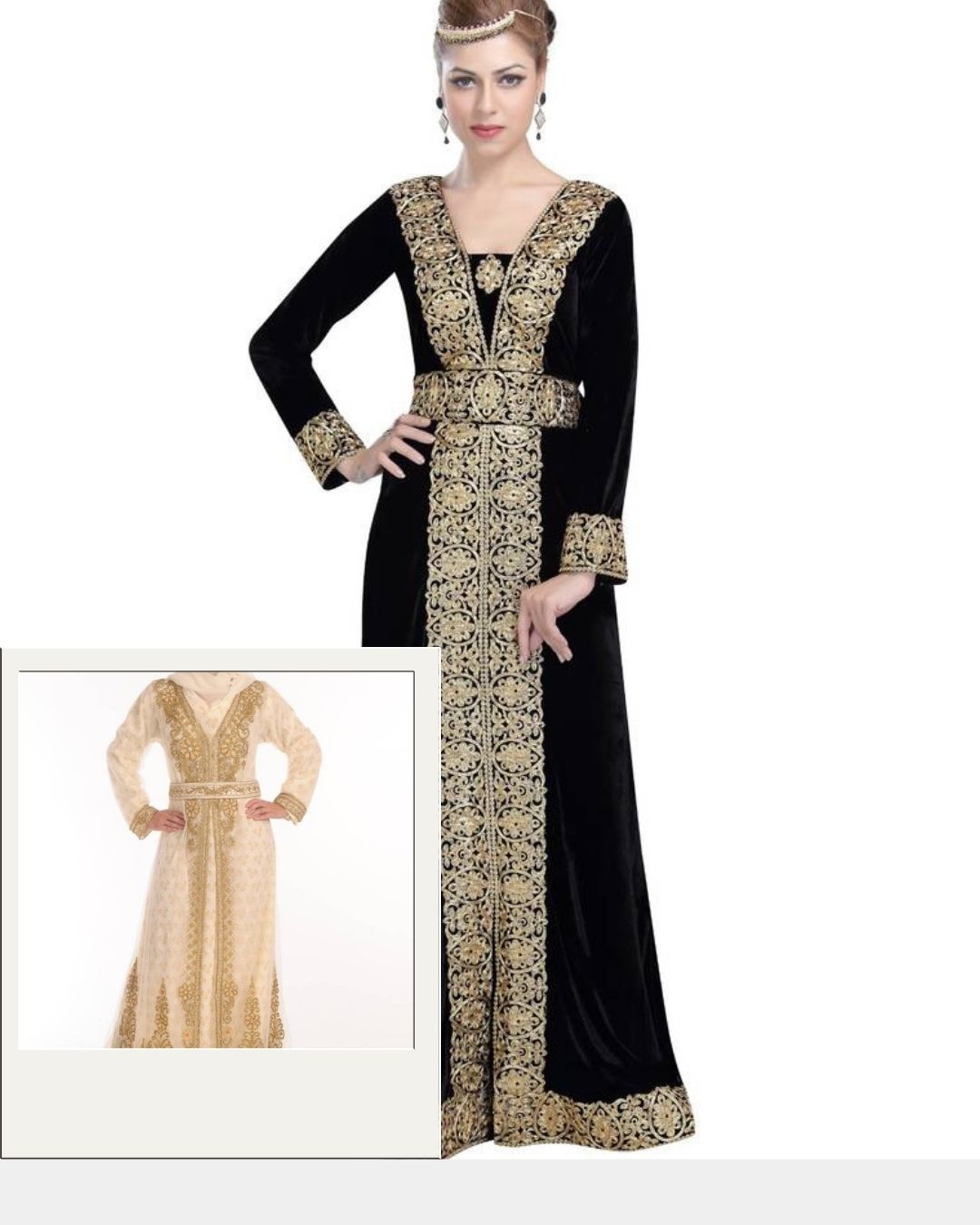
- Black: A black kaftan exudes a powerful spiritual and fashion statement. It signifies elegance, sophistication, and mystery. Often used for formal and evening occasions, the color also speaks of wisdom and dignity.
Takchita — A Layered Variation of The Kaftan
While the Moroccan kaftan has its roots in various societies and cultures, the Takchita is a 100% Moroccan garment stemming from the country’s rich cultural heritage. Unlike Kaftans, the Takchitas are composed of two pieces. The inner layer is called Tahtiya and is similar to kaftan. It is long and basic with no ornaments and is used as the first layer. The outer layer of the ensemble is called Fouqia or Dfina. It is open, transparent, and covered with gorgeous embroidery and beading. Apart from this, the Takchita is worn with a belt called the Mdamma. This belt is crafted out of silk, gold, or silver and is decorated with precious stones, giving the Takchita a tailored silhouette. A dress crafted for the pure purpose of adding a touch of modernity and creativity to the kaftan, the Takchita is elegance redefined.
Kaftans in Moroccan Wedding Ceremonies
In Moroccan wedding ceremonies, brides often wear Kaftans and Takchitas to showcase elegance, heritage, and tradition. Here are a few ways kaftans are worn during Moroccan weddings:
- The Seven Outfits: Brides usually change into seven outfits during the wedding festivities. These include various styles of kaftans, takchitas, and regional dresses such as the Fassi, Soussia, and Sahraouia.
- Mehendi: A traditional green and gold kaftan is worn during Mehendi for good luck and prosperity.
- Wedding day: Moroccan wedding dresses are white in color, symbolizing purity. Usually, heavily embroidered kaftans or Takchitas are picked.
Modern Minimalist Kaftan Designs
The modern Moroccan kaftan has moved beyond its traditional origins and has truly become an international garment embraced by women from all over the world. In 2026, the kaftan dress looks quite different from its original version. Here are some modern minimalist kaftan designs that are trending right now:
- Artisanal Printed Kaftans: Traditional printing techniques are revolutionizing Moroccan kaftan designs. For example, the Bagru print from Rajasthan brings a fresh new vibe with its geometric motifs and floral patterns. Similarly, Shibori, which is an ancient Japanese tie and dye technique, has left a mark on the latest Caftan dress trends.
- Asymmetrical Hemlines: In 2026, the kaftans feature dramatic asymmetrical cuts that create flowing silhouettes. These hemlines serve to add movement and drama to every step. These cuts preserve the garment’s modest values while making it fashionable for everyday wear.
- Sustainable Luxury: With the world taking the concept of fashion waste seriously and taking steps to reduce it, sustainable Kaftans are becoming commonplace. Artisans are using organic fabrics, natural dyes, and sustainable production methods. These techniques make the modern kaftan appealing to environmentally conscious fashionistas.
Fusion of Western Fashion with Moroccan Elements
The best of both worlds, fusion fashion blends the traditional, Bohemian styles of Morocco with modern silhouettes and western cuts. Here are some of the best ways in which designers are incorporating Western fashion with Moroccan elements:
- The Kaftan integration: Traditional kaftans are being worn as an overlay over jumpsuits, jeans, and trousers.
- Focus on breathable fabrics: The new-age kaftans are being crafted with breathable materials like cotton, silk, and wool.
- Boho Chic: The Boho look is the new cool. Kaftans are being used as maxi dresses and paired with skinny jeans for contrast.
- Accessories: Traditional Moroccan accessories such as pointed slippers (Babouche), handcrafted jewelry, and vibrant scarves are now popularly being paired with Western outfits like dresses and skirts.
The Global Fashion Industry’s Embrace of the Moroccan Kaftan
With its fashion-forward look and amazing silhouette, it is definitely not a surprise that the Moroccan kaftan dress has not just been adopted but celebrated in the global fashion industry. Here are a few ways the international audience has embraced the Moroccan kaftan:
- International Runways: From Paris to New York, the kaftan dress has elegantly graced the fashion runways. They have featured in high-profile fashion events like the fashion week. These platforms have showcased the Moroccan kaftan as a top choice for formal wear on the global fashion scene.
- Celebrity Love: Top celebrities such as Oprah, Beyoncé, and Jennifer Lopez have all been spotted rocking the Moroccan kaftan. They have donned these outfits for red carpets, movie premieres, and galas. These figures have played a significant role in popularizing the kaftan as an ensemble beyond traditional Islamic wear.
- Media Coverage: Fashion magazines and blogs have played a significant part in popularizing the Moroccan kaftan. Fashion articles, editorial spreads, and listicles have covered the comfort and beauty of the caftan dress in detail. This coverage has educated a wider audience on the elegance of this attire.