

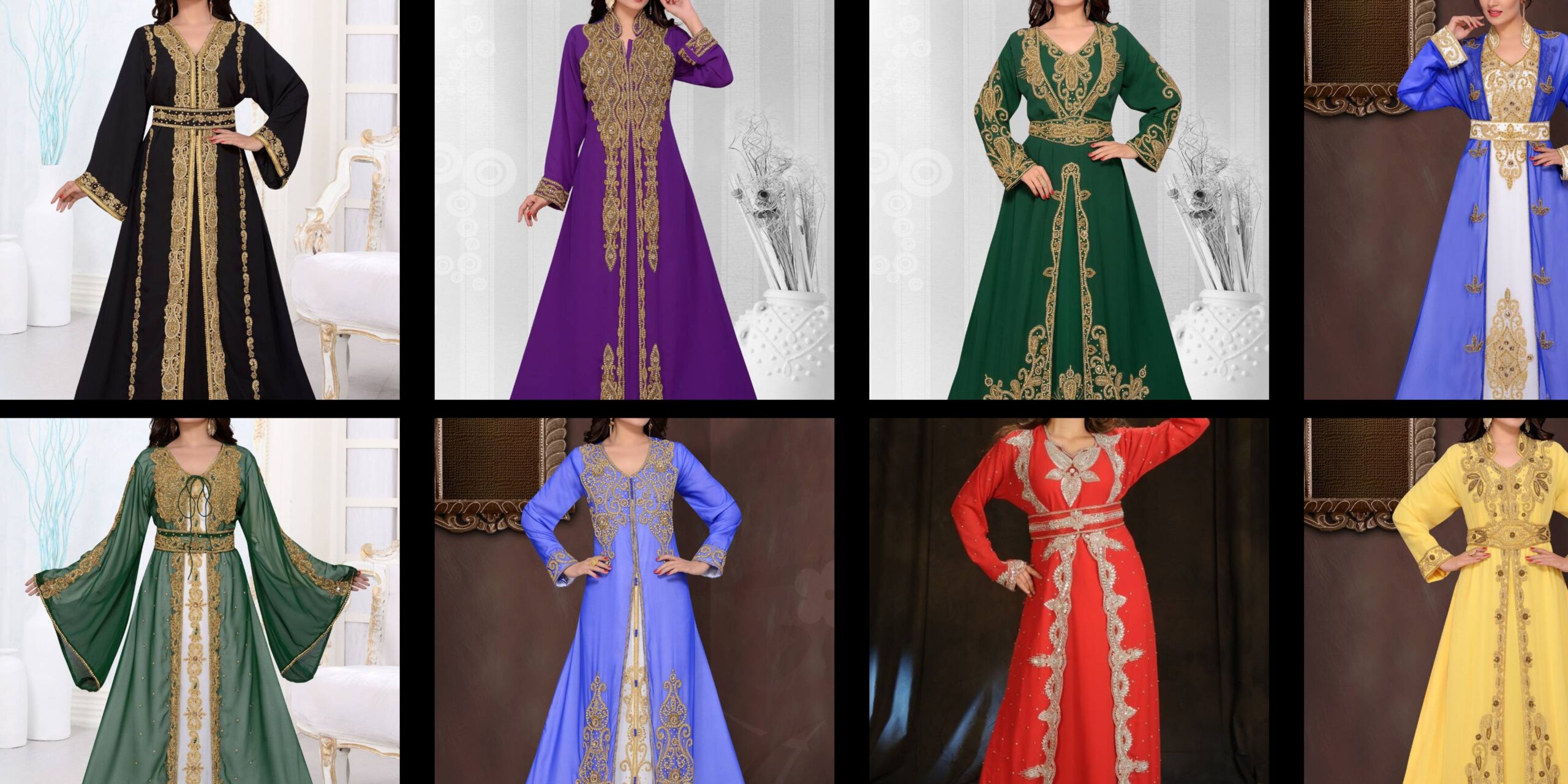
The Moroccan Kaftan is one of the most iconic pieces of Islamic clothing in the world right now. It is a long one-piece dress that is embellished with ornate embellishments. These techniques are ancient and are passed down from generations of Maalems or Kaftan artisans. The dress is often trimmed with sfifa– a fez made silk braid and closed with cherry-shaped buttons called aakad. This kaftan from Morocco is as luxurious as they come. However, did you know this Morocco traditional wear comes in many shapes and forms? From the comfortable Takchita dress to the elegant bridal Moroccan kaftan, the styles are endless. In this blog, we will take a closer look at the types of Moroccan kaftans and understand what makes them unique in detail.
- The Traditional Moroccan Kaftan:
This kaftan style is probably the most popular form. It comes in long, flowy, and robe-like in appearance. It also features a central opening and is decorated with ornate handmade buttons called the aagad. Its style is taken up a notch with the detailed embroidery featured on it. This embroidery is called fetla or randa. Historically, it was worn by the elites, but now it’s a staple in the wardrobes of women across the Muslim world. Women wear it during weddings or special occasions. It also features a sleek silhouette, often cinching the waist with a decorative belt called the medemma.
- The Takchita:
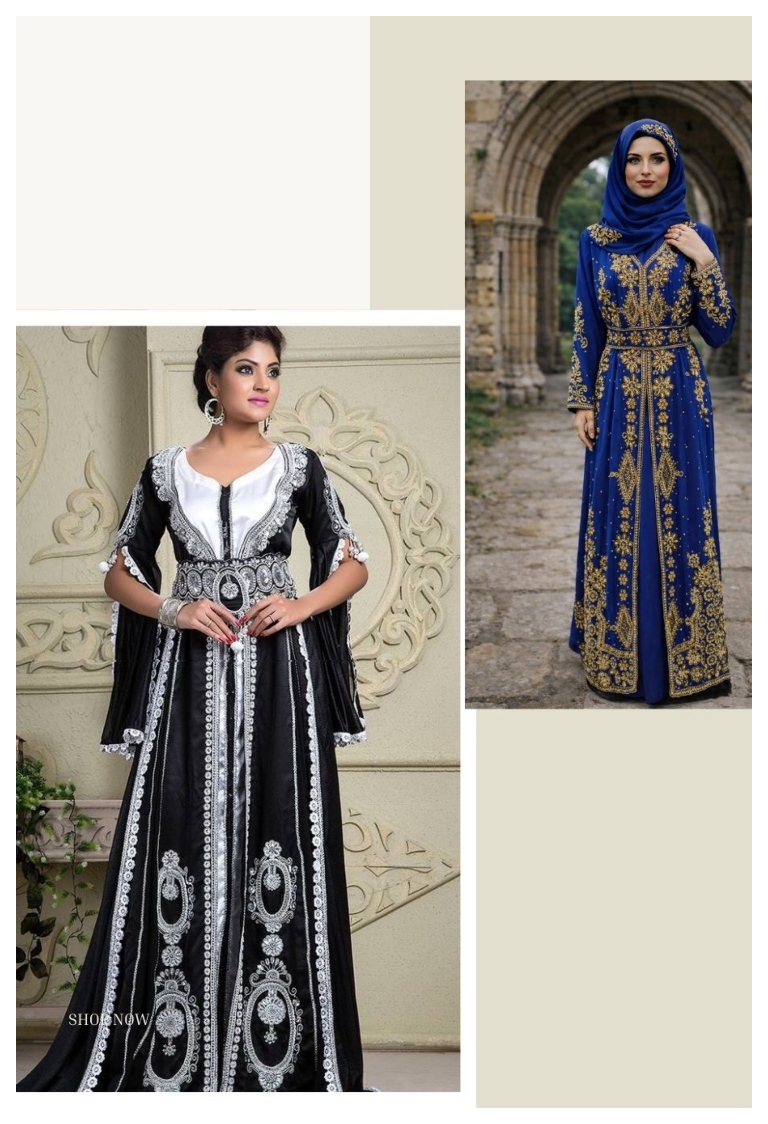
The Takchita dress is a two-piece kaftan that comprises two elements– The inner dress, which is light and simple, and the outer dress that is richly adorned with embroidery and details in pearls or rhinestones. Unlike the traditional kaftan, the Takchita is distinguished by its layers and majestic appearance. Bridal Takchitas are the top choice for brides. With its elaborate designs and intricate embellishments, the Takchita is the very symbol of heritage, class, and style.
- The Andalusian-Inspired Kaftan:
This North African traditional dress draws inspiration from the “Hispano-Moorish” culture. It merges the sensibilities of the 15th-century Andalusia (former Islamic region of Spain) and North African craftsmanship. These kaftans lean towards quiet luxury and are more streamlined than their traditional counterparts. They often feature gold or silver threadwork, such as Sqalli on the cuffs, shoulders, and chest. The patterns featured are geometric and floral, inspired by the Andalusian art and architecture.
- The Berber (Amazigh) Style Kaftan:
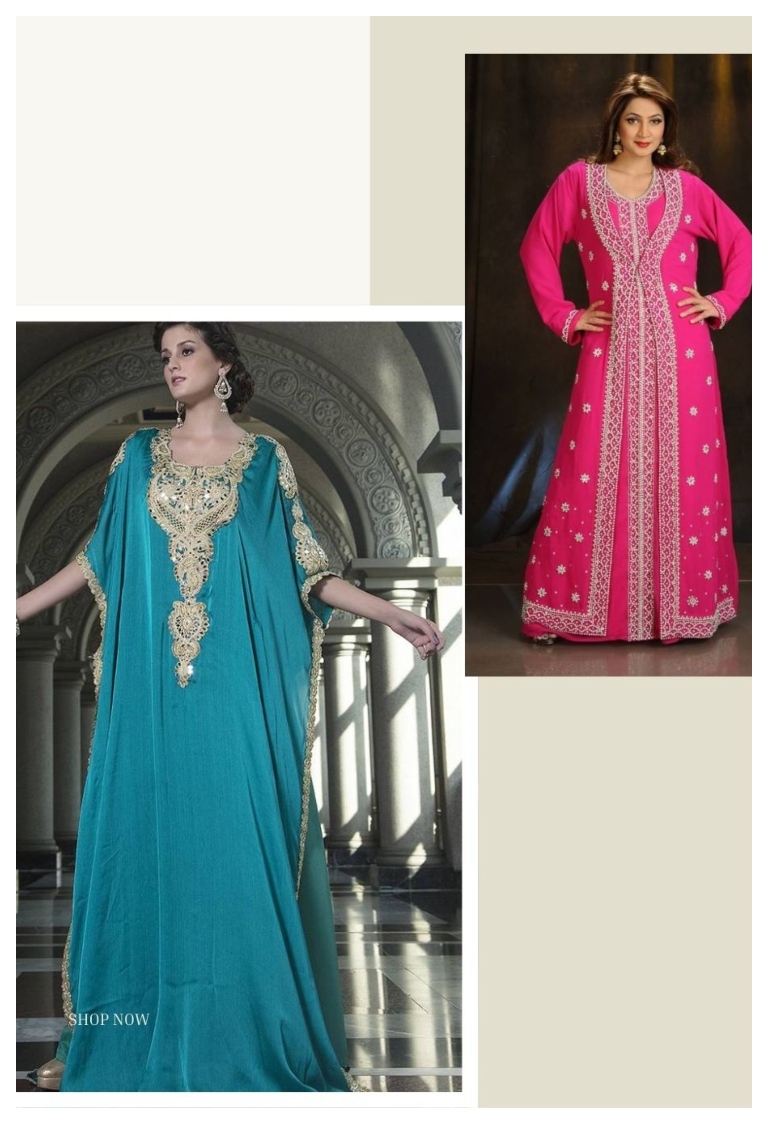
This colorful and intricate garment originates from the fashions of the Berber people of Morocco. It is known for its long, flowing, and often loose-fitted design. It also features intricate designs, symbolic patterns, and is crafted from natural materials like wool, silk, and cotton. Showcasing indigenous craftsmanship, it is perfect for occasions like weddings, Eid, and even daily wear. This kaftan features rich geometric or symbolic embroidery that is inspired by the traditional Amazigh motifs and patterns.
- The Modern Minimalistic Kaftan:
The modern kaftan is a fresh new take on traditional kaftan dresses. It combines traditional elements with modern designs to present a garment that is sophisticated and graceful. It incorporates various contemporary materials, designs, and decorations. The cuts are also modern and very hip. They often feature wide sleeves, relaxed silhouettes, structured silhouettes, and intricate embroidery. These features add refinement and align them with the latest fashion trends. Their flowy design also offers comfort, making them suitable for dailywear as well as special occasions.
- The Haute Couture Moroccan Kaftan:
This luxury kaftan reflects the opulence of the Moroccan culture beautifully. It features luxe fabrics like velvet and silk, intricate embroidery, and gold/silver detailing. It was once exclusive to royalty but is now worn by women from all walks of life on special occasions like weddings. It features Sfifa (braided thread), Aakad buttons, and detailed embroidery. These kaftans are also called wearable art and are now being worn by women on global stages like fashion shows, events, and movie premieres.
- The Bridal Kaftan:
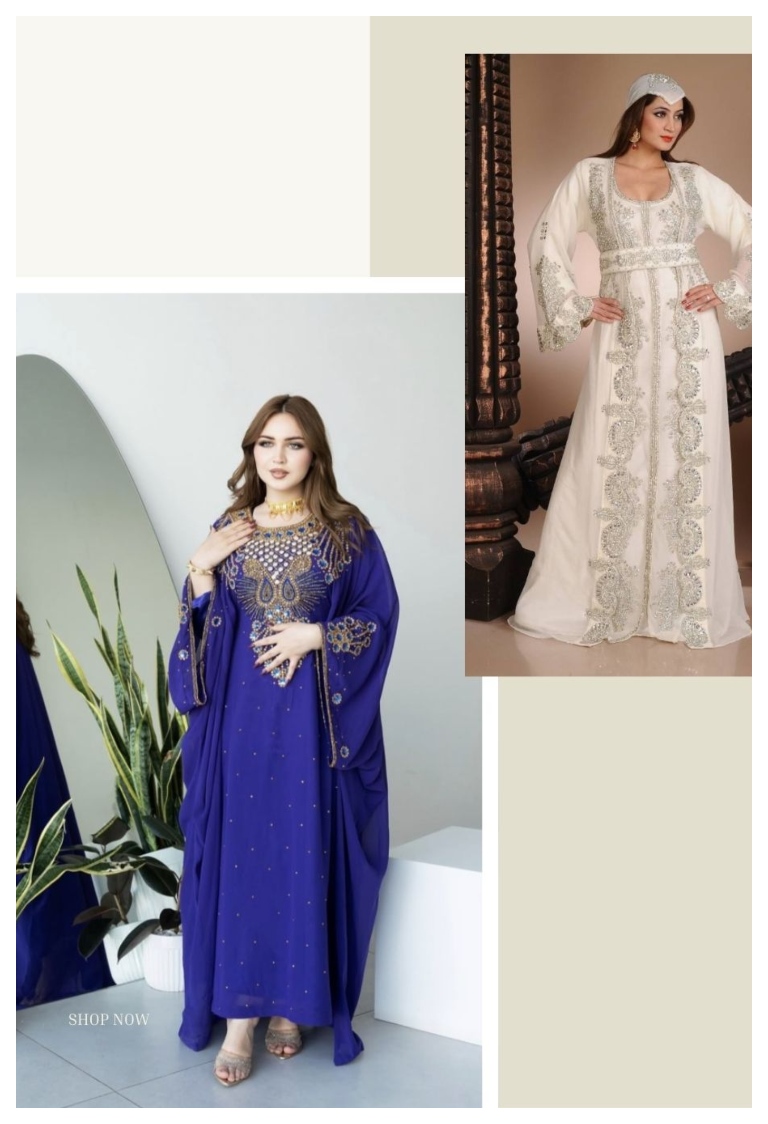
The wedding is one of the most important days in a woman’s life, and her outfit should match the occasion. Bridal Moroccan kaftans are rising in popularity right now and for good reason. They are luxurious, layered, and extremely elegant. They reflect the rich and vibrant culture of Morocco effortlessly. They are characterized by intricate, heavy embroidery, rich fabrics, and hand-stitched detailing. The wedding kaftan usually comes in two layers – a simple inner dress and an outer sheer layer called Dfina. They come with elaborate beadwork, crystals, gold/silver thread work, and traditional embroidery.
- The Fusion and Global-Inspired Kaftan:
These kaftans are a modern interpretation of the classic kaftan silhouette. They blend contemporary fashion trends with heritage essence. Fusion kaftans merge traditional techniques such as hand-block printing, mirror work, or embroidery with modern silhouettes like asymmetrical hems, structured shoulders, and belted waists. They also draw inspiration from the culture of the world. Elements such as Japanese Kimono sleeves, Moroccan embroidery techniques, and Western boho-chic trends are commonplace. They offer comfort and versatility along with a stylish, modern touch.
Thus, the world of Moroccan kaftan styles is vast and varied. Some factors to consider while choosing the perfect kaftan for you are comfort, style, and occasion. Pick one that speaks your style language and be the best-dressed person in the room, always.