


In the world of traditional Islamic clothing, the burka stands out as the most culturally significant and distinctive garment. It is a full-body Islamic clothing that covers the body from head to toe. While many are familiar with its appearance, few understand the religious and cultural meaning behind it. Also, did you know that many regional variations exist across countries and communities? In this blog, we will take a deep dive into the Muslim burqa and try to answer the question of why women wear burkas.
The Interesting History of Burqas
It is surprising to note that burqas existed way before the rise of Islam. Several ancient civilizations of the Middle East and Central Asia practiced the veiling of women. As Islam emerged in the 7th century, modest dressing became a part of everyday life. Modest Islamic clothing, such as burqas, developed through regional cultural customs. The modern burqa became prominent in Central Asia and parts of South Asia. It particularly became popular in Afghanistan in the 18th and 19th centuries. In today’s times, the burqa has become a point of debate. While most women wear it as a form of religious expression, some consider this garment a symbol of oppression. Today, the burkhas continue to exist alongside traditional modest garments. They highlight the diversity of interpretations and experiences within Islamic societies.
Stunning Types of Islamic Clothing For Women
- Burka: Also known as Harabah, the burka is an enveloping outer garment worn by Muslim women. It covers the full body and face. The garment usually has a mesh screen for the eyes.
- Hijab: A headscarf worn by many Muslim women, symbolizing modesty, religious devotion, and connection to God. It covers the hair, neck, and sometimes the chest.
- Niqab: This Islamic clothing is a veil that covers the face, leaving the eyes exposed. It signifies modesty and varies in interpretation regarding whether it is mandatory to wear.
- Chador: This is a full-length outer garment that comprises a large piece of cloth that is wrapped around the head and upper body, leaving only the face exposed.
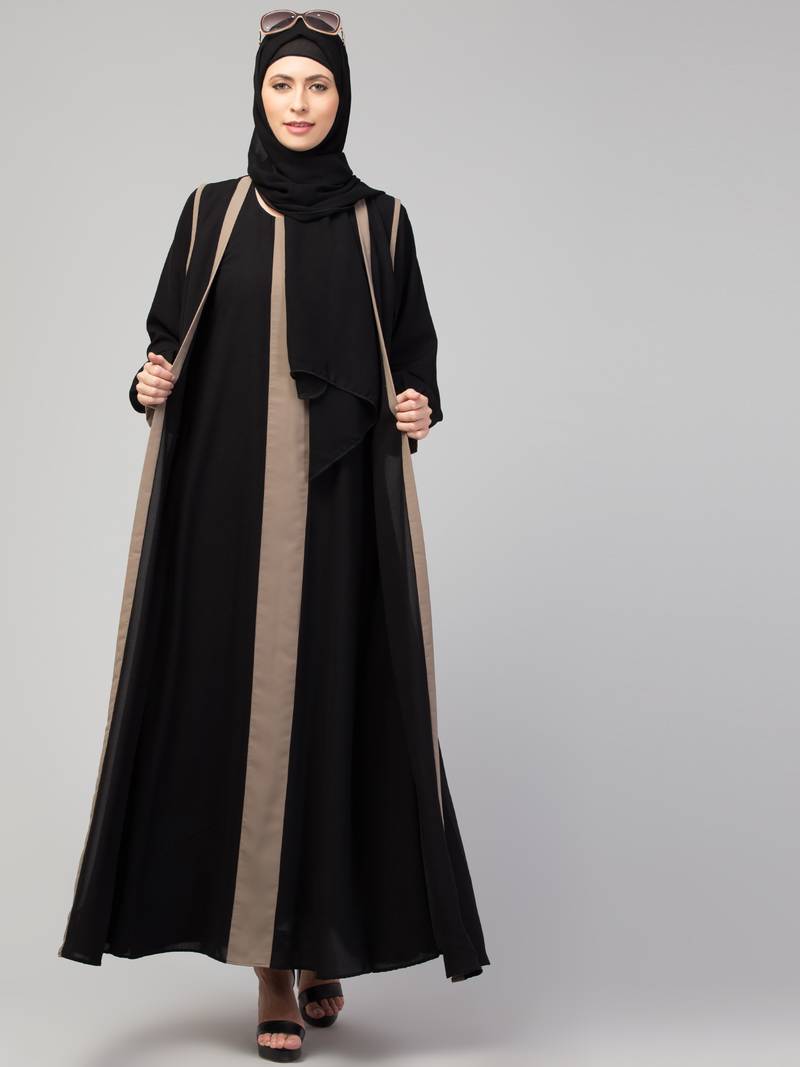
- Abaya: Sometimes also called an aba, the abaya is a loose, robe-like garment popular in the Muslim world.
Religious and Cultural Significance Of Burka Clothing
Burka clothes have immense religious and cultural significance in the Muslim society. It is interlinked with the concept of modesty, a cornerstone teaching of Islam. Muslim men and women are encouraged to dress modestly and conduct themselves with dignity when in public. For many women, wearing a burqa is a tangible way to express their devotion to the religion and its teachings.
Apart from religious associations, the burqa also carries important cultural significance as well. In countries such as Afghanistan and Pakistan, the burqa has long been a part of societal traditions. In these communities, wearing a burqa is seen as a way to preserve cultural identity. The practice also maintains long-standing traditions that have been passed down from generation to generation.
Regional Variations of the Burqa
As Islam spread across the modern world, cultural norms and practices started to steep into modest clothing. The burqa also evolved with regional culture. Here are some amazing variations of the burqa that you should know about:
- Afghanistan: The burqa in Afghanistan is also called Chadari or Chaderi. It is most traditional and conservative form. It is a full-length garment that is typically light blue, white, or green in the northern part of the country. In the southern regions, the ensemble is brown or green in color. It comes with a mesh screen over the eyes called a grille.
- Pakistan: In Pakistan, the burqa is worn in the Pashtun region as well as the Khyber Pakhtunkhwa area. It is similar to the Afghan version but is black in color and made up of lighter materials. Women these days have embraced a newer style of the burqa called the Pak Chador. This comprises a large triangular scarf and a separate face veil.
- India: Popular in areas such as Old Delhi and Lucknow, the Indian burqa is a slim, black, and embroidered cloak. It is very different from the Afghan style and is paired with a niqab instead of featuring a built-in mesh screen.
- Saudi Arabia: Islamic women in Saudi Arabia wear a Boshiya. It is a black veil that covers the entire face. It is crafted from sheer materials that allow the wearer to see out but not for others to see in.

Burqa— Legal and Political Aspects
No other garment has been hotly debated like the Burqa. This is especially true in Western countries, where it is often seen as a form of oppression and a symbol of patriarchy. Here are some countries that have regulated and even outright banned wearing a burqa in public:
- France: In 1994, the burqa was banned in educational institutions in France. Further, in 2010, the government introduced a bill banning face coverings like the chador and burqa in public.
- Italy: The burqa and Niqab are banned in public places in Italy since 2025.
- Egypt: While 90% of Egyptian women wear a headscarf, only a small number wear the burqa. The country doesn’t want to present itself as extremist and hence discourages women from wearing it.
- Morocco: In 2017, the Moroccan government voted to ban the manufacturing, marketing, and sale of the Afghan burqa.
- Cameroon: In the wake of the July 2015 suicide bombings, the Cameroonian government banned the burqa and other face coverings in the Northern region of the country.

Trending Burqa Materials and Designs
- Must Have Burqa Fabrics:
- Nida: Nida is one of the most widely used materials for crafting burqas. It is soft, lightweight, and drapes perfectly — making it perfect for both daily and formal occasions.
- Chiffon: This stunning fabric is renowned for its light, airy texture. Designers often use it to craft layered burqa looks and garments for festive occasions.
- Crepe: The crepe material is another favorite when it comes to Muslim fashion. Its textured surface and wrinkle-resistant properties make it a favorite for designing burqas.
- Popular Burqa Design Elements:
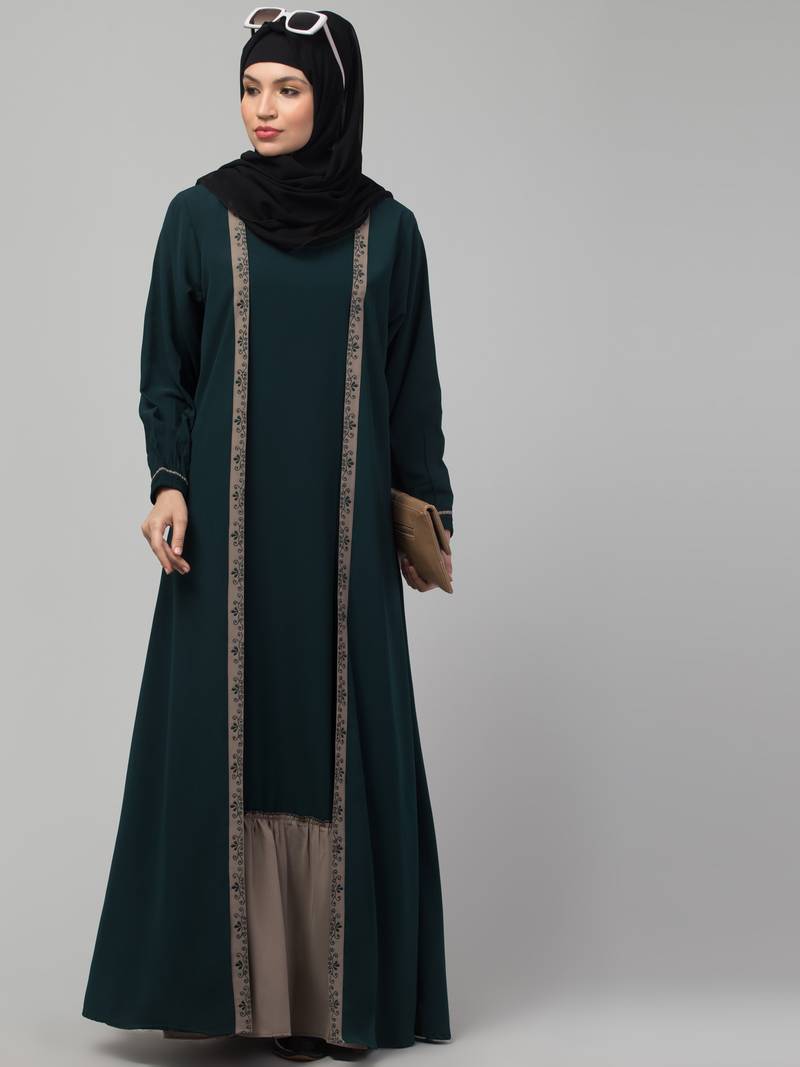
- Intricate embroidery and threadwork detailing.
- Sequins, beads, and stones for an opulent touch.
- Open front and zip styles for comfort.
- Layered looks for the contemporary charm.
- Colored burqas in shades like pastels, maroon, navy, and beige.
Modern Trends and Adaptations of the Burqa
- Fusion of Tradition and Modernity: Muslim women are now preferring designs that bridge the gap between traditional Islamic wear and modern aesthetics. Styles such as open burqas for layering and burqa-hijab combinations are becoming commonplace.
- Designer Influence: Modern designers have now started bringing the burqa to a global stage. They are now collaborating with fashion houses to curate limited edition collections that are the perfect blend of tradition and modernity.
- Sustainability: The demand for sustainable modest fashion options is on the rise. Products appealing to eco-conscious customers due to environmentally friendly, lightweight, and durable characteristics are gaining popularity.
Final Thoughts
In many ways, the story of the burqa mirrors the story of modest fashion itself — deeply rooted in tradition yet constantly evolving. What began as a cultural practice in certain regions has now evolved into a multifaceted ensemble. The burqa has long ceased being a piece of clothing. It is now an expression of piety, religious belief, and individuality.