

Table of Contents
- What is a Saree?
- What are Ceremonial Sarees?
- The Amazing Components of the Saree
- The History Of the Saree and Its Cultural Significance
- The Interesting Evolution of the Saree
- The Complete Saree Guide – Fabric Edition
- What is Trending In The Saree World?
- How To Drape a Saree (Nivi Style)
- Fabulous Saree Draping Styles That You Should Know About
- Types Of Sarees According to States
- Beyond Borders – Sarees From All Over The World
- Some Lesser-Known Facts About the Saree
- Tips On Choosing The Right Saree
- How To Care For and Store Sarees
- The Complete Guide To Online Saree Shopping
Sarees are not just clothes; they are part of India’s story. For centuries, the beautiful drape has been designed, which you know as Indian ethnic wear. You could say the sarees are literally woven into the cultural emotions and everyday life of India.
The history goes all the way back to the Indus Valley civilisation, almost 5000 years ago. That makes the saree one of the oldest garments still worn in India Today. What’s even more amazing is that it has evolved without losing its soul. From the early days of simple unstitched pieces of fabric to modern versions like lehenga sarees and pre stitched sarees, the style has changed, but the essence remains the same.
And that is the only reason why the saree holds so much relevance today, and it is so prominent. It balances traditional comfort and personal style in a way very few garments can. Over the years, it has embraced influences from every corner of India, from the rich Banarasi weave of the north to the luxurious Kanjivaram silk of the South. Another reason the saree is loved by women is its versatility. They are naturally free size and flattering on every type of complexion and shape. They actually give you the freedom to experiment and express all principles.
Additionally, sarees are really comfortable, often made from breathable cotton, elegant, and many other fabrics that look beautiful can also feel wonderful on your skin. So when you wear a saree, you are not just dressing up, you’re actually carrying centuries of craftsmanship, culture, and heritage. In this Indian saree guide, you can dive deeper into the world of sarees, their history, styles, fabrics, and why they continue to hold such a special place in your heart.
What is a Saree?
A saree is an unstitched strip of fabric that is cinched at the waist by pleats, and the other end is draped over the shoulder like a stole. It is worn with a blouse or a choli and leaves the midriff completely bare. While there is no fixed saree length, modern sarees usually follow a standard saree length. The common length is 5.5 meters, often seen in everyday wear sarees. Sarees of 6 meters are also popular for styles that require more fabric. Some traditional and regional sarees are even longer. The width of the saree typically ranges from 1.1 to 1.2 meters, providing ample coverage from the waist to the shoulders.
The history behind the etymology of the saree is also fascinating. The word saree is derived from the Sanskrit word śāṭī[ (शाटी) which refers to an unstitched piece of garment worn by women in ancient texts. The expression then evolved in the Prakrit languages as sāḍī or sāṛī. This designation is commonly used in North India, Punjab, and Maharashtra. In Southern languages like Kannada, Tamil, and Telugu, terms such as āḍe, cheera (Telugu), and pudavai (Tamil) are prevalent.
What are Ceremonial Sarees?
Every special occasion deserves a special outfit, and ceremonial sarees are the best picks for the same. These sarees are special and reserved for events like weddings, rituals, and important life events. They come with rich fabrics, elaborate designs, and heavyweight. Some of the most popular ceremonial sarees are Kanjeevaram, Banarasi, and Paithani. These sarees are also culturally significant, carrying symbolic meanings tied to prosperity, purity, and devotion. Their key features include rich fabrics such as silk, brocade, or heavy woven textiles. They often come in meaningful colors, such as red, green, orange, blue, and more. These colors perfectly capture the essence of the special occasions. Ceremonial sarees are also adorned with rich motifs like flowers, temple-inspired designs, and geometric patterns.
The Amazing Components of the Saree
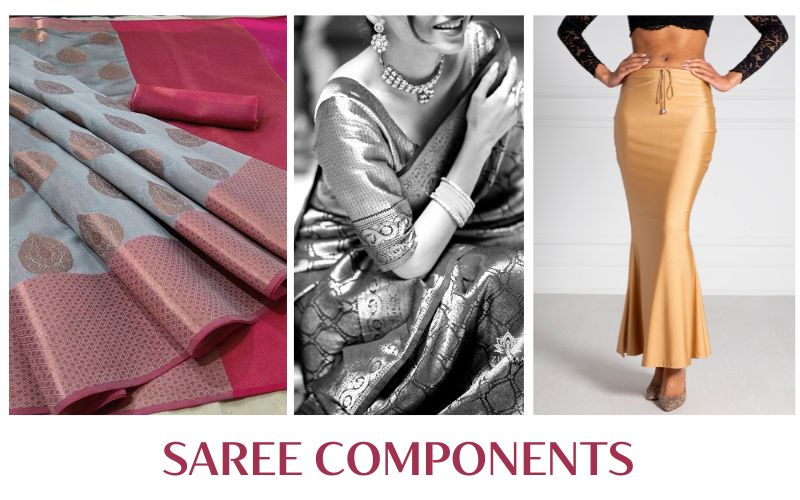
- The Saree Fabric: This is the main body of the ensemble. It is unstitched and is 5.5 to 6 meters in length. It is often made from fabrics such as silk, cotton, georgette, chiffon, and more.
- Blouse (Choli): The blouse is the fitted top worn with the saree. It usually comes in various styles like round neck, V neck, halterneck, boat style, and more. The design, color, and make of the blouse have a major impact on how your saree looks.
- Petticoat (Underskirt): This is an underskirt worn beneath a saree. Usually crafted from comfortable fabrics like cotton or cotton blends, it helps secure the saree pleats and hold the drapes. It also serves to add shape to the saree silhouette.
The History Of the Saree and Its Cultural Significance
The saree is one of the oldest attires that is worn today and has a rich history spanning more than five millennia. Its roots can be traced back to the Indus Valley civilization (2800 BCE), where figurines and seals depict women wearing strips of cloth resembling a saree. As the Vedic period dawned, the saree evolved. During this period, the saree was a three-piece garment, comprising antariya (lower garment), uttariya (upper cloth), and stanapatta (chest band). Over time, these elements merged to form the saree that we know today. During the medieval period, regional saree styles like Banarasi, Kanjivaram, Pathani, etc. started to gain prominence – adding to the cultural significance of the ensemble. In India, the saree holds deep symbolic meaning. It is often worn during important life events such as weddings, religious ceremonies, and festivals. The colors, motifs, and fabrics used in making the saree also carry special meanings representing prosperity, purity, and good luck.
The Interesting Evolution of the Saree
From the simple unstitched pieces of fabric of the earlier days to the contemporary fusion styles, the saree has undergone quite an evolution. The significant change happened during the colonial era, when the British made wearing blouses mandatory. They also introduced new fabrics such as georgette, net, and chiffon to suit the hot Indian climate. Trade with Europe made way for Western influences on the saree. The prints and designs changed. European elements such as shorter lengths, contemporary prints, and different draping styles became commonplace. Women also started experimenting with the draping of the saree with drapes such as the Nivi drape, Seedha Pallu, and Bengali style, becoming popular. Today, the contemporary saree comes in luxe fabrics, stylish silhouettes, and Indo-Western elements.
The Complete Saree Guide – Fabric Edition
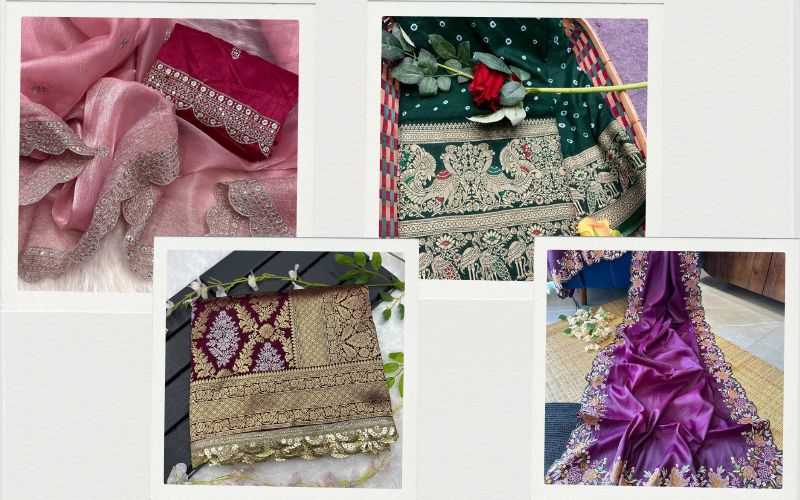
1. Natural Fabric Sarees
- Cotton Sarees: Made from cotton fabric, these sarees are breathable, lightweight, and comfortable. They are mostly used for daily and office wear.
- Silk Sarees: Crafted from the luxurious silk fabric, these sarees are renowned for their opulence and grace. Some common types of silk sarees are Kanjeevaram, Banarasi, Paithani, and more.
- Linen Sarees: A great alternative to cotton, linen sarees are known for their rustic charm. Style these for brunches with friends. Low-key celebrations or official meetings.
- Wool Sarees: These sarees are warm and soft and made from wool or wool blends. A great pick to stay warm in colder climates while still looking elegant.
2. Blended Fabric Sarees
- Cotton Silk Sarees: Want the regality of silk as well as the comfort of cotton? Go for cotton silk sarees. These are ideal for casual as well as semi-formal occasions.
- Art Silk Sarees: These sarees are made up of artificial silk and give the glow of silk while being an affordable alternative for the same. They are commonly used for festive wear and daily wear.
- Tussar Silk Sarees: Made from wild silk, the Tussar silk sarees are renowned for their rich texture, natural sheen, and breakable fabric. Their beauty is further increased by the traditional handwoven patterns that adorn them.
- Matka Silk Sarees: These sarees are crafted from Matka silk that has a textured, rustic appearance. They are durable and lightweight– ideal for casual and semi-formal occasions.
3. Lightweight Fabric Sarees
- Chiffon Sarees: Known for their lightweight and sheer texture, chiffon sarees offer a soft drape and elegant fall. They are extremely popular for parties, weddings, and formal occasions.
- Georgette Sarees: Another contemporary favorite, georgette sarees are known for their elegant vibe. They are slightly textured and completely lightweight.
- Organza Sarees: These sarees are hotly trending right now. They are sheer, crisp, and delicate. Their delicate transparency, structured drape, and elegant sheen have made them a fashion favorite.
- Crepe Sarees: Characterized by their slightly crinkled texture, crepe sarees are another amazing contemporary pick. They offer a graceful drape and elegant flow– perfect for high-class parties and celebrations.
4. Shiny Fabric Sarees
- Satin Sarees: These are smooth, glossy sarees crafted from the satin fabric. Popularly known for their luxurious sheen, soft texture, and elegant drape, they make the perfect cocktail party attire.
- Tissue Sarees: Made from a blend of silk and metallic threads, these sarees are lightweight and shimmering. They come with a sheer, translucent texture, making them the go-to pick for festive and wedding wear.
- Net Sarees: Crafted out of the net fabric, these sarees are popular for being lightweight and sheer. They are often embellished with stones, sequins, and beads, giving them an extremely glamorous look.
- Velvet Sarees: These luxurious sarees are made from velvet fabric. They are renowned for their plush texture, rich appearance, and heavy drape. If you want to add easy glam to your look, this saree is the one to pick.
5. Synthetic Fabric Sarees
- Polyester Sarees: The polyester fabric is known for its wrinkle resistance, easy maintenance, and affordability. Sarees fashioned out of polyester are durable and lightweight, making them a wardrobe must-have.
- Nylon Sarees: These sleek sarees are made from nylon fabric. They are valued for their durability, easy-care nature, and affordability. They are an elegant and practical choice for daily wear.
- Rayon Sarees: The rayon fabric is derived from wood pulp and bamboo, and rayon sarees are extremely soft and breathable. They offer smooth texture, fluid drape, and come in vibrant colors, making them another daily wear favorite.
6. Handloom Sarees
- Khadi Sarees: These rustic sarees are well known for their simplicity, elegance, and eco-friendliness. Made from hand-spun yarn, these sarees celebrate India’s traditional craftsmanship.
- Jamdani Sarees: Originating from Bengal, the Jamdani sarees are made with fine cotton or silk. They also feature intricate geometric and floral patterns, making them a classic choice for festive wear.
- Banarasi Silk Sarees: The queen of sarees, the Banarasi silk sarees are the epitome of grace and elegance. Often chosen as bridal wear, these sarees aren’t mere clothing but pieces of art come to life.
- Paithani Saree: The pride of Maharashtra, the Paithani sarees are incomparable. They are well known for their rich, vibrant colors, intricate zari work, and distinctive peacock and floral motifs.
Here is a Complete Guide to Different Saree Fabrics
What is Trending In The Saree World?
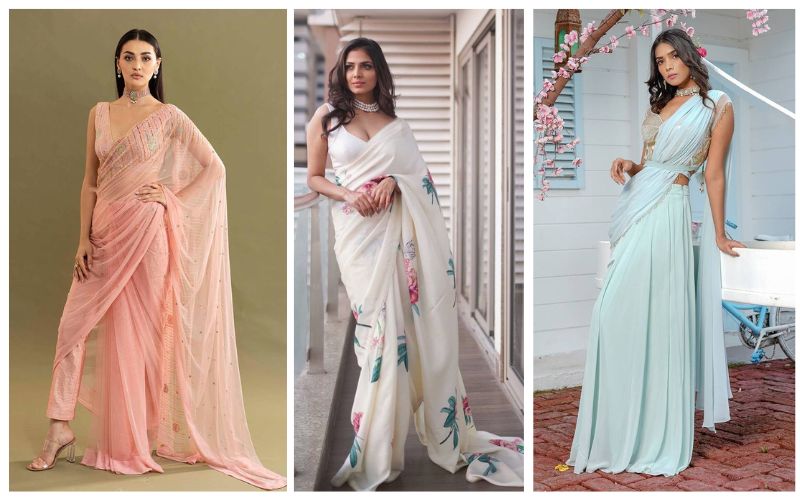
Colors: Trending saree colors currently encompass a huge palette. We are seeing everything from light pastel shades to glamorous jewel hues. Earthy tones like beige, olive green, and brown have also made a major comeback.
Designs: Right now, the fashionistas are going forward with the less-is-more approach. Minimalistic trends such as minimal borders and clean pallus are a hit.
Blouses: This year, the major focus is on the blouse. Statement blouses, such as corset style, halter neck, and sequin blouses, are garnering major love.
Fabrics and Drapes: Leaning even more into the minimalism trend, light fabrics with soft drapes are the talk of the town this year. You can see fabrics such as organza, georgette, and chiffon trending because of their soft feel and excellent drape.
How To Drape a Saree (Nivi Style)
Step 1: Start by putting on the blouse and the petticoat. Ensure that the petticoat is snug, as it will give support to the saree.
Step 2: Take one end of your saree and tuck it into the right side of your petticoat. Wrap it around your waist completely.
Step 3: The next step is to make the pleats. Make around 5-7 pleats, each 5 inches wide, and tuck them at the center of your saree.
Step 4: The remaining fabric should be wrapped around the waist again, ensuring that it gives a smooth fall.
Step 5: Drape the pallu on your left shoulder. It can be worn pleated or loose as per your preference.
Step 6: Make sure that your saree reaches the floor by adjusting it. Lastly, secure the pleats and pallu with a safety pin or saree pin
Here is a Detailed Guide on Nivi Style Saree Drape
Fabulous Saree Draping Styles That You Should Know About
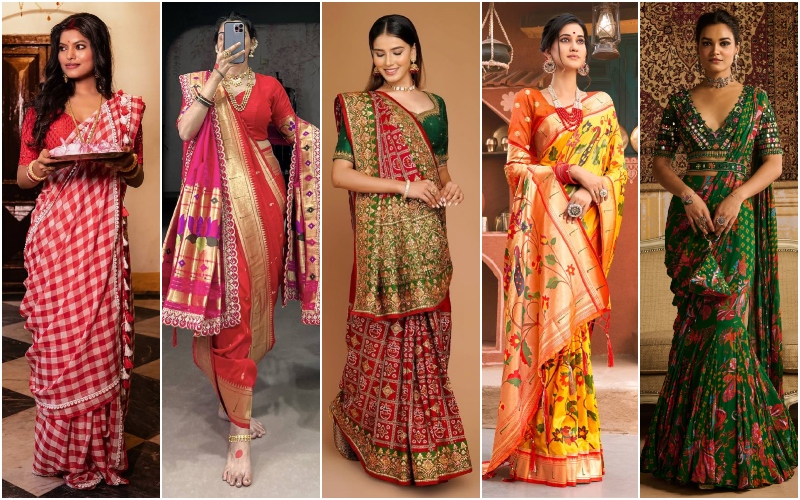
- Nivi Style: This is the most common draping style. It is draped with pleats in the front and the pallu on the left shoulder.
- Bengali Style: This drape comes with no pleats. The wide pallu is draped around the body and over both shoulders.
- Gujarati Style: In this style, the pallu comes from the back to the front over the right shoulder. The Gujarati drape style is especially popular for festivals like Navaratri
- Nauvari or Kasta: This draping style from Maharashtra is worn like a dhoti with pleats tucked into the back. This saree style is draped without the petticoat, and the saree is nine yards long.
- Coorg Style: This distinctive draping style comes with no pleats. The saree is instead wrapped around the body twice, and the pallu is thrown over the shoulder.
- Mekhela Chadar: This draping style originated from Assam and comprises the Mekhela (lower garment) and the Chadar (upper garment). The Mekhela is gracefully wrapped around the waist, while the Chadar is draped over the shoulder elegantly.
- Angrakha Drape: This Angrakha style is very unique and involves wrapping the pallu around the body in a criss-cross manner– resembling the panels of an Angrakha.
- Mermaid Style: This modern draping style involves draping the saree tightly around the hips and legs, accentuating your figure.
- Double Saree Drape: This style involves draping two sarees together for a voluminous look. It creates a stunning layered look that looks absolutely ethereal.
- Pinkosu Style: In this draping style, the pleats are arranged at the back instead of the front, and the pallu is draped over the front shoulder exquisitely.
To know more in detail about different saree draping styles, click here
Types Of Sarees According to States
- North Indian Sarees: The northern part of India is a treasure trove of beautiful sarees. Saree styles like the Banarasi, Chikankari, Bhagalpuri silk, and Pashmina sarees all originate from here.
- South Indian Sarees: Beloved Indian sarees such as Kanjeevaram, Mysore silk, Kasavu, and Pochampally Ikkat are from the South of India.
- Eastern Indian Sarees: East India has given birth to exquisite saree styles such as Baluchari, Tant, Bomkai, Sambalpuri, and the Assam silk saree.
- West Indian Sarees: The western states of India, like Maharashtra and Gujarat, are home to beautiful sarees such as Bandhani saree, Patola saree, Leheriya saree, and Paithani saree.
- Central Indian Sarees: Sarees such as Chanderi and Maheshwari can trace their origins to the central Indian state of Madhya Pradesh.
- Some lesser-known sarees from states: Many Indian sarees are underrated and deserve more love and attention. Some examples include the Kotpad saree from Odisha, the Garad Korial from West Bengal, the Sungadi from Tamil Nadu, and the Khana from Maharashtra.
- Modern and Contemporary Styles: The changing trends in fashion have given rise to many modern saree silhouettes. Some popular examples include the dhoti sarees, pant-style sarees, lehenga sarees, and pre-draped sarees.
Beyond Borders – Sarees From All Over The World
- Bangladesh: The national attire for women in Bangladesh is the saree. While most women choose to wear the Dhakai Jamdani weave, other variants like the Dhakai Banarasi saree, Rajshahi silk, Tangail sari, Tussar silk, and Katan sari are also very popular.
- Sri Lanka: The Kandyan-style saree is renowned for being the national dress of Sinhalese women. This style, which is also known as Osariya, consists of a blouse that covers the midriff completely. The pallu of the saree is neatly pleated instead of being free-flowing.
- Nepal: Nepal is home to a very special type of saree draping known as Haku Patasihh. In this style, the sari is draped around the waist, and the pallu is replaced by a shawl.
- Pakistan: Sarees are very popular in Pakistan and are often worn to showcase class and status. Some common types of sarees adorned are Phulkari, Kota Doria, Banarasi, and Ajrak.
Some Lesser-Known Facts About the Saree
- In ancient India, the saree was actually a unisex garment, worn by both women and men. Gender specific clothing came into play much later.
- For a long time, sarees were worn without blouses. It is only during the colonial period, when the British made wearing of the blouses compulsory, that the blouse became mainstream.
- Some sarees like the Kanchipuram, Banarasi, and Patola can take anywhere from six months to years to weave.
- Each region in India has its own distinct weave. From the Banarasi in the north to the Kanjeevaram in the south, each saree style is a hallmark of regional identity and pride.
- Sarees are extremely versatile and can be styled in countless ways. Switching up the draping style, blouse, or pleats can completely transform a saree.
- In many regions of India, the color of the saree represents a woman’s marital status. For example, white for widows and red for newly married women.
- Sarees are also wearable stories with many motifs and symbols on the saree depicting local religious stories, mythology, and culture.
- Sarees have also inspired global fashion immensely, with international designers borrowing elements like drapes, pleats, and borders.
- Originally, the saree had no fixed length and was woven based on a wearer’s height and purpose. The modern 5.5- 6 meter length only became popular after industrial weaving was introduced.
Tips On Choosing The Right Saree
- Choose according to the Occasion: For daily wear, go for simple cotton or linen sarees. Light silks, cotton blends work well for office wear. Banarasi and Kanchipuram sarees should be reserved for special occasions, such as weddings. For parties, go for glam fabrics like net, satin, and chiffon.
- Be Mindful of the Weather: For hot climates, breathable fabrics such as cotton and muslin are the best choice. For cooler temperatures, silks and velvets work well. Georgette, crepe, and chiffon are suitable for all climates as they are easy to manage.
- Opt for Colors that Suit Your Skin Tone: If you are warm-toned, then red, orange, mustard, and gold bring out your glow. However, if you have a cool tone, then opt for blue, green, purple, and silver. Colors like pastels, beige, peach, and pink suit women with a neutral tone very well.
How To Care For and Store Sarees
- Hand washing only works for cotton and daily wear sarees. However, if your saree is ornate and composed of fabrics such as silk or velvet, it is best to get it dry cleaned.
- Always remember to dry the saree in the shade and avoid direct sunlight.
- While ironing, use a low or medium setting. Always iron on the reverse side of the saree to avoid damaging the embroidery and embellishments.
- Refold sarees every three-six months to avoid creases.
- Store sarees in cotton or muslin bags to let them breathe. Avoid plastic covers completely as they can trap moisture.
Here are quick useful tips on how to take care of traditional expensive sarees
The Complete Guide To Online Saree Shopping
- Check the authenticity of the fabric. Look for hallmarks and silk marks to ensure that the saree you are buying is genuine.
- Be mindful of the length and borders of the saree, as you don’t want the saree to be too long or too short.
- Go through the product images carefully.
- Compare your choice of saree on various platforms for price, quality, and offers. Sometimes the same product is available on different websites, giving you a variety of choices.
- Look for customer images and reviews as they will give you a clear idea of how the saree looks in real time.
- Pick trusted platforms for your saree shopping as they give quality assurance and have accurate product information.
FAQs
1. Is it sari or saree?
Both these terms are correct. While sari is the original term derived from Sanskrit, saree is the common English spelling.
2. How many types of Indian sarees are there?
While the number isn’t fixed, it is generally accepted that India has over 100+ different types of sarees.
3. What is the standard length of an Indian saree?
The standard length of an Indian saree is anywhere between 5.5 and 6 meters.
4. Which type of saree is best?
No saree can be considered the best technically. The best saree totally depends on the occasion, personal style, and preference.
5. Which saree is the queen of the saree?
Luxurious sarees such as Banarasi saree and Kanchipuram saree are often considered the queens of sarees.
6. Which saree is more expensive?
Sarees with intricate handwork, zari, rare weaving techniques, and traditional craftsmanship are typically more expensive. Some examples include the Banarasi silk saree, Kanjeevaram silk saree, and the Patan Patola saree.
7. Which type of saree is soft?
Cotton, chiffon, georgette, linen, Mysore silk, Kanchipuram silk, and Tussar silk sarees are very soft.
8. What is the difference between handloom and machine-made sarees?
Handloom sarees are hand-woven on traditional looms. On the contrary, machine-made sarees are produced on power looms.
9. Where can you buy Indian sarees online?
While shopping for Indian sarees online, only go for trusted platforms. Mirraw is one such online platform that offers thousands of sarees at the best prices and quality.
10. How can you get the best price when buying sarees online?
Look for seasonal discounts, offers, and free shipping to get the best deals while saree shopping online.