

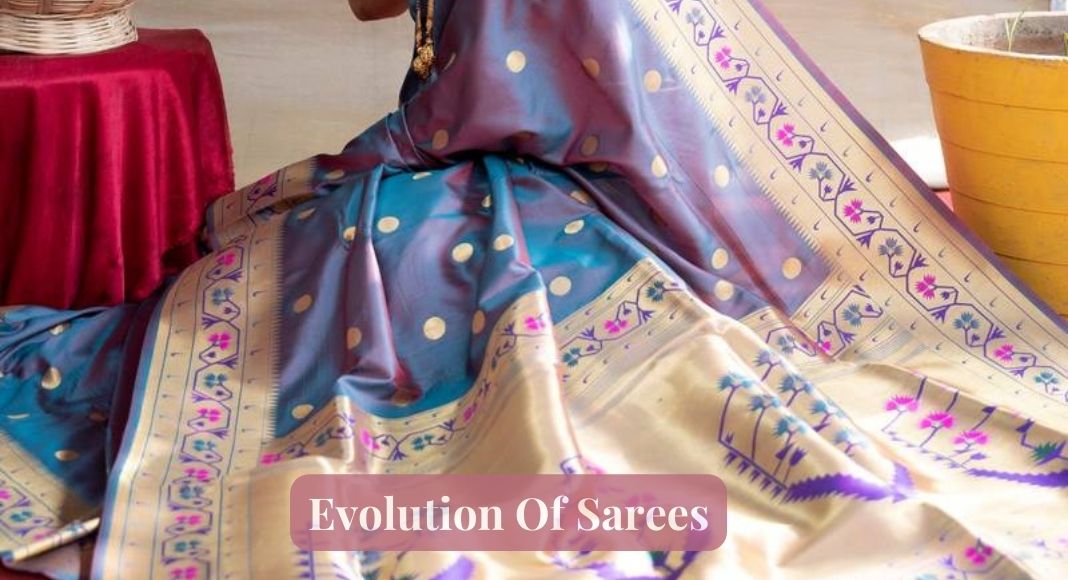
The saree is the identity of an Indian woman. It is associated with India’s culture and values that have passed down through generations. Be it everyday wear to special occasions, the saree has always held a special place in a woman’s life. Over the years, the sarees have evolved in terms of style, fabric, and even draping.
In this blog, we explore how the saree has transformed over the years.
The Origins of the Term Saree
The origin of the term Saree is very simple, and it comes from the Sanskrit term sati or satika. This meant a strip of cloth. However, these also found an account back in 300-100 BCE in the Sanskrit and Buddhist texts. They have mentioned that this saree was considered an unstitched garment. Archaeological findings from the Indus Valley Civilisation have also mentioned sarees.
Here is a comprehensive guide to Indian sarees. Click to know more.
Royal Sarees of the Mughal Era
The sarees were considered a symbol of elegance in the Mughal period. During this period, the women preferred fabrics like silk, muslin, and brocade. What made these sarees attractive is the gold and zari work embroidery.
Apart from gold and zari, chikankari work also flourished during the Mughal rule. Unlike gold and zari work, these embroideries were done using threadwork. Similarly, vine patterns and persian inspired motifs were also popular during the Mughal era.
Colonial Impact on the Indian Saree
The British colonial period has seen significant changes in the saree culture. During this, the sarees had to change as per Victorian norms. There were no changes in the design of the saree but the way Indian women wore it.
Earlier, women wore sarees without a blouse. However, the British introduced the culture of blouses. After this, the blouses with net sleeves, Peter Pan collar and even boat neck became popular. The fabrics that were used heavily during the 19th century were cotton and silk.
Iconic Saree Styles of 1950 – 1990 India
The sarees during the 1950s to 1990s were heavily influenced by India’s social, economic, and cultural shifts. The phase of independence saw sarees in very simple designs made mainly of cotton, khadi and linen. These fabrics not only kept them comfortable and were a symbol of their quest for independence.
Chiffon and georgette sarees with thread and sequin work became a status symbol during the 1960s. These sarees were made more popular by Bollywood actresses.
In the 1970s, women started preferring bright colours, printed patterns and synthetic fabrics. Similarly, sarees turned bold and glamorous, influenced heavily by cinema and television in the 1980s.
Stylish Saree Looks of the 2000s
The 2000s saw a major breakthrough for the saree industry. This was the time when new designers like Manish Mahalotra, Sabyasachi and Tarun Tahiliani were emerging. They put their focus on lightweight fabrics like chiffon, georgette, net and satin. Additionally, they used more sequins, cutdana work and zardozi for their sarees. It was at this time only when pre stitched and ready-to-wear sarees became popular.
How Saree Fabrics Have Changed Over Time?
India’s changing history, climate and technology have a significant influence on the evolution of the saree fabric. Earlier, in ancient India, people used sarees made from natural fibres like cotton and silk. Cotton sustained the tropical climate of India, while silk was used as a status symbol during festivals and ceremonies.
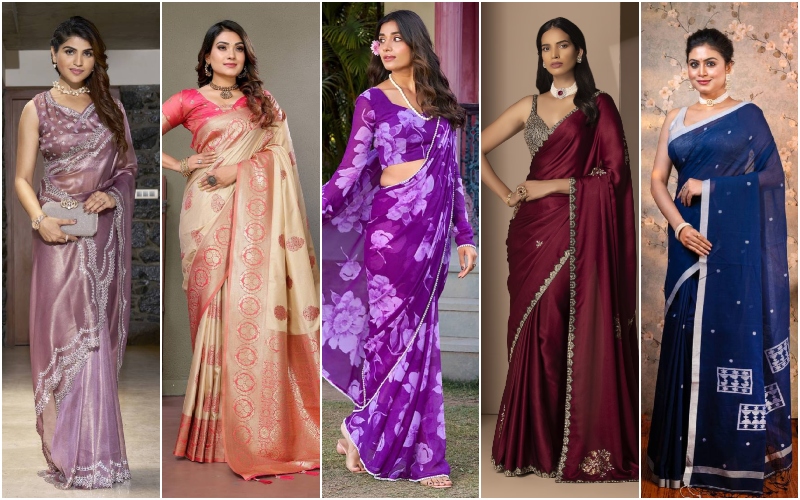
The advancement in weaving technology helped in the development of Banarasi silk, brocade, and fine muslin, often embellished with gold and silver threads. The colonial rule under the British monarchy led to mill-made yarns that made sarees affordable.
Post-independence India saw a revival of indigenous textiles. The textile industry also introduced synthetic fibres like nylon, polyester, and chiffon. So, the saree that you are seeing today is a product of the evolution and experimentation that has been done over the years.
Saree Draping Styles – Then and Now
Saree draping styles have seen quite the evolution over the years. The Nivi draping saree is one of the oldest drapings, which was popularised by Gyanodanandini (wife of Satyendranath Tagore). The belted saree, wherein a kamarbandh was worn around the waist, became popular in the 70s.
The 80s saw the rise of retro sarees by popular actresses like Mumtaz, wherein the saree was draped in layers. Today, the draping has become contemporary and stylish, with techniques like pant style and mermaid style being popular.
Check here for more Innovative Saree Draping Styles
How Pattern, Border and Saree Motifs Have Changed?
One thing that has greatly influenced how we look at sarees today is the patterns and motifs. In ancient India, women used to drape a simple cotton saree without a blouse. The artisans moved to more organic designs in medieval India. They used hand-painting to bring out floral patterns, elephants, peacocks and even temple designs on the sarees.
Embroideries were introduced during the Mughal era. Different forms of embroidery like Chikankari, zardozi, sequin work, and stone work were popular amongst Mughal queens.
Now, saree patterns have become more experimental today. Today, wooden prints have been replaced by digital prints and abstract designs. Similarly, borders have also seen an upgrade, and now minimal saree borders have become very common.
Indian Saree at the Global Stage
It is a moment of pride to see how the saree has travelled all along from India to the global stage. These days, you can spot celebrities donning sarees at international fashion weeks, red carpets and even at film festivals. The craze of sarees is such that international brand Gucci has designed its own version of a saree, which was donned by Bollywood celebrity Alia Bhatt. Other than this, other celebrities like Kim Kardashian, Sophie Turner and Beyoncé have also worn sarees with grace.
Trending Saree Designs in 2026
1. Soft Pastels
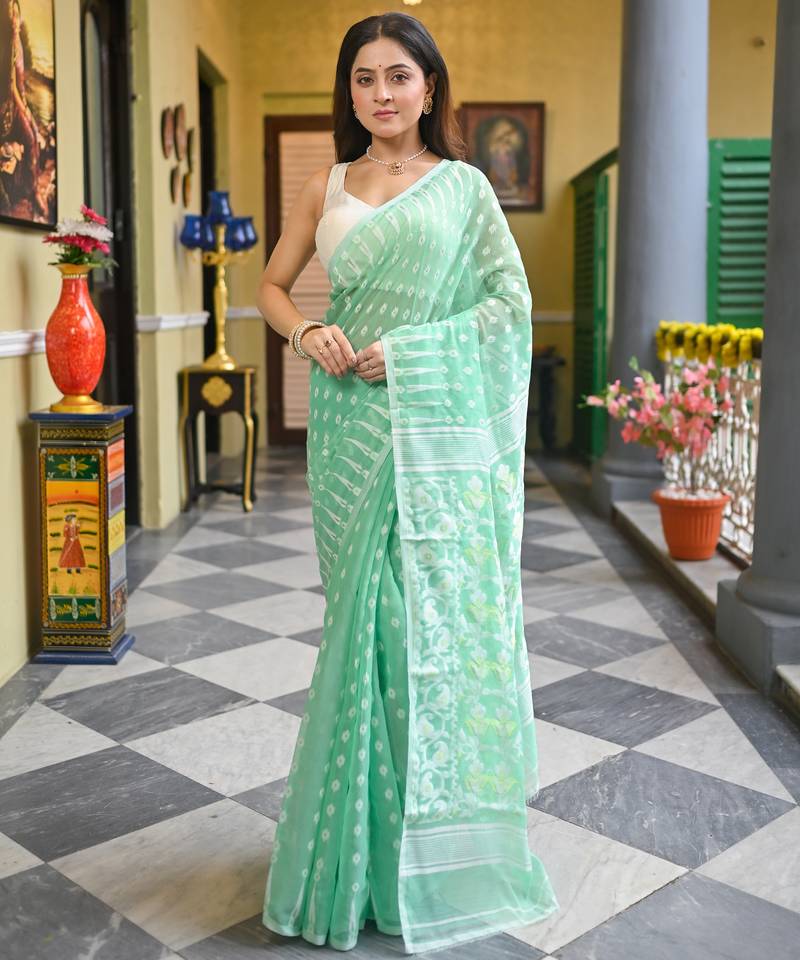
Sarees in gentle pastel shades are everywhere right now. These colours are fresh, and you can wear them during daytime events and office wear also. Some go-to colours for these sarees are blush pinks, mint greens, and powder blues.
2. Pre-Draped Saree
Famous designers have introduced pre stitched sarees for women. These come pre-designed with pleats and pallu that you can wear like a skirt in minutes. This saree style eliminates the hassle of pleating and draping.

3. Lightweight Fabrics
Comfort is key in current saree trends. Women now like fabrics like organza, chiffon, georgette, linen, and soft cotton blends. These fabrics provide easy draping, making them perfect for women who do not know how to drape a saree.

4. Subtle Embellishments
Heavy borders and dense embroidery are no longer popular. Today, designers and even celebrities give more importance to thin borders and delicate handwork. That sequin embroidery, which was popular in the 60s, has made a charming comeback in 2026.

What Lies Ahead for the Saree in Modern India?
The future of the saree feels exciting and full of possibilities. It is no longer limited to Indian fashion but has become a part of everyday wear and for modern wardrobes. Now, designers focus more on simple fabrics and styles, hence it has become more than just a piece of clothing. The craze of sarees is such that now even young girls are loving this 6-yard drape.