

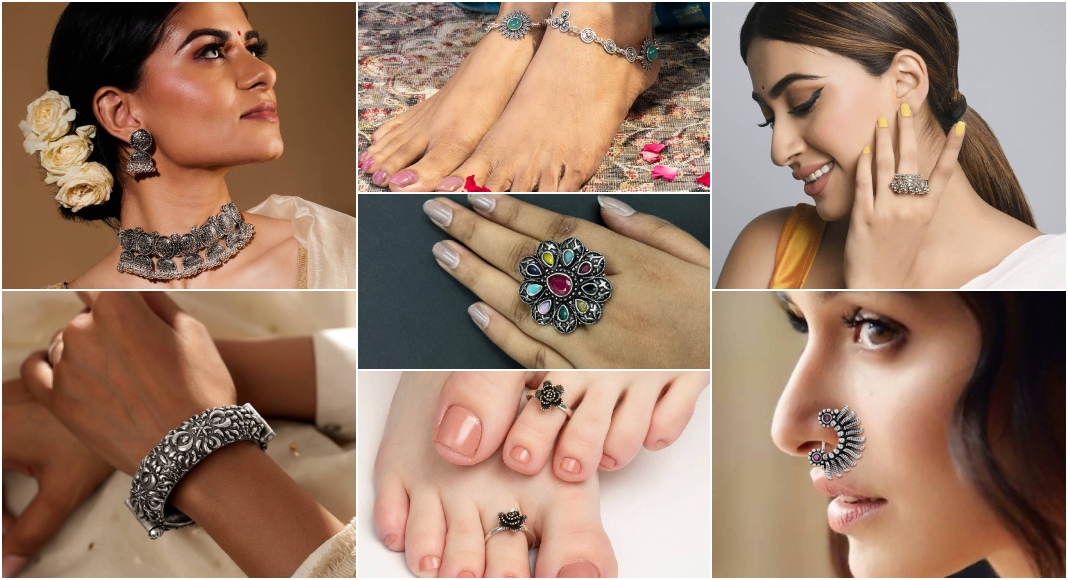
Oxidized jewelry has become very prominent in recent years. You will see it everywhere– in local markets, online stores, fashion exhibitions, and even bridal styling shoots. A lot of people love it because it looks traditional, artistic, and slightly old-world, yet it fits perfectly with modern fashion.
Oxidized jewelry has a dark silver or blackened finish. Instead of being shiny like normal silver or gold jewelry, it has a dull, antique-like appearance. The dark finish gives your jewelry depth and makes the designs stand out clearly.
The biggest difference between oxidized jewelry and traditional jewelry is the look. Traditional silver or gold shines brightly while oxidized jewelry looks vintage and really earthy. It does not sparkle. Instead, it attracts attention through its textures and detailed patterns. Today, oxidized jewelry is worn with saris, kurtis, lehengas, and even jeans. It suits ethnic wear and fusion outfits at the same time. Another reason for its prominence is affordability. It gives a heavy, handcrafted look without being expensive. Because of its bold appearance and easy styling, oxidized jewelry has become a favorite choice for women of all age groups.
The Journey of Oxidized Jewelry Through History
Oxidized jewelry is not a modern invention. Its roots go back hundreds of years, especially in India and other ancient cultures. In India, oxidized jewelry has strong connections with Rajasthan, Gujarat, and South India. Long before machine-made jewelry existed, artisans actually worked with raw materials and natural methods. With time, these metals developed a darker surface because of air and natural chemical reactions.
Instead of polishing the metal repeatedly, the craftsman started appreciating the dark finish. They realized that the blackened surface highlighted carvings and patterns much better than a polished metal.
In Rajasthan, tribal communities wore oxidized ornaments as a part of daily life. These pieces were bold and symbolic. Jewelry was not only a decoration but also a symbol of identity and status. In Gujarat, oxidized jewelry developed alongside mirror work and enamel designs. In South India, temple-style jewelry slowly adopted oxidized finishes for dancers and ritual wear.
Over centuries, oxidized jewelry has moved from being fairly traditional to becoming a fashion statement. Earlier, it was mostly worn by rural communities and performers; today, it is loved by urban women and fashion designers across the country. Even now, oxidized jewelry carries a strong cultural feel. When someone wears it, it immediately reflects tradition and craftsmanship.
Metals and Materials Used in Oxidized Jewelry
Oxidized jewelry can be made using different types of metals. The choice of metal impacts color and durability. Sterling silver is one of the most commonly used metals. When silver is oxidized, it develops a dark grey or black tone that looks really rich and antique. This type of jewelry is more expensive but actually lasts longer.
Brass is another popular metal. It is affordable and holds oxidation really well. Many statement necklaces and earrings are made from brass because it allows detailed carving. Copper is also used, especially in handmade jewelry. It gives you a slightly reddish undertone beneath the black finish, creating a warm look.
Some jewelry is made using metal alloys, which are mixtures of metals. These are lightweight and budget-friendly, making them suitable for everyday wear. Oxidization happens either naturally or through a chemical process. In traditional methods, metal darkens naturally over time. Modern jewelry chemical treatment is used to create an instant oxidized finish. Oxidized jewellery is different from antique jewelry, and antique jewelry refers to old heritage pieces, while oxidized jewelry is newly made but designed to look old.
Different Styles of Oxidized Jewelry
Oxidized jewelry comes in many forms, from simple everyday pieces to bold statement designs.
Oxidized Necklaces
They are one of the most prominent types of jewelry. Choker necklaces sit close to your neck; they often feature floral or temple-inspired elements. Long oxidized chains are usually paired with pendants that have engraved designs or goddess figures. Tribal necklaces are heavier, and you can often layer them for a strong ethnic appearance. Statement necklaces are large and eye-catching. You can wear it as the main accessory with simple outfits.

Oxidized Bangles and Bracelets
Thin oxidized bangers can be worn in sets and create a soft jingling sound. They are perfect for everyday wear with ethnic outfits. Cuff bracelets are bolder and broader. They usually have carved patterns, and you can wear them alone as a statement piece. Layered bracelets combine multiple designs and give you a boho feel.

Oxidized Rings
Rings in oxidized jewelry are often large and artistic. Cocktail rings have oversized designs, and they become the center of attention. Stacking rings are slim, and you can wear them together on multiple fingers. Additional oxidized rings feature floral or tribal patterns.

Anklets and Toe Rings
Oxidized anklets have a strong ethnic charm. Some are simple chains while others include engraved pieces. Toe rings are widely common in Indian tradition. They are available in oxidized designs with beautiful detailing.

Other Oxidized Jewelry Pieces
Apart from regular ornaments, oxidized jewelry also includes hair clips, brooches, and nose pins. These pieces are often used for dance performances or festive styling and photo shoots.

Regional Styles of Oxidized Jewelry Across India
- Rajasthan Influence
Rajasthani oxidized jewelry is heavy and bold. It often features large pendants and thick chains besides tribal patterns. A lot of designs resemble Kundan jewelry, but they are finished in oxidized metal. The pieces look powerful and dramatic.
- Gujarati Influence
Gujarati oxidized jewelry is colorful. Mirror work and enamel are often combined with oxidized metal. The designs are lively and perfect for garba and other celebrations. The jewelry looks vibrant and full of movement, making it perfect for festivals and cultural events.
- South Indian Influence
South Indian oxidized jewelry draws inspiration from temples and classical art. You can often see elements of gods and goddesses, lotuses, and traditional carvings. The designs are structured reflecting the beauty of temple sculptures. The style is commonly worn for classical dance performances or traditional functions.
- Punjabi and Haryana Influence
Oxidized Jewelry from Punjab and Haryana is known for its strong presence. The pieces are usually large and eye-catching. Oversized earrings and broad necklaces are really prominent. The style matches well with vibrant suits and festive Punjabi outfits.
When Does Oxidized Jewelry Feel Just Right to Wear?
One of the biggest reasons oxidized jewelry is so loved is that it fits easily into daily and festive life. During festivals like Diwali, Navratri, and Durga puja, oxidized jewelry adds a small touch without feeling too heavy. Statement necklaces and Jhumkas look beautiful with festive saris and lehengas. Dark silver jewelry stands out beautifully against bright fabrics and gives you a complete festive feel. For weddings, you can choose heavy oxidized necklaces or layered pieces. They look rich and traditional.

Oxidized jewelry also works very well every day. Simple earrings, small rings, or light pendants go perfectly with cotton kurtis, and handloom saris. They add style without feeling heavy or uncomfortable. Fusion fashion is another space where oxidized Jewelry shines. It looks amazing with Indo-Western outfits like long skirts, crop tops, or dresses. The contrast between modern clothes and traditional jewelry creates a unique and stylish look.
Even for office or small parties, oxidized jewelry can be worn if you choose it correctly. Small studs, thin bangles, or subtle necklaces add personality without looking loud. It gives a classy touch while still staying comfortable.
Simple and Practical Ways to Style Oxidized Jewelry
Styling oxidized jewelry does not require expert knowledge. When you are wearing saris, oxidized jewelry pairs beautifully with cotton, linen, and plain silk sarees. A heavy necklace works beautifully with simple blouses. For printed sarees, smaller jewelry pieces keep your look balanced.
With lehengas or salwar suits, oxidized Jhumkas work very well. If the outfit is colorful, plain oxidized jewelry looks best. However, if the outfit is simple, you can choose heavier jewelry. Fusion styling with oxidized jewelry is popular. You can wear big Jhumkas with jeans and kurtas, or pair a statement necklace with the maxi dress. Long skirts and crop tops also look great with oxidized chokers or layered necklaces.
Layering jewelry should be done really carefully. Wearing two oxidized necklaces together works well if they are of different lengths. But mixing too many pieces at once can make you look messy. You should avoid wearing heavy earrings, necklaces, and rings altogether. Oxidized jewelry looks best when one piece is highlighted, and the rest are all kept minimal. Choosing jewelry according to your neckline is also important. With deep necklines, chokers, and bold necklaces look good. High necklines look better with long earrings instead of necklaces.
Face shape also matters. Long earrings suit round faces, while round Jhumkas look beautiful on oval faces. The small details help your jewelry sit better on the body.
Taking Care of Oxidized Jewelry – The Right Way
Oxidized jewelry is very easy to maintain, but it does need gentle care. However, rough handling can damage the finish.
- Cleaning should always be soft and minimal. A clean, dry cloth is usually enough after every use. If your jewelry becomes dirty, mild soap and water can be used very carefully, following immediate drying.
- Harsh chemicals should never be used. Detergents or toothpaste can remove the oxidized layer easily, hence avoid them.
- Perfumes, deodorants, and hairsprays should be applied before you wear your jewelry. The products can fade the dark finish over time.
- Storage is very important. Oxidized jewelry should always be stored separately. When your pieces rub against each other, they scratch easily.
- Keeping jewelry in cloth pouches or anti tarnish bags help protect your surface. You should avoid plastic bags as they trap moisture.
- You shall never polish your oxidized jewelry like silver jewelry. Polishing removes the black layer, and once that is gone, the joinery loses its entire look. With proper storage and gentle handling, oxidized jewelry can last you for several years without losing its charm.
How to Buy Oxidized Jewelry?
Buying oxidized jewelry might seem easy, but quality can vary a lot. Knowing a few basics helps you choose better pieces. Oxidized jewelry has clear carvings and sharp patterns. Blurred designs really mean poor finishing. The metal should feel strong, not very thin. Lightweight jewelry is completely fine, but it should not be fragile.

Silver-based jewelry lasts longer than alloy jewelry. Brass jewelry is affordable and works well for statement designs. The price depends on the metal design and craftsmanship. Simple earrings can be very affordable, while large, handcrafted necklaces might cost more. That is oxidized jewelry available at every price range, from budget shopping to designer collections.
Online shopping allows you to get access to huge collections. Local exhibitions and handicraft stores often offer you good-quality pieces. Online shopping provides you with more variety. While buying online, you must check close-up photos and material descriptions carefully. Trusted brands and handmade sellers usually mention the metal type.
Oxidized Jewelry Trends People Are Loving in 2026
Oxidized keeps evolving with fashion trends. 2026 has brought many interesting styles. Large statement necklaces with clear designs are trending. Instead of extremely heavy layers, people prefer bold single pieces. Earrings are becoming more experimental. Asymmetrical earrings and oversized Jhumkas are gaining prominence.
Rings are also trending, especially large cocktail rings and adjustable designs that fit all finger sizes. Minimal oxidized jewelry is becoming prominent among young buyers. Small pendants, slim bangles, and tiny studs are preferred for daily wear. Many designers are even mixing traditional elements with modern styles. Temple designs combined with geometric patterns are being widely seen.
Celebrity and influencer styling has played a major role. Oxidized jewelry is now one with gowns, jackets, and modern sari drapes. The biggest trend is comfort. People want somebody who looks bold but feels light and very easy to wear.
FAQS
- Does oxidized quality cause skin allergies?
Most oxidized jewelry is safe for regular use. But if you have sensitive skin, you should avoid low-quality alloys.
- How long does the oxidized finish stay?
With proper care, the finish can last you possibly for years. Frequent exposure to water and chemicals might fade it faster.
- Can oxidized jewelry be worn with Western clothes?
Yes, oxidized jewelry looks beautiful with dresses, skirts, jackets, and Indo-Western outfits when you style it properly.
- What is the difference between oxidized and antique jewelry?
Oxidized jewelry is newly made with a dark finish, while antique jewelry is old or vintage jewelry that holds historical value.