

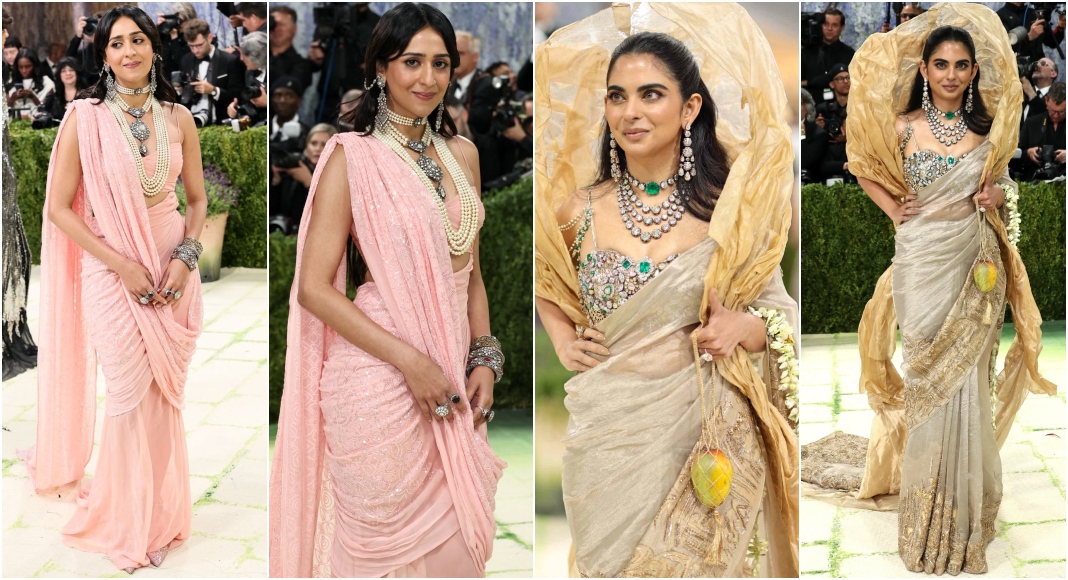
The Met Gala 2026 celebrated the theme “Fashion is Art,” and this year, Indian fashion found one of its strongest moments on the global red carpet. While dramatic gowns, sculptural silhouettes, and experimental couture dominated the evening, sarees emerged as one of the most powerful fashion statements of the night. South Asian celebrities and cultural icons used the six-yard drape not simply as traditional attire, but as wearable art that represented craftsmanship, heritage, storytelling, and modern couture design.
The Met Gala has often featured Indian embroidery and luxury craftsmanship in past years, but 2026 felt different. Sarees were no longer treated as “ethnic alternatives” to gowns. Instead, they became central fashion statements that aligned perfectly with the gala’s artistic theme. Celebrities blended handwoven textiles, archival references, heirloom jewelry, and avant-garde silhouettes to create some of the most memorable looks of the evening.
Isha Ambani’s Gold-Woven Saree Became the Biggest Indian Fashion Moment of the Night
Among all South Asian attendees, Isha Ambani delivered one of the most talked-about saree looks of the gala. She wore a custom Gaurav Gupta sari-gown crafted with pure gold threads and paired it with a sculptural cape and a heavily embellished diamond blouse. The ensemble was woven by artisans from Swadesh and featured hand-painted Pichwai-inspired motifs influenced by ancient Indian frescoes.
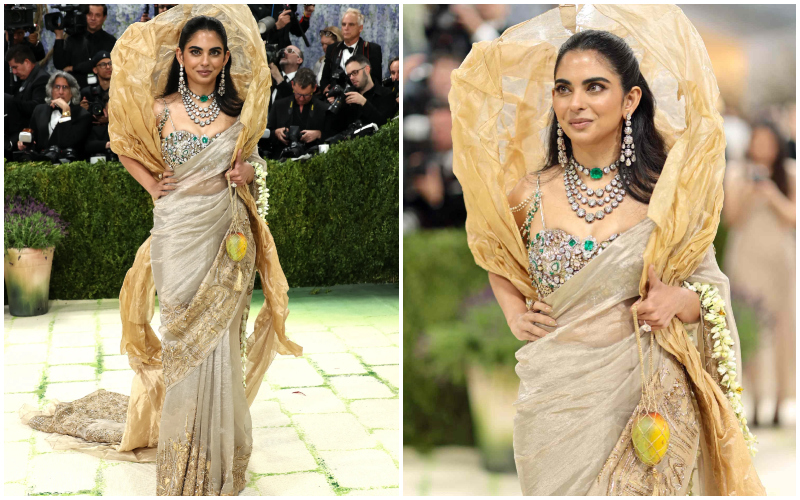
What made the outfit extraordinary was its balance between heritage and futuristic couture. The saree preserved the fluid elegance of a traditional drape while incorporating the dramatic structure that has become synonymous with Gaurav Gupta’s couture identity. The look was described as “wearable art,” highlighting the fact that the outfit reportedly took over 1200 hours to create using heritage weaving techniques.
The styling also played a major role in elevating the ensemble. Styled by Anaita Shroff Adajania, the look included heirloom diamonds that added royal grandeur without overpowering the craftsmanship of the saree itself. The entire appearance reflected how Indian couture is now competing on equal footing with global luxury fashion houses at major international events.
Try this celebrity-inspired saree style with Mirraw sarees

Silver Tissue Embroidered Saree
Princess Gauravi Kumar Brought Royal Saree Heritage to the Red Carpet
Another unforgettable saree appearance came from Princess Gauravi Kumari, who paid tribute to Indian royal heritage through fashion. She wore Maharani Gayatri Devi’s vintage chiffon saree styled by designer Prabal Gurung.
The look stood apart because it relied on elegance and historical significance rather than dramatic embellishment. Maharani Gayatri Devi remains one of India’s most celebrated style icons, known for her understated chiffon sarees and refined royal aesthetic. By reviving a vintage drape connected to Indian fashion history, Gauravi Kumari transformed archival clothing into a modern couture statement.
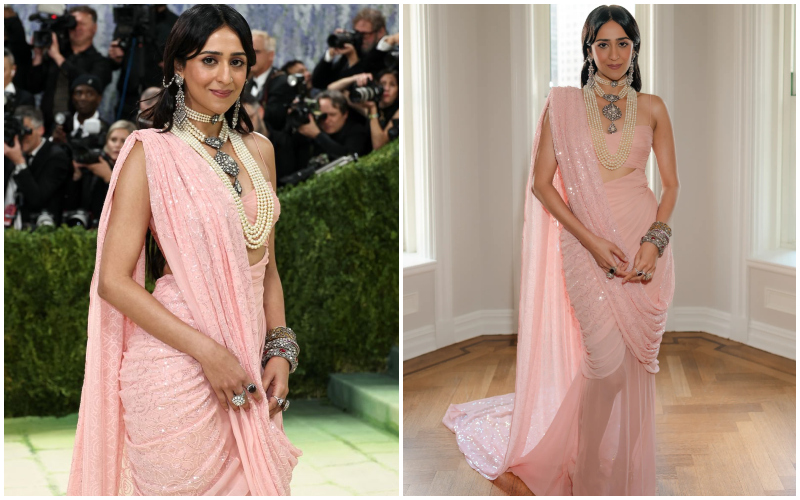
The saree also highlighted a growing global appreciation for vintage textiles and sustainable luxury. Rather than choosing a completely new couture creation, the royal chose a heritage garment with emotional and cultural value. This aligned perfectly with the Met Gala’s larger artistic narrative, where fashion was treated as a form of preservation, memory, and identity.
Fashion critics and social media audiences praised the appearance for bringing quiet sophistication to a red carpet otherwise dominated by maximalism and theatrical styling.
Recreate this iconic saree look with similar styles from Mirraw

Soft Pink Ombre Gradient Drape Saree Set
Sarees Became Symbols of Art, Craftsmanship, and Identity
One of the most significant outcomes was the global visibility given to Indian textile traditions. South Asian attendees used the red carpet to spotlight Indian artisanship and heritage craftsmanship.
Unlike conventional red carpet gowns, sarees naturally carry layers of cultural storytelling. Every weave, embroidery technique, border motif, and drape style reflects regional traditions and historical influences. At this year’s gala, celebrities used these details intentionally:
- Gold weaving referenced royal Indian textiles
- Pichwai motifs connected fashion with traditional Indian art
- Vintage chiffon sarees highlighted royal heritage
- Sculptural drapes blended couture with classical silhouettes
- Heirloom jewelry emphasized generational craftsmanship
The saree’s adaptability also became clear on the red carpet. Some celebrities embraced traditional elegance, while others experimented with cape structures, metallic finishes, and architectural tailoring. This versatility allowed the garment to fit seamlessly into the gala’s avant-garde fashion environment.
Check Also Met Gala 2026 Jewelry Trends: Diamonds, Pearls, and Archival Luxury
Why the Met Gala 2026 Was a Landmark Moment for Saree Fashion
Indian fashion on international carpets was often limited to embroidery references or heavily embellished gowns inspired by South Asian aesthetics for years. This narrative has seen a beautiful shift in the 2026 Met Gala, making the saree a centrepiece.
The event showed that Indian draping traditions can exist comfortably within contemporary haute couture conversations. Designers did not westernize the saree to make it globally acceptable. Instead, they amplified its design pattern with modern elements, making it a buzz across social media, bridal couture trends, and festive fashion collections. Some great options that have seen an uptick in recent times are metallic tissue sarees, archival drapes, handwoven textiles, structured blouses, and couture-style pallu designs.
Conclusion
This Met Gala saw that sarees are not merely secondary fashion choices. Rather, these can take the centre and shine when you do proper styling. Celebrities like Isha Ambani and Princess Gauravi Kumari have shown how the saree can move effortlessly between heritage and high fashion while still retaining its cultural soul.