

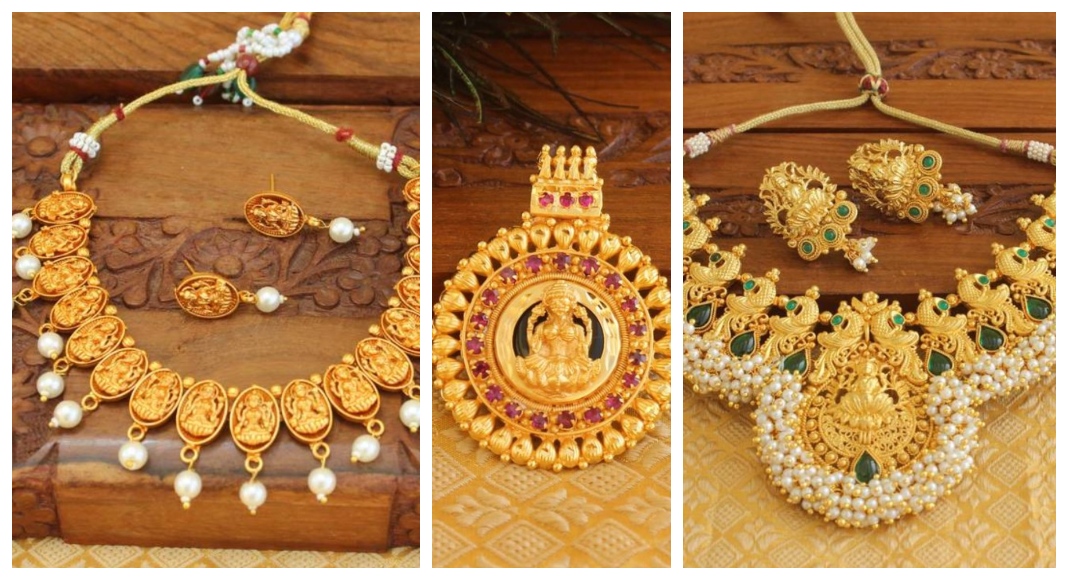
If you have ever stood in front of a mirror wearing a silk sari and added a piece of temple jewelry, you know the feeling; the whole look changes. It feels richer and almost sacred. That’s the magic of South Indian temple jewelry.
You need to know that temple jewellery never tries too hard to grab attention. It doesn’t rely on your flashy trends or modern styling tricks. Instead it carries a neutral richness that comes from history, culture and faith. For generations you would have seen women wearing these ornaments during weddings, festivals and classic dance performances. It has always been present in important life moments shining softly while holding centuries of tradition. What makes temple jewelry really special is its spiritual connection.
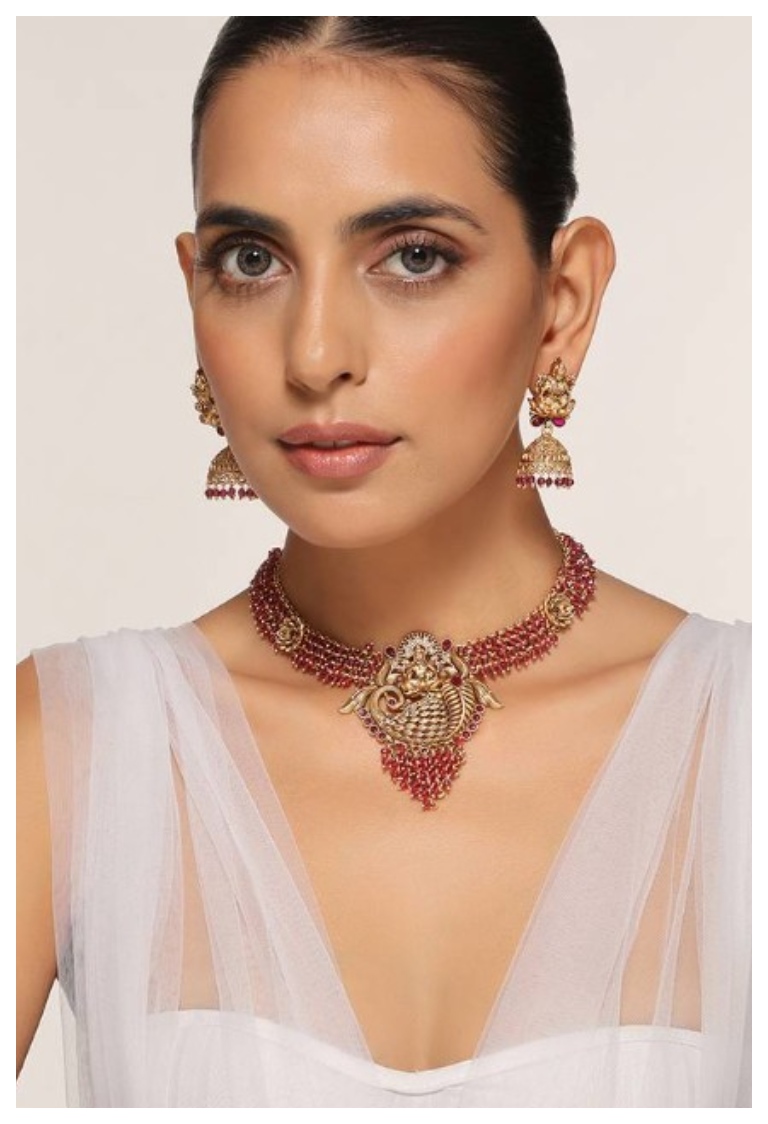
Every design is inspired by ornaments that are worn by gods and goddesses and South Indian temples. Of this each piece feels really powerful; you are graceful at the same time. It is different from fashion jewelry that keeps on changing season by season. Temple jewelry has remained almost untouched by time and honestly that’s exactly why it feels so rare and meaningful today. When you look at temple jewelry you are not just admiring craftsmanship you are actually witnessing a story that has travelled through centuries.
History of Temple Jewellery
Its roots go back to the Chola dynasty between the 9th and the 13th centuries. This was the time when South Indian temples were built with extraordinary detail, covering gopurams, stone carvings, and sculptures that still leave us in awe today.
During this time, jewelry was created mainly for temple idols. The ornaments were offerings made with care, belief, and reverence. Gold was not chosen because it was precious but because it was believed to carry purity and divine energy.
Later, temple dancers known as devdasis began wearing similar jewelry while performing inside temples. The dances were not entertainment in the modern sense; they were offerings. The jewelry they wore reflected the same richness and spirituality seen on the idols.
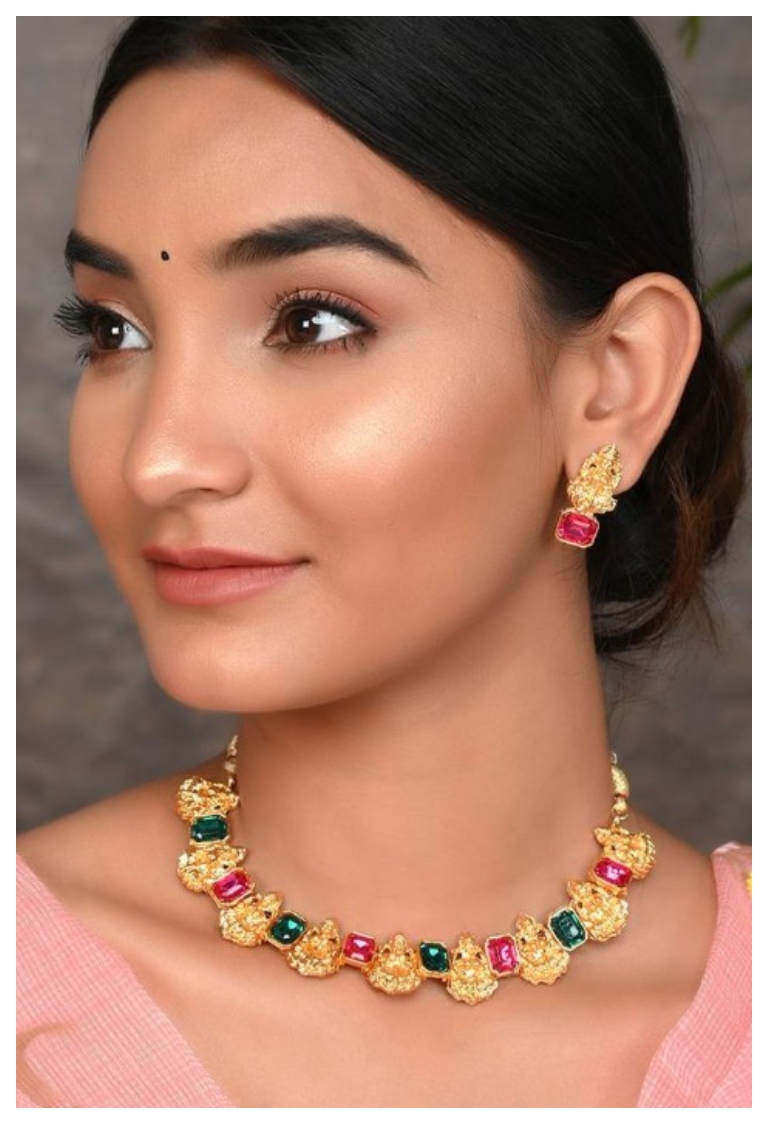
At first, these ornaments never left temple spaces, but as kings and royal families admired the craftsmanship, temple jewelry slowly moved into palaces. Eventually, it found a place in weddings and functions, especially in South India.
Over centuries, what started as a sacred temple adornment became a symbol of tradition and pride. Regions like Tamil Nadu and Andhra Pradesh became towns for this jewelry, each adding to its own local touch.
Skilled Craftsmanship Behind every jewelry piece
One of the most beautiful things about temple jewellery is that it’s still deeply human. Real hands make it, and real families protect the craft.
- The materials that give it soul
Originally, temple jewelry was made using pure gold. Rubies and pearls were added carefully, not randomly. Each stone had a meaning, and each placement mattered. Today a lot of pieces are crafted using silver with gold plating, which allows you to wear and enjoy the style. Semi-precious stones and Kundan work help recreate the same traditional richness without losing authenticity.
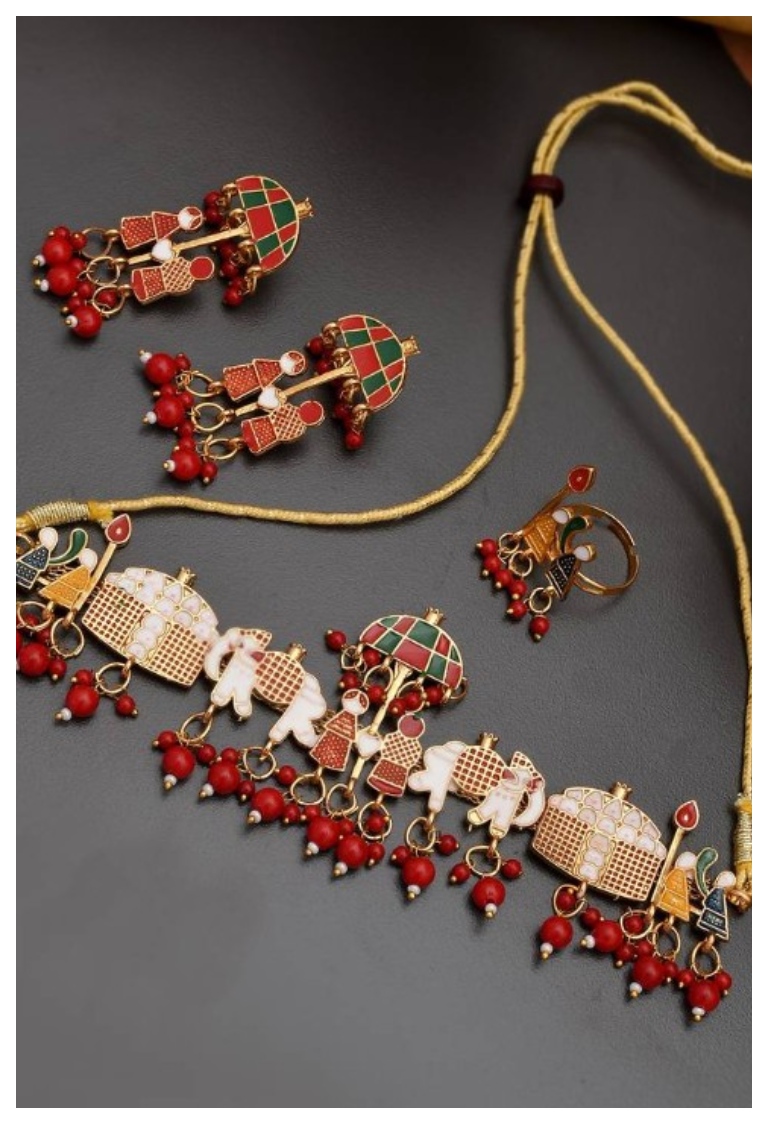
- How time and patience shape each piece
Temple jewelry takes time; there are no shortcuts here. Fine metal wires are twisted to form patterns. Tiny beads are added one by one to create texture, and enamel colors are filled carefully, never rushed. Faces of goddesses, Lotus flowers, and elephants are all carved by the handful. This is the only reason why temple jewellery never looks perfect in a factory-made way; it looks alive.
- Tradition meets modern comfort
Modern life has changed, and temple jewelry has gently adapted to it. Today, you can see designs that are lighter and very easy to wear. You can comfortably wear it for long weddings and celebrations, but the soul stays traditional, and the experience feels easier.
The many beautiful forms of temple jewelry
Temple jewelry is not one single piece; it is a complete language of ornaments, each one playing its part.
- Necklaces that carry presence
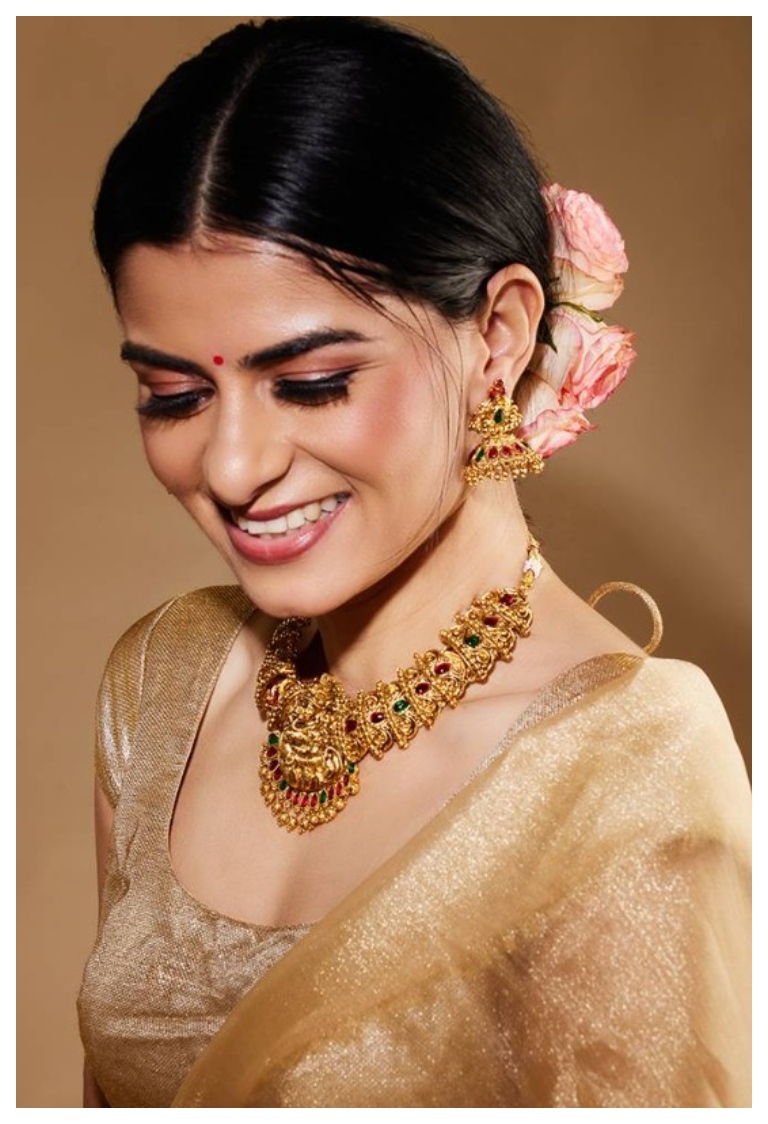
Temple jewelry necklaces do not try to be subtle, and they should not. Long Haram necklaces often feature goddess Lakshmi or temple carvings. They sit heavily on the chest, grounding the entire look. Kasu mala Necklaces made with coin-shaped designs have always symbolized prosperity and abundance. Choker necklaces close to the neck, add structure and new strength. When layered, they create a look that feels royal.
- Earrings that frame your face
Jhumkas are probably the most loved temple jewellery earrings. The gentle movements add life to your face, and earrings usually feature floral elements and feel quieter but equally traditional. For wedding and dance performance long earrings help highlight your expressions and add drama without looking excessive.
- Bangles that feel auspicious
In South Indian culture, bangles are more than just decoration. Temple jewelry bangles are thick and often carved with traditional patterns or goddess figures. Bracelets or kadas add balance to heavy necklaces and complete the look beautifully.
- Head and hair ornaments that transform your look
This is exactly where temple jewelry truly shines. A maang tikka resting on the forehead instantly adds grace. The chutti outlining the hairline makes your face glow. The Jada running along the braid is beautiful and symbolic. Armlets worn on your upper arms are a touch of old-world royalty.
- Waist and foot jewelry
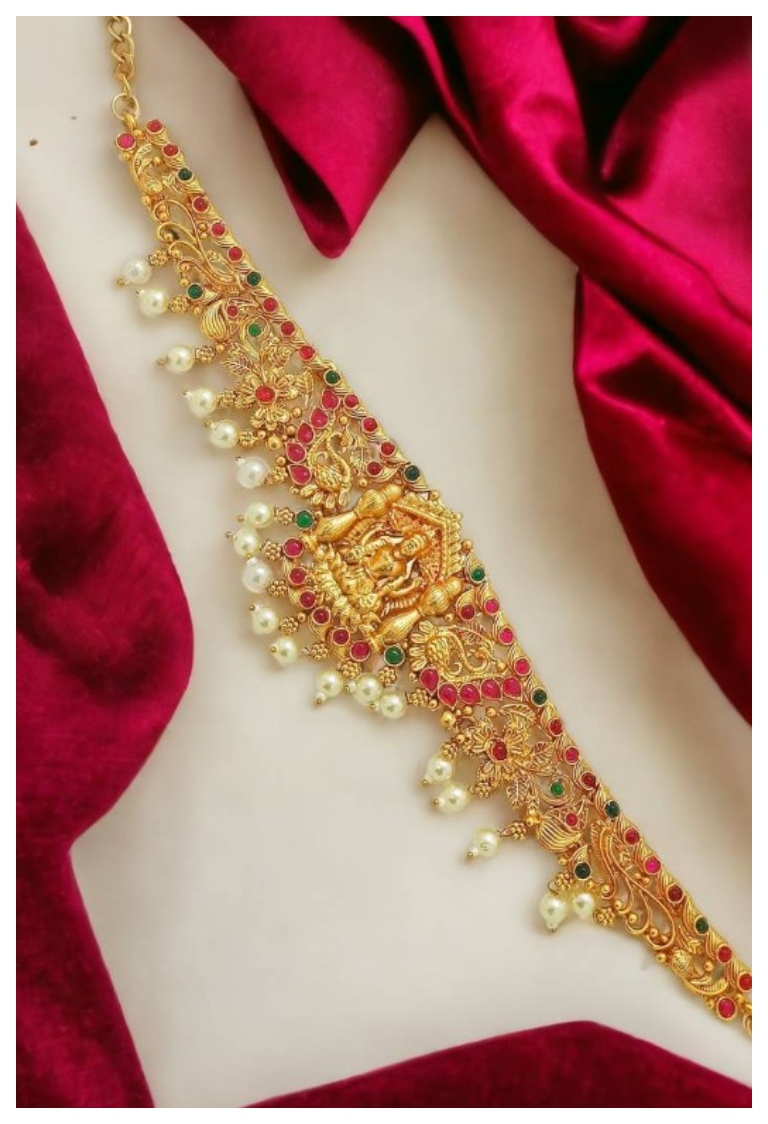
The waist belt makes a powerful statement. It represents protection and prosperity and is an essential bridal ornament. Anklets often with tiny belts or stonework bring rhythm and softness to every step.
- Full bridal temple jewelry sets
When all these pieces come together on you as a bride, the result is breathtaking. There is nothing flashy here, but just divine. You can expect a strong, complete bridal set.
Why does temple jewelry still matter so much?
Temple jewelry is not only beautiful. It carries feelings, faith, and memories that truly go beyond gold and stones. For many families, these ornaments are tied to important moments in life, weddings, festivals, prayers, and celebrations that stay in the heart forever.
In South Indian weddings, temple jewellery holds deep meaning. It symbolizes prosperity, protection, and divine blessings for new beginnings. Brides are often adorned to resemble goddesses, especially goddess Lakshmi, who represents abundance and grace. Every necklace and waist belt is believed to invite positive energy and happiness in your married life.
During festivals like Navratri or Diwali, wearing temple jewelry feels auspicious. The occasions celebrate tradition and devotion, and the jewelry becomes a way of honoring both. Many households treasure temple jewelry pieces like family heirlooms, passing from one generation to another. With each generation, the jewelry gathers stories and memories along with its shine.
Temple jewelry also plays a powerful role in classical dance. In art forms like Bharatanatyam and Kuchipudi. The temple jewelry on such occasions is not optional but essential. The bold necklaces, expressive earrings, and adornments help bring every moment to life. They highlight your facial expressions, support storytelling, and complete the spiritual and visual beauty of the performance.
Regions that shaped the beauty of temple jewelry
While temple jewelry follows the same traditional spirit, each region of South India has its own personality in the designs. This is what makes jewelry so rich and diverse.
- Tamil Nadu is considered the heart of temple jewellery. Cities like Kanchipuram are known for their amazing craftsmanship and heavy gold appearance. The designs here closely resemble temple structures and idol ornaments.
- Karnataka, especially Mysore and Bangalore, brings a softer and more refined touch. The jewelry often features graceful patterns, smoother finishes, and elegant gemstone placement.
- Andhra Pradesh and Telangana draw strong inspiration from sacred places like Tirupati. Here, designs focus on symmetry and detailed carvings, besides balanced structures that reflect temple architecture and religious symbolism.
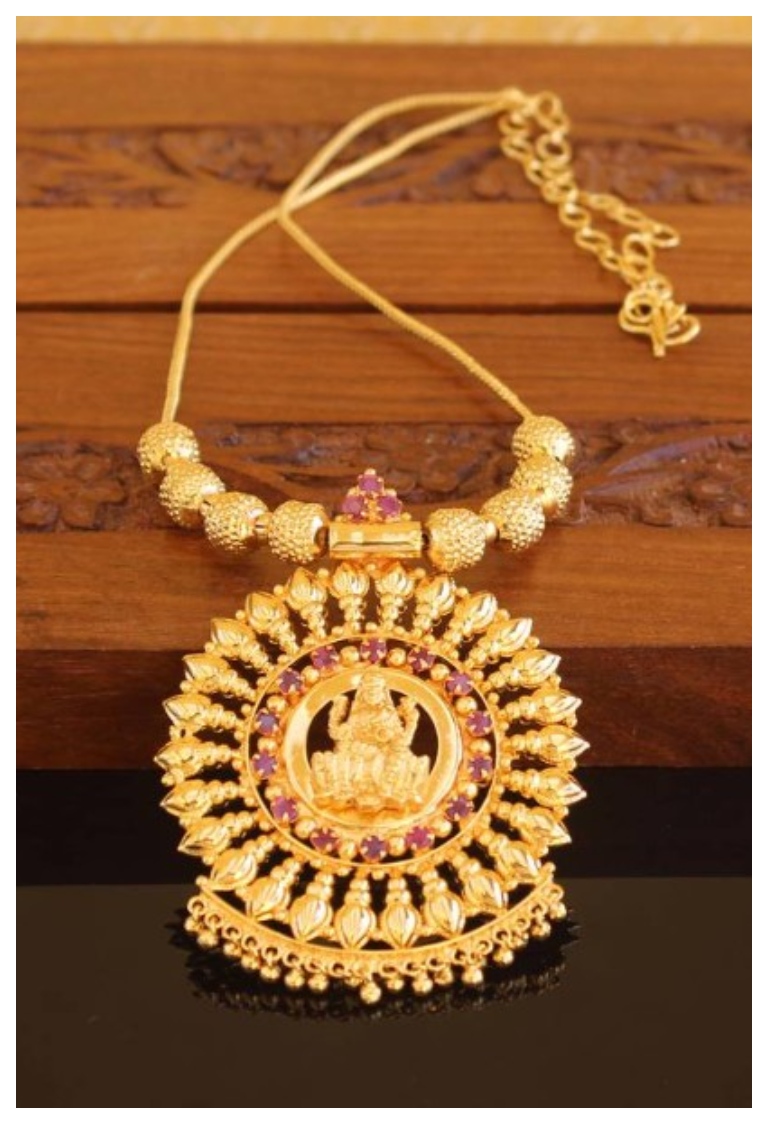
- Kerala temple jewelry stands apart with its unique gold texture and minimal use of stones. The design feels pure tradition and earthy, closely matching Kerala’s cultural aesthetics.
How do you choose temple jewelry that truly suits you?
Buying Temple jewelry can feel confusing, especially when there are so many designs and styles available. You might think that you have to buy jewelry to look traditional, but that is not always true. The right jewelry is the one that suits your outfit and body type.
- Matching temple jewelry with sari fabrics and color
The first thing to look at is your sari; heavy silk saris like Kanchipuram silk or Banarasi silk look best with traditional temple jewelry. The shine of gold matches naturally with the silk fabric. If your sari is dark, like maroon or bottle green jewelry with ruby or emerald stones look really nice. For lighter sarees like cream or off-white, simple temple jewelry without too many stones looks better. If the sari already has heavy work, choose jewelry with cleaner designs. If the sari is simple, you can wear slightly heavy jewelry.
- Choosing jewelry according to your face shape and body structure
Face shape also matters when you are choosing jewelry. If your face is round, longer necklaces and medium-sized jhumkas usually sit better. If your face is long, round earrings help balance the look. If you are a petite woman, then you can go for medium-sized rather than extremely heavy pieces. Taller or fuller women can easily carry long, harams and wide waist belts without looking overpowered. There are no strict rules; the best choice is always that which makes you feel confident.
- Traditional jewelry or modern lightweight jewelry
Traditional jewelry is heavy and bold, which looks grand, but can feel uncomfortable if you wear it for several hours. Because of this, a lot of people today prefer lightweight temple jewellery designs that look traditional but feel easy to wear. They are perfect for long weddings or receptions. You can also mix both styles. For example, you can wear a heavy necklace with lighter earrings or combine a traditional choker with a modern chain.
- Buying for investment or for regular use
Some temple jewelry is meant to be cherished for life. Heavier gold pieces with delicate carvings are often purchased as long-term investments or heirlooms. For regular wear on festive occasions, you can go for gold-plated or silver-based jewelry. The pieces give you the same traditional appearance without the stress of daily handling. Choosing both types allows you to enjoy temple jewelry freely without the fear of damage or loss.
Temple jewelry for brides: Creating a divine wedding look.
If you’re a South Indian bride, then temple jewellery is not just an accessory; it’s a part of your bridal identity. It transforms you into a goddess-like figure, glowing with tradition.
- The complete South Indian bridal set
A traditional bridal temple jewelry set usually includes several elements that come together beautifully. The Haram forms the foundation, often layered with shorter necklaces or chokers. Jhumka earrings frame your face and move with every step. Armlets sit proudly on your upper arms and add royal charm. The waist belt holds the saree pleats in place while symbolizing protection and prosperity. Head ornaments like maang tikka or chutti can complete your look, turning you into a vision of elegance.
- Layering jewelry for a balanced look
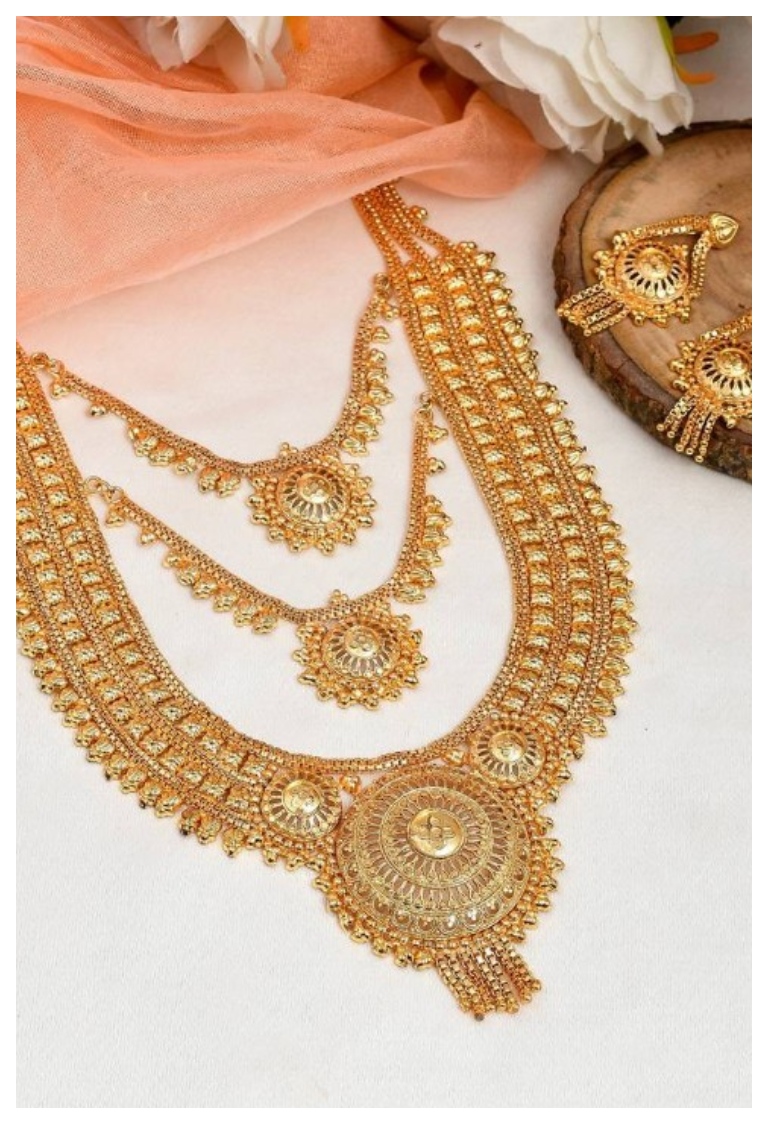
Layering is an important part of bridal styling. Instead of wearing one heavy necklace, you can often wear two or three different lengths. A short choker near the neck, followed by a medium-length necklace and a long Haram, creates depth and richness. The key is to maintain spacing, so each piece stands out perfectly. Too much layering can feel heavy, while thoughtful layering looks graceful.
- Blending tradition with modern bridal style
Modern brides often want the beauty of tradition without looking overly heavy. You can choose classic temple elements, but in lighter-weight or cleaner finishes. You can even pair traditional jewelry with pastel sarees or minimal makeup. The blend keeps the soul traditional while the appearance feels fresh and modern.
Caring for temple jewelry so it lasts for generations.
Temple jewelry can last for decades if cared for properly. A little attention goes a long way in preserving its beauty.
- Safe storage practices
You must always store temple jewellery separately in a soft cotton or velvet cloth. Avoid stacking pieces together as the metal surfaces can scratch each other. Anti-tarnished pouches are extremely helpful, especially for silver-based jewelry. Keep your ornaments away from moisture. Never store jewelry in plastic for a long time, as it traps moisture.
- Cleaning without damaging the design.
Temple jewelry should never be cleaned using harsh chemicals. For gold pieces, gentle polishing with a soft cloth is enough. Gold-plated jewelry should only be wiped clean after use. You must avoid water or sprays. Professional cleaning is always safer than home remedies.
- Preserving antique jewelry
Antique jewelry requires expert care. You must avoid frequent handling and never attempt to polish it yourself. Periodic professional maintenance helps preserve the carvings and original finish. With proper care, antique jewelry becomes a priceless family treasure.
Buying temple jewelry online: what should you know?
Shopping for temple jewelry online has become really common, especially for brides living away from their hometowns.
- Choosing trusted online stores
You must look for established jewelry websites that clearly mention materials, finish, and craftsmanship details. Genuine sellers provide close-up images and clear return policies. Customer reviews and real photographs help you understand the quality better.
- How to check authenticity
Authentic temple jewellery really reflects fine carvings and clean finishing. You must always look for hallmarks when buying gold jewelry. For plated or silver-based jewelry, the description should clearly mention base metal coating, quality, and stone type.
- Understanding pricing and value
Prices are likely to vary based on the metal and the stone quality. Handcrafted jewelry often costs more than machine-made pieces because of labor and detailing. Instead of choosing the cheapest option, always focus on value, durability, and authenticity as they matter far more than just price alone.
FAQs
- What materials are usually used to make temple jewelry?
Temple jewelry is traditionally made from gold and decorated with rubies and emeralds. Today, silver with gold plating is also commonly used.
- Can Temple jewelry be worn with modern outfits?
Yes, absolutely lightweight temple jewellery pairs really well with gowns and even with western outfits when styled thoughtfully.
- What is the average cost of a South Indian bridal temple jewelry set?
The cost depends on materials and craftsmanship. Gold bridal sets can range anywhere from several lakhs, while gold-plated or silver sets are available at much more affordable prices.
- Are lightweight or artificial alternatives available?
Yes, many brands offer lightweight and gold-plated options that look traditional while being comfortable.
- How can antique jewelry be preserved for the long term?
Store it carefully in a soft cloth and avoid moisture. When needed, you can also get it professionally cleaned. Proper care can preserve antique jewelry for several generations.