

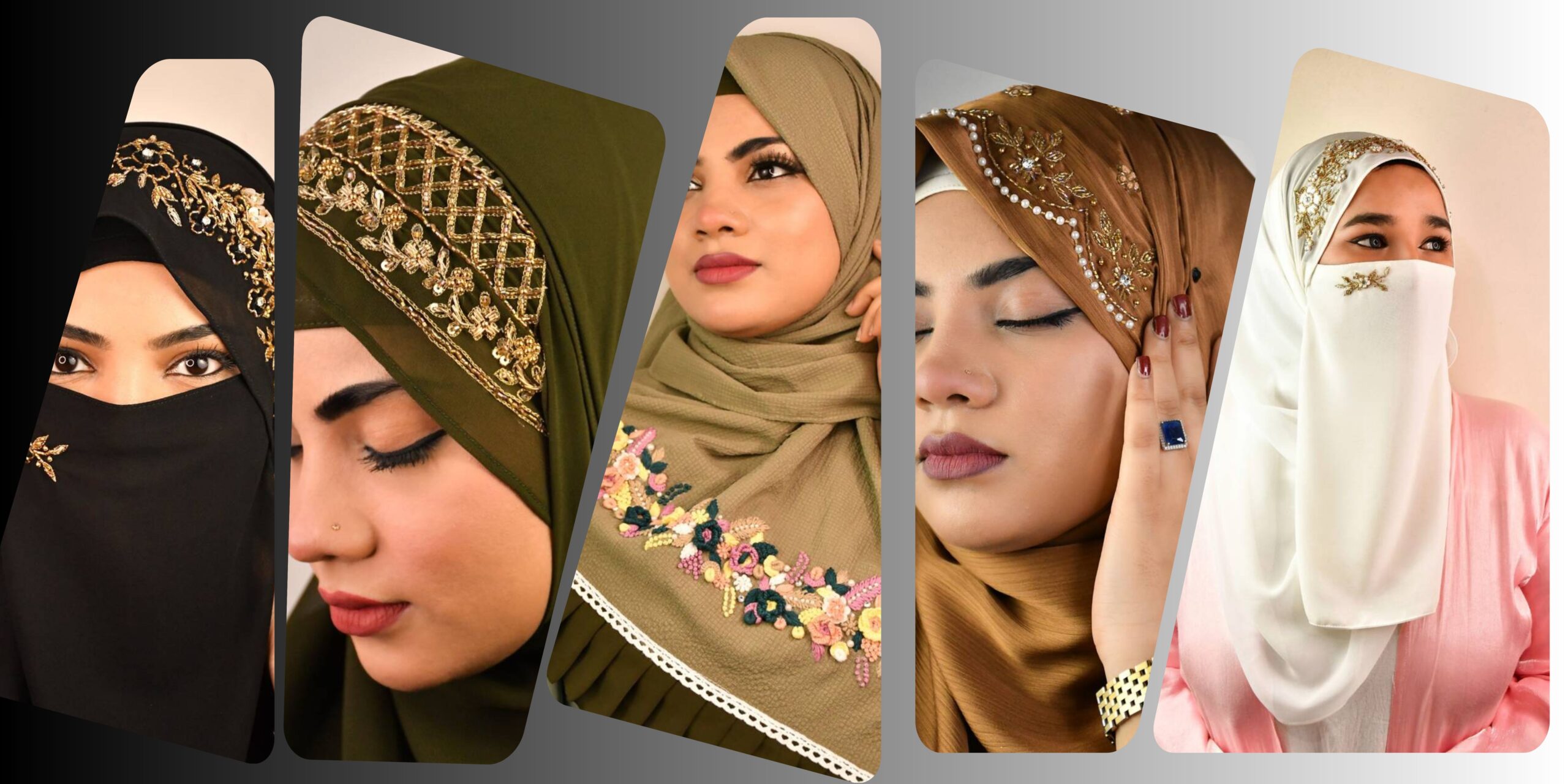
The Hijab is a jewel in Women’s Islamic clothing. However, it is not a mere garment but holds much more significance apart from its fabric and style. It is a tangible symbol of the Muslim woman’s faith and devotion to her religion. It denotes identity and diversity. It is also a way for women to honor the principles of modest clothing in Islam.
However, it might come as a surprise to many that Hijabs and abaya existed way before the advent of Islam. The Arab world borrowed this head covering from its neighboring countries of Syria and Persia. In those countries, wearing a Hijab was seen as a status symbol. The earliest Hijabs were in the form of simple fabric scarves that covered the hair and neck. From these simple designs, the Hijab has now evolved in various shapes and forms– seamlessly integrating itself into the Muslim teachings and faith.
As Islam spread across different regions, styles of head covering developed into unique cultural expressions. We got to see variations such as the Chador in Iran, the Niqab in the Arabian Peninsula, and the Burqa in Afghanistan. In this Hijab guide, we will explore the amazing world of Hijab styles and take a closer look at this multifaceted garment.
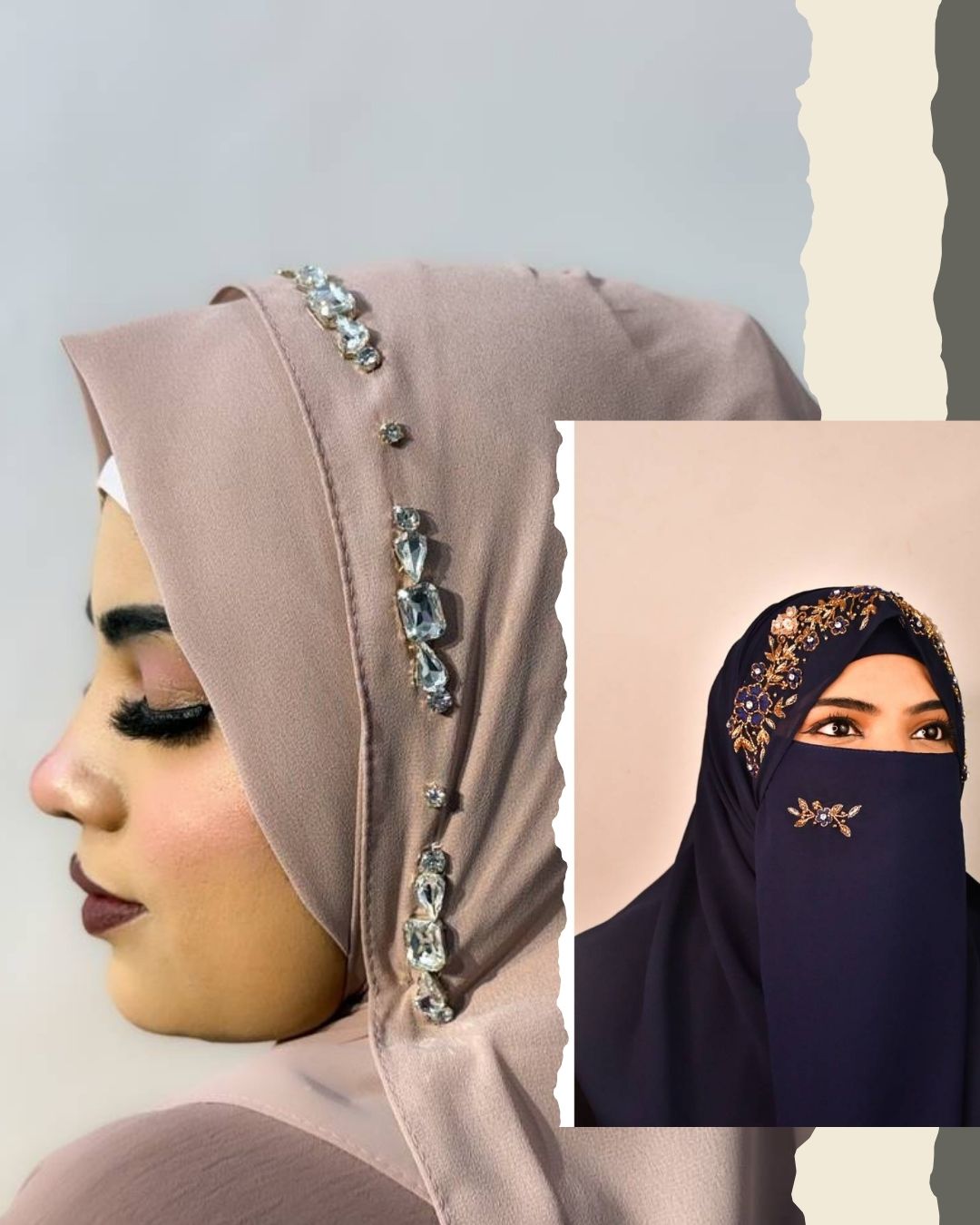
Different Types of Hijabs That You Should Know About
- The Classic Hijab: The most popular style worldwide, this is the form that comes to mind when we hear the word Hijab. It is a wrap that covers the hair and neck, while keeping the face bare. If we had to give some Hijab tips for beginners, it would be to master this wrapping technique.
- Al Amira Hijab: These types of Hijabs come in a two-piece design that comprises a close-fitting cap and a tube-like scarf. Revered for its easy convenience, this style is apt for daily wear as well as travelling. It is effortless to put on and secure; it embodies the spirit of modesty without sacrificing style.
- Khimar Hijab: This is a long, cape-like Hijab that covers the head, neck, and shoulders. It often extends down to the waist or even beyond. Popular in Africa and the Arab world, this Hijab style exudes full modesty with an elegant silhouette. Khimars also come in a variety of colors, patterns, and lengths, allowing for customization as per your style and comfort.
- Chador Hijab: This Hijab is an exemplary example of modest fashion and provides total coverage from the head to the toe. Originating in Iran, this comes in the form of a long cloak and in solid colors such as black and navy. While traditionally, they used to be plain, now they come in subtle patterns and lightweight fabrics that allow for personal expression.
- Niqab Hijab: This variation of the Hijab comes with a face covering as well, only leaving the eyes open. It is often worn with other Hijab styles like the Khimar and Shayla, and provides a deeper level of modesty. Commonly worn in Arabian countries and South Asia, this Hijab style is connected to reverence and deep commitment to Allah.
- Burqa Hijab: The talk about different Hijab styles would be incomplete without mentioning the Burqa. It provides the highest level of coverage and comes with a mesh screen for the eyes. Popular in Afghanistan and parts of South Asia, the Burqa covers the entire body from head to toe.
- Shayla Hijab: The Shayla Hijab is a long, rectangular scarf that is wrapped loosely around the head and secured with pins or magnets. The Hijab of choice in the Arab world and Western countries, this Hijab style is a symbol of style meeting modesty. It is simple and classic– perfect for beginners or those who prefer a loose Hijab look.
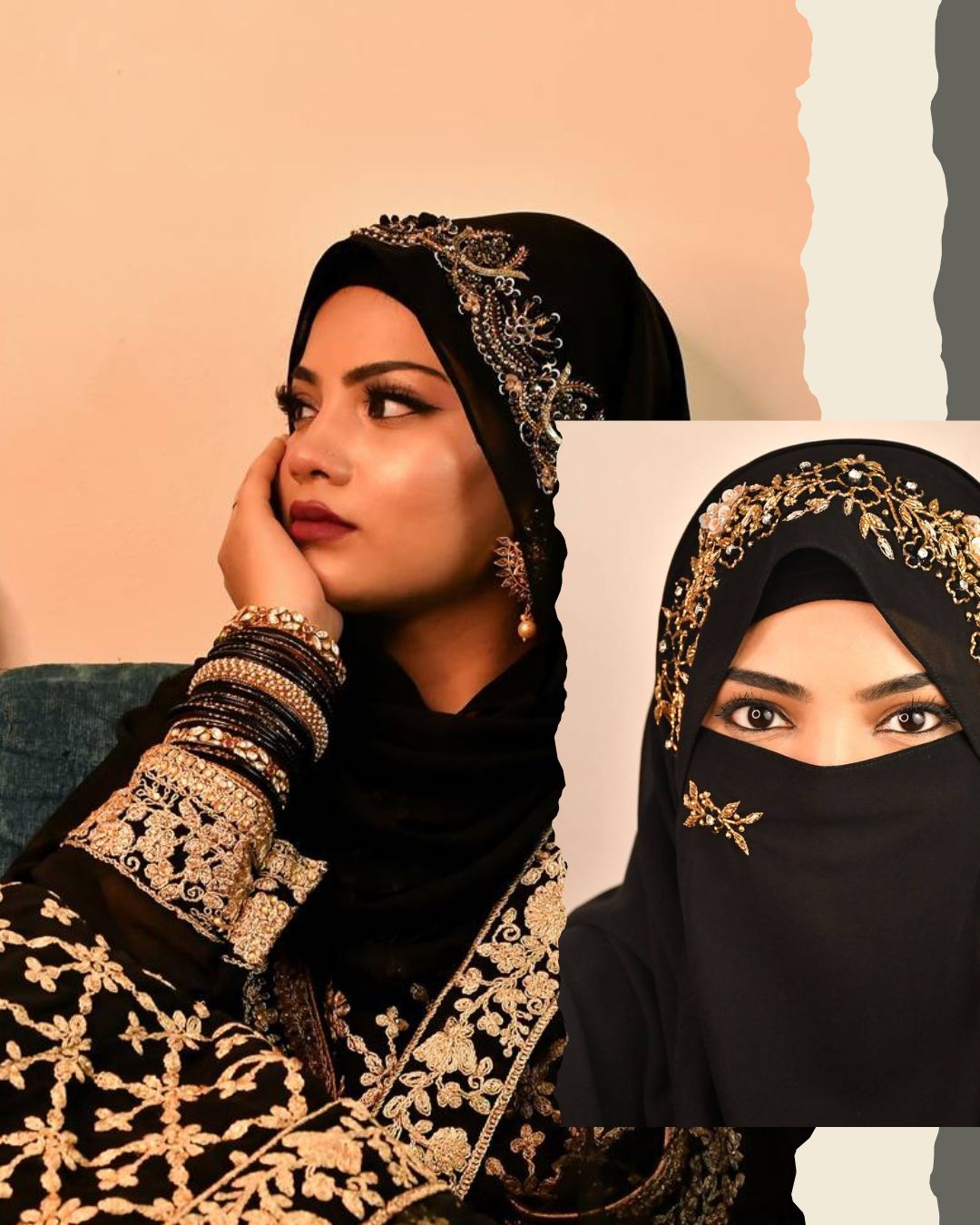
What Fabrics and Materials are Used In Hijab?
- Chiffon: This lightweight and pretty material is one of the most commonly used fabrics in Hijabs. Chiffon hijab is a mixture of fibres like cotton, silk, and synthetic blends. Its lightweight and flowy structure makes it comfortable and easy to wear. It also gives off a graceful appearance and comes in a variety of colors and patterns.
- Jersey: If you are looking for stylish Hijab looks that are also comfortable, go for Jersey hijabs. The super stretchable fabric is also easy to wear. Further, it doesn’t need any pins or magnets to stay in place all day. Thus, this Hijab fabric is the best choice for daily wear as well as casual occasions.
- Polyester: Polyester Hijabs are all the rage right now. It is also super easy to maintain and is an affordable pick. It also comes in a range of styles, making it perfect for daily wear as well as for special occasions. Its soft feel and wrinkle-free texture have made it a top pick for the modern woman
- Rayon: Rayon Hijabs are all-season coverings that can be worn in any climate. Perfect for a casual look, this Hijab fabric is supple, soft and light. It is also easily drapable and can be used to create a plethora of styles.
- Silk: The luxurious silk Hijabs are often saved for special occasions like weddings and Eid. They come in a wide range of colors and patterns. The fabric’s natural sheen gives an elegant look to the Hijab. The silk Hijabs also come in a variety of embellishments and adornments, taking the luxe look even further.
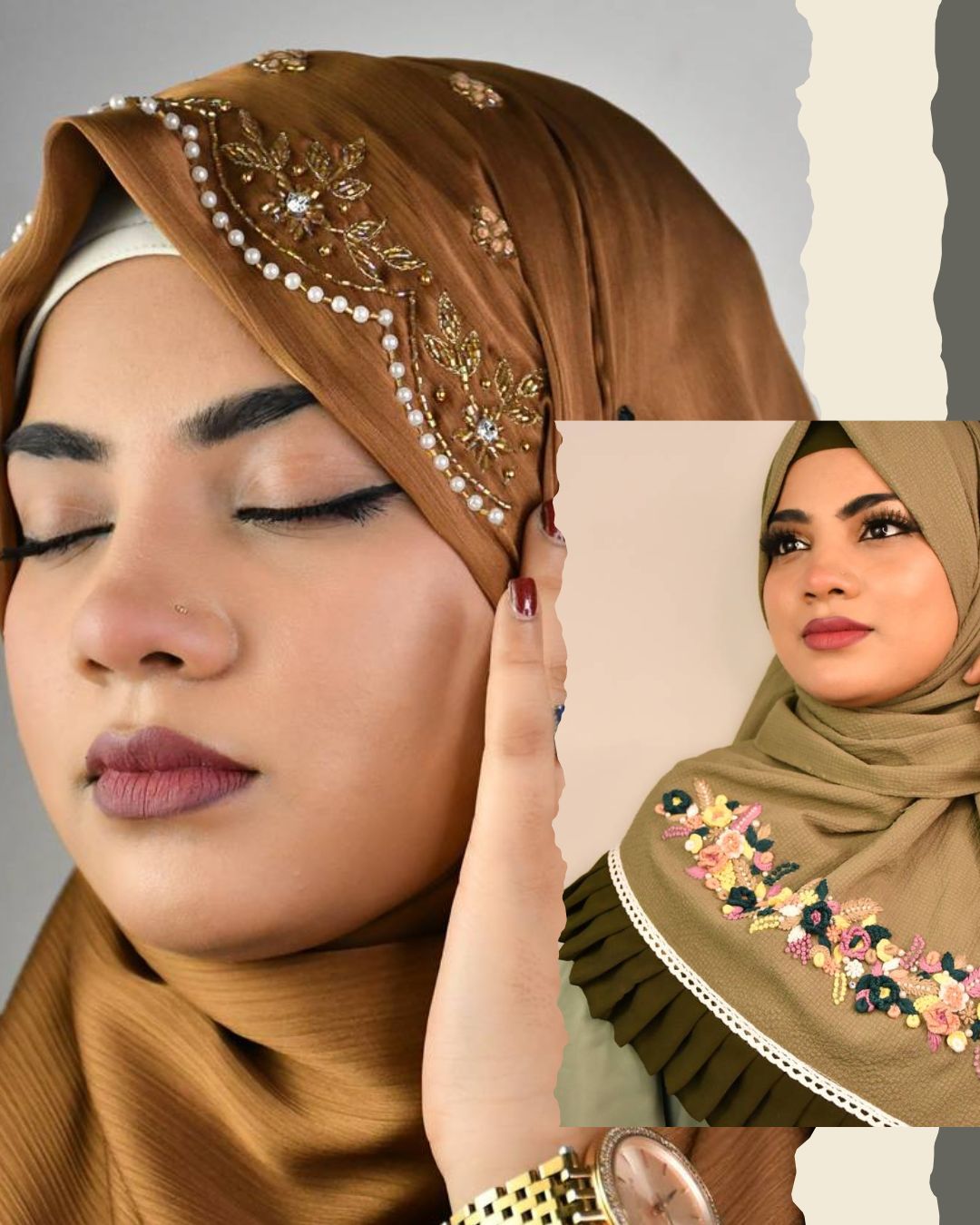
Hijab Styling Tips– Daily Wear and Special Occasions
- The Classic Wrap: If the question of how to wear Hijab for a casual, everyday look is on your mind, then the classic wrap should be your go-to style. It is the simplest and most versatile style. Just drape your Hijab over your head, then proceed to wrap one end around your neck. Let the other end flow freely, and you are good to go.
- The Loose Drape: Perfect for social gatherings and semi-formal events, this wrap gives off a relaxed and effortless feel. This look is very much in trend now as well. In this style, the Hijab falls naturally over your shoulders with minimal wrapping. Go for flowy fabrics like Chiffon or modal for a chic vibe.
- Turban Style: If you want to get creative with your Hijab wrap, then try out the turban style wrap. It involves wrapping the Hijab snugly around your head and then tying it at the back. It is also a great option for showing off your accessories and pairs well with high-neck outfits. Fabrics such as modal or jersey are perfect for this wrapping style.
Hijab Accessories — Pins, Undercaps, and More
- Hijab Magnets: Replace traditional pins that might damage your Hijab fabric with trendy Hijab magnets. These magnets secure your Hijab in place without poking the fabric.
- Hijab Bangles: Another alternative to pins are the Hijab bangles. They are circular in shape and act as a fashion accessory as well as hold your Hijab in place.
- Undercaps: These are a must-have for any Hijabi and pair well with transparent Hijabs. They ensure your hair stays neatly in place. They come in various forms, such as full coverage caps to ones that cover just the front of your head.
- No-Snag Pins: Hijab styling ideas are elevated to the next level by no-snag pins. They feature a newly designed concept that prevents the poking or snagging of your Hijab. They fasten your Hijab under your chin by tying the ends together.
- Regular Pins: This is one accessory, without which the wardrobe of any Hijabi is incomplete. These trusty small pins ensure that your Hijab stays in place all day long. It is essential to keep a stack of these in your handbag for Hijab emergencies.
Types of Hijabs – Regional and Cultural Variations
- Pakistan: In Pakistan, the Hijab is draped loosely around the head, allowing some hair to peek out the front. The colors match the traditional clothing and can range from light to dark.
- Syria: Modern Hijab styles in Syria include pinning the Hijab around the head tightly. Undercaps are commonly worn, and drapes are made at the top of the head to add a distinctive design.
- Turkey: The Hijab styles of Turkey are very fashionable and elegant. The scarf is tied to the side of the neck in an elegant bow. This style is very feminine and classy while still providing full modesty.
- Malaysia: In the Southeastern country of Malaysia, the Hijabs are light and brightly colored with floral patterns. The drapes are elegant and add volume as well as give full coverage to the hair.
- Somalia: Somalian women wear their Hijabs like a turban. Long scarves are used to make the turban look voluminous. Color and patterns are added by using an undercap.
How To Maintain and Care for a Hijab
- Wash with care. Overwashing can damage a delicate Hijab quickly. Wash only after a few wears to preserve the quality of the Hijab.
- Air drying is the best way to protect your Hijab from damage. Tumble drying can shrink or weaken the fabric.
- How you store your Hijab has a significant impact on the quality of your Hijab. Hang slippery fabrics like satin and chiffon to prevent creases. Cotton and bamboo Hijabs can be folded neatly into a drawer.
- Treat makeup or food stains immediately with a mild remover. Don’t use cleaners with harsh chemicals as they can impact the fabric. Air out your Hijabs between washes to keep them smelling fresh.
- Keep an emergency kit that includes spare pins, an undercap, a lint roller and a stain remover in your bag.
Final Thoughts
Thus, a Hijab is not defined by a single style, region, or perspective. It is a soft blend of faith, culture, history, and style. The Hijab styles might change from region to region, but the meaning it holds for the wearer remains the same.