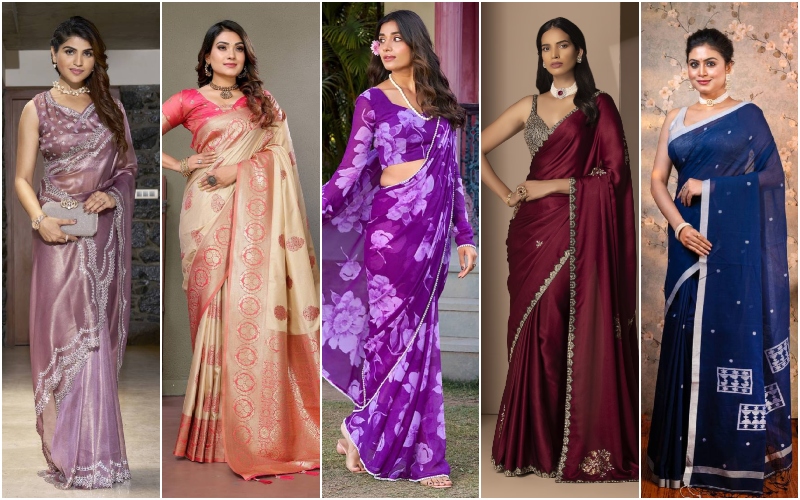
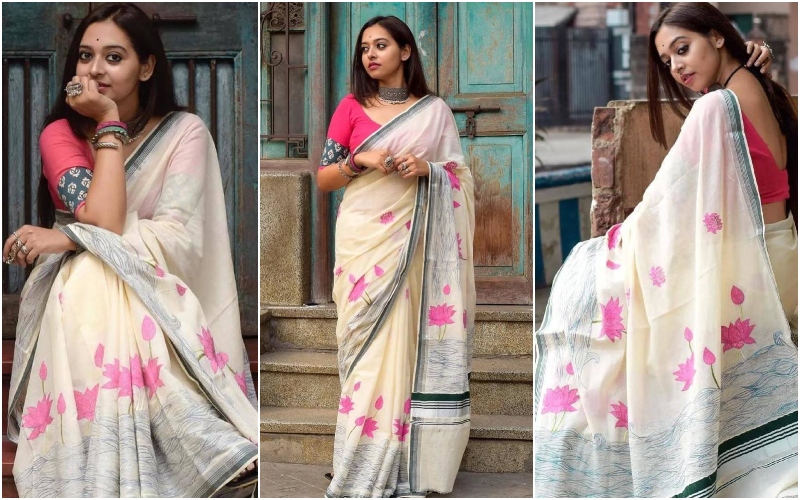
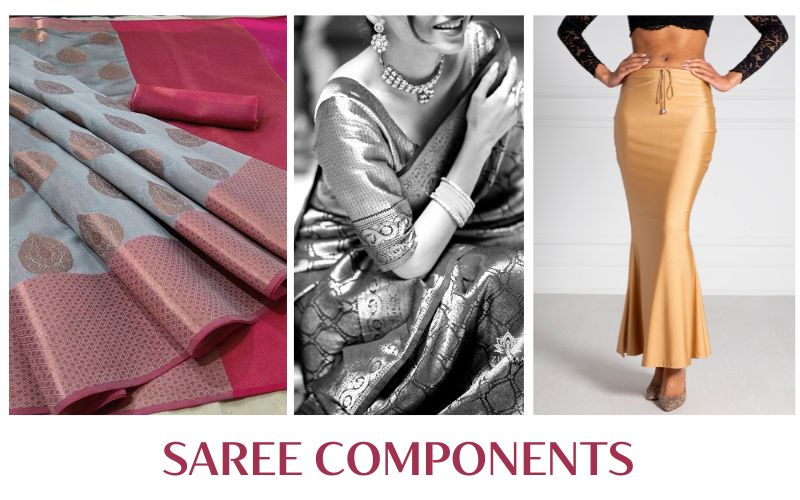
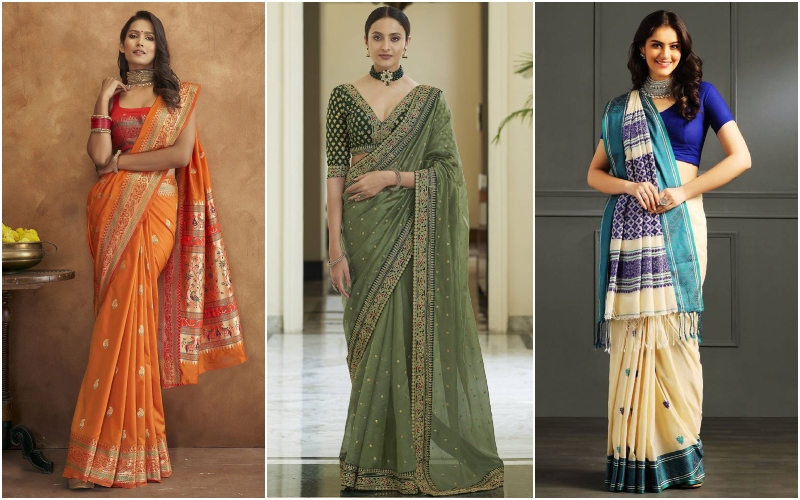
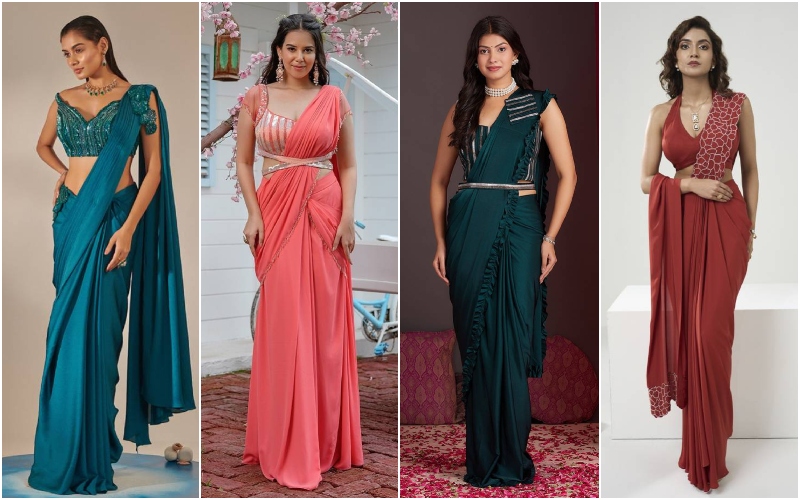
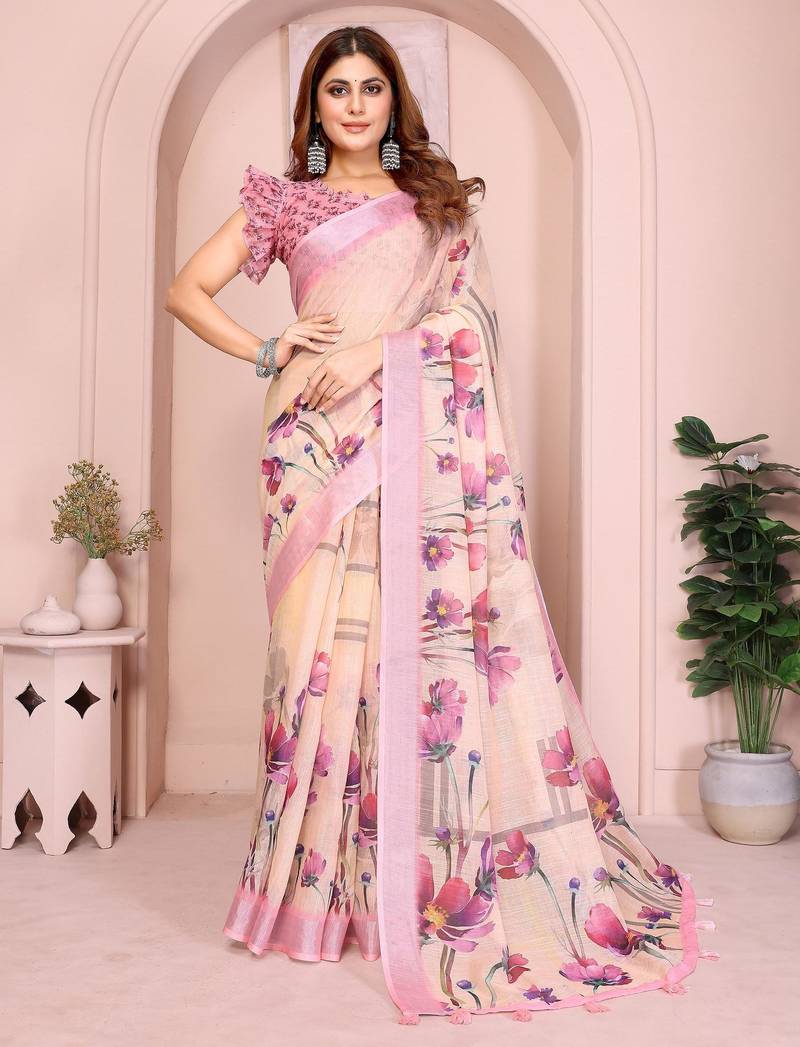
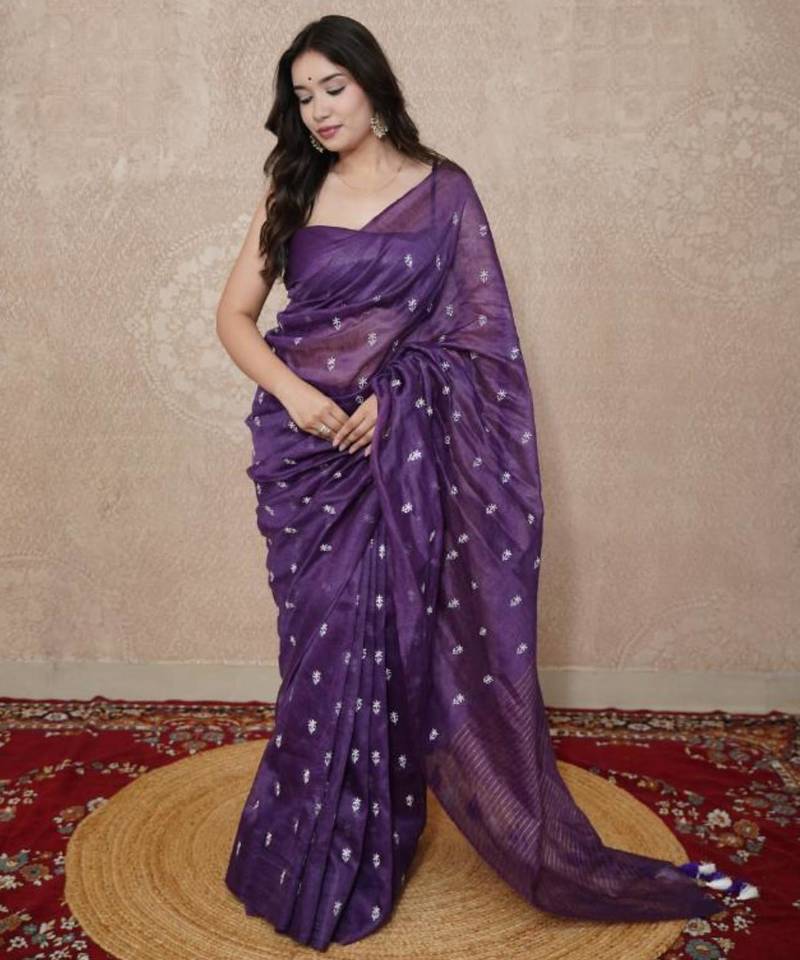
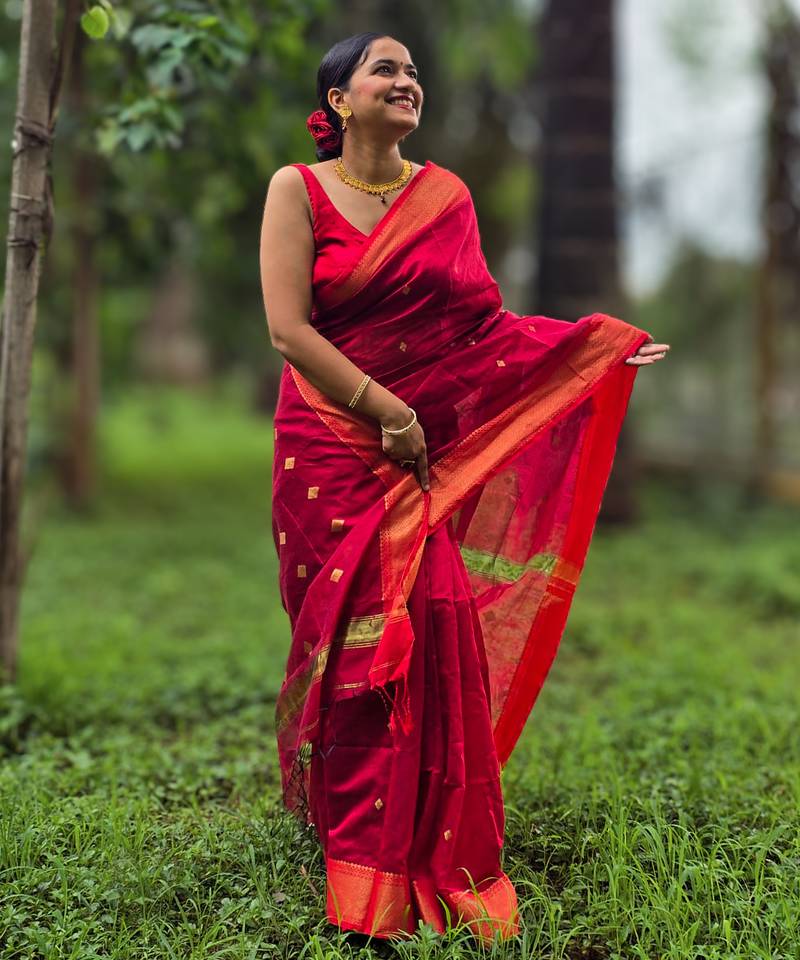
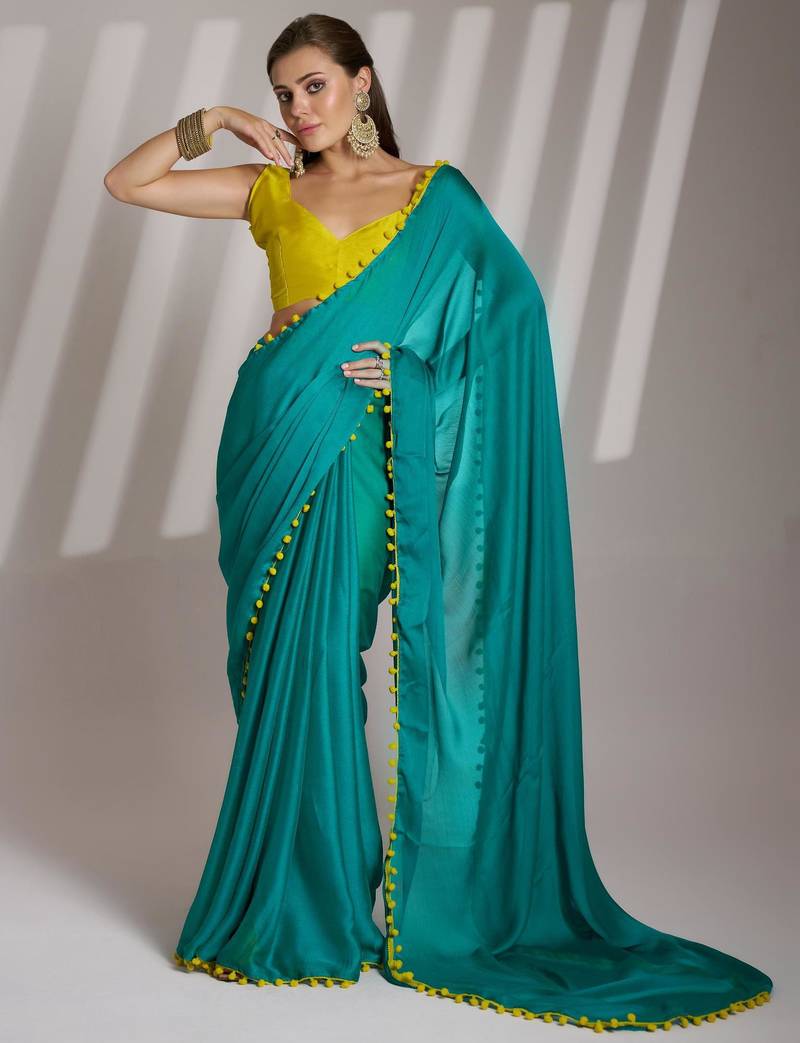
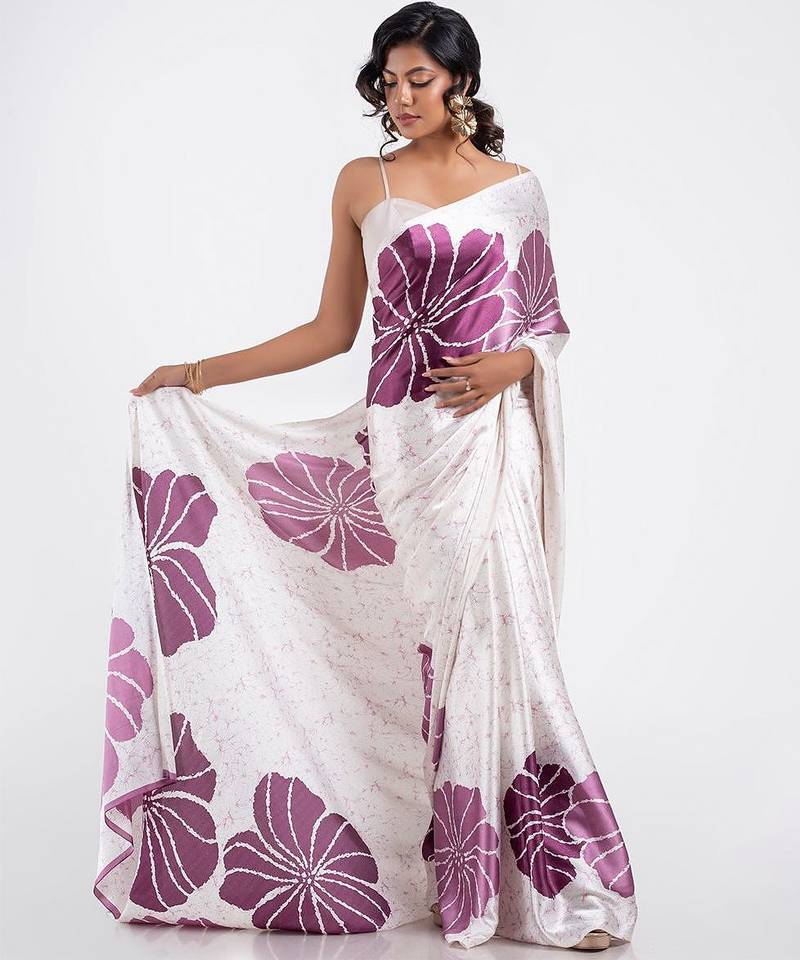
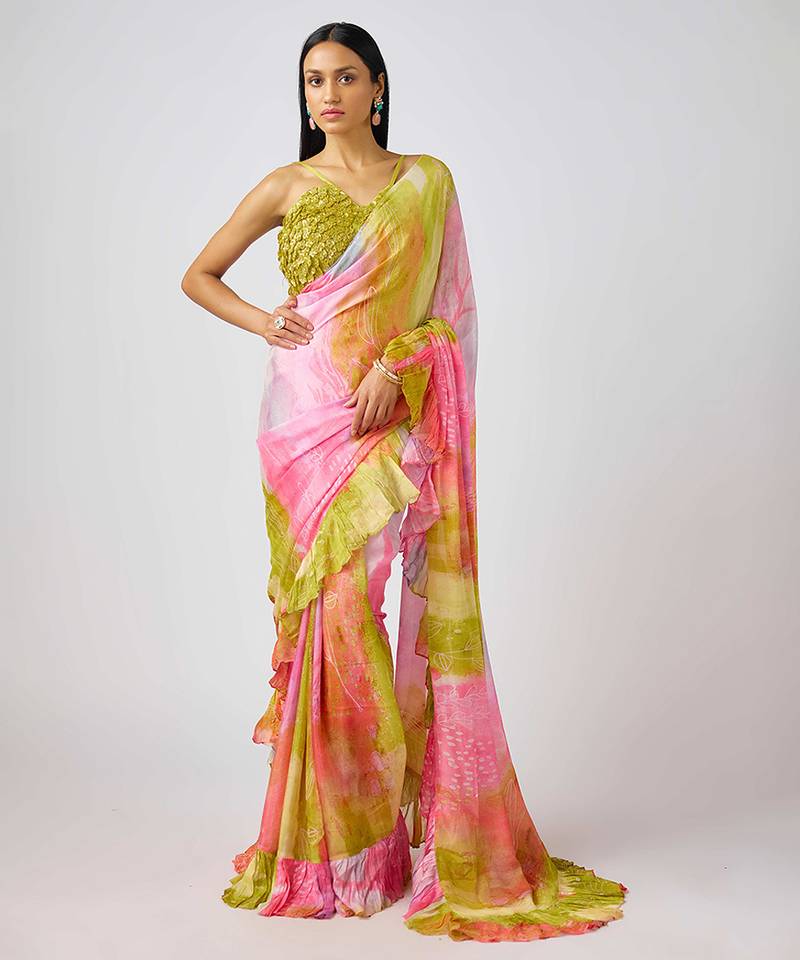
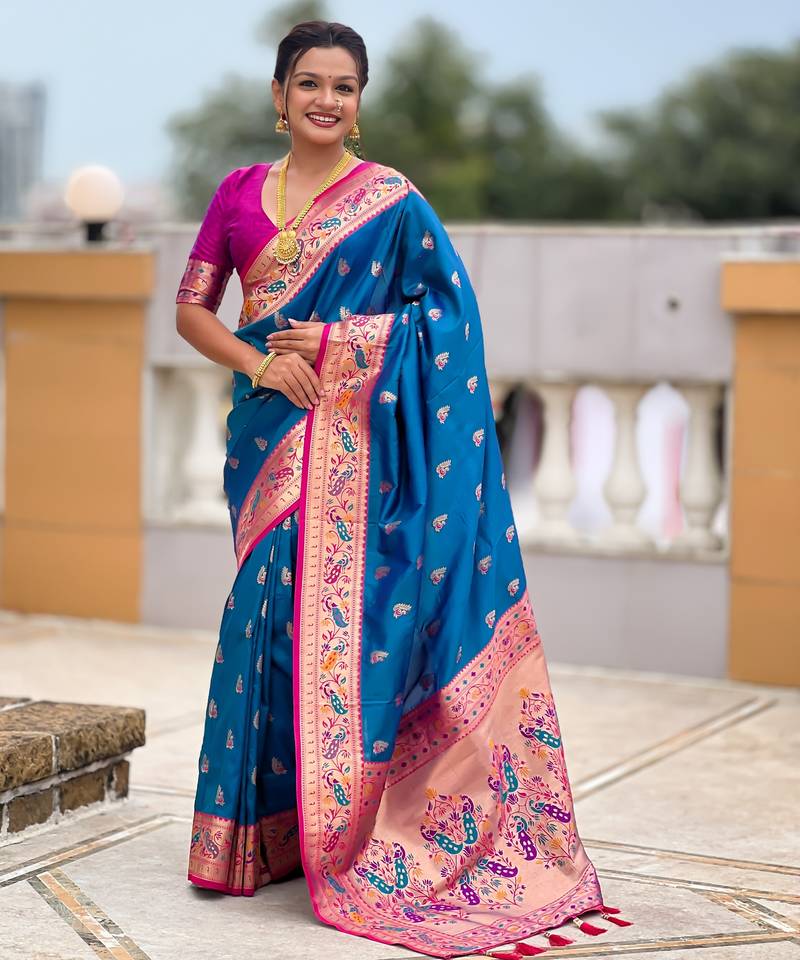
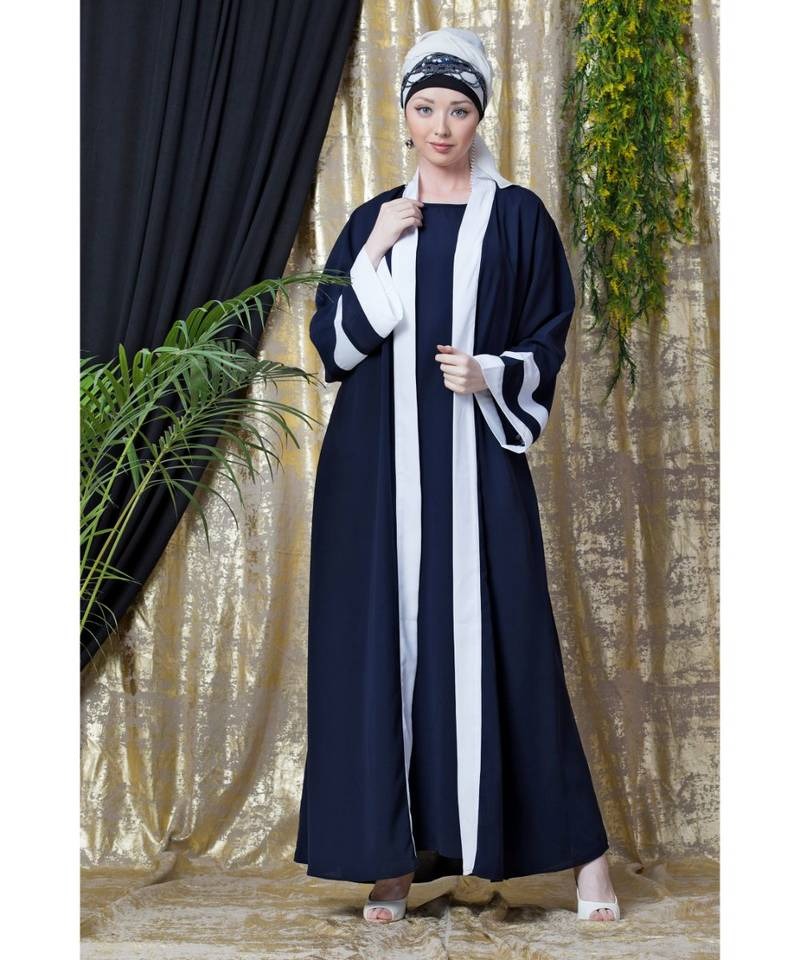
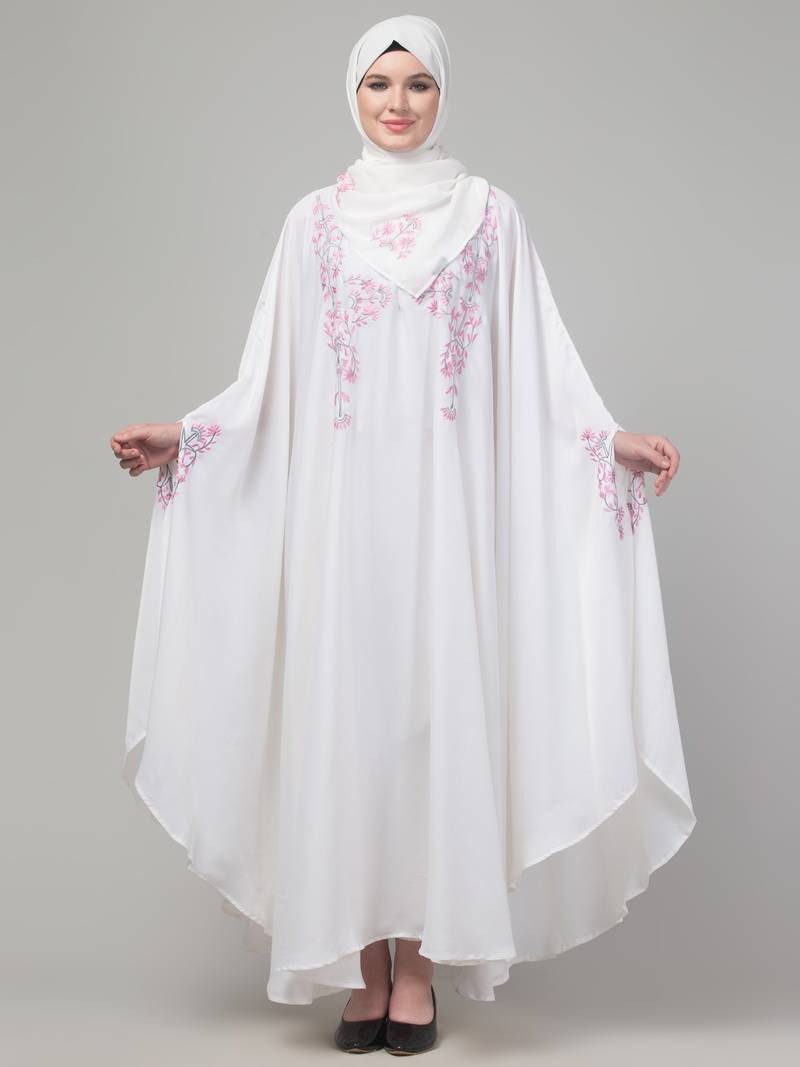
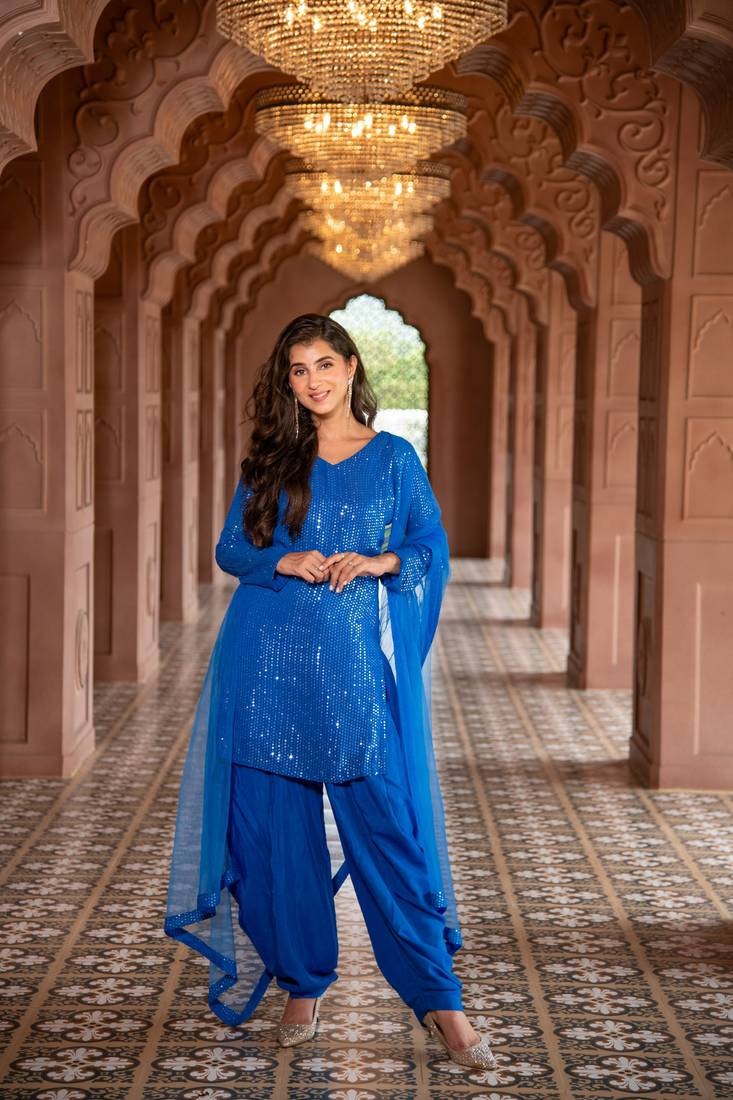
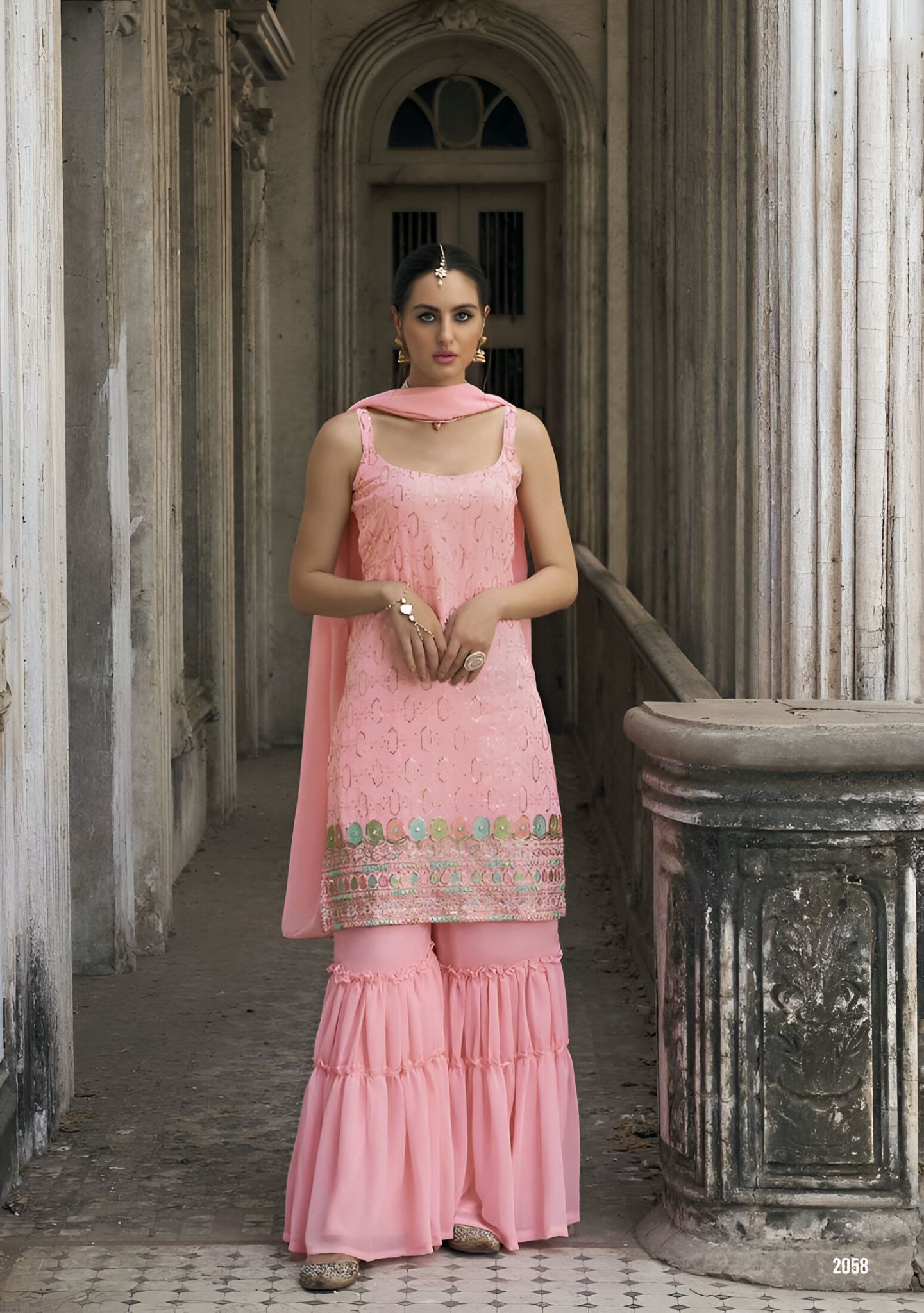
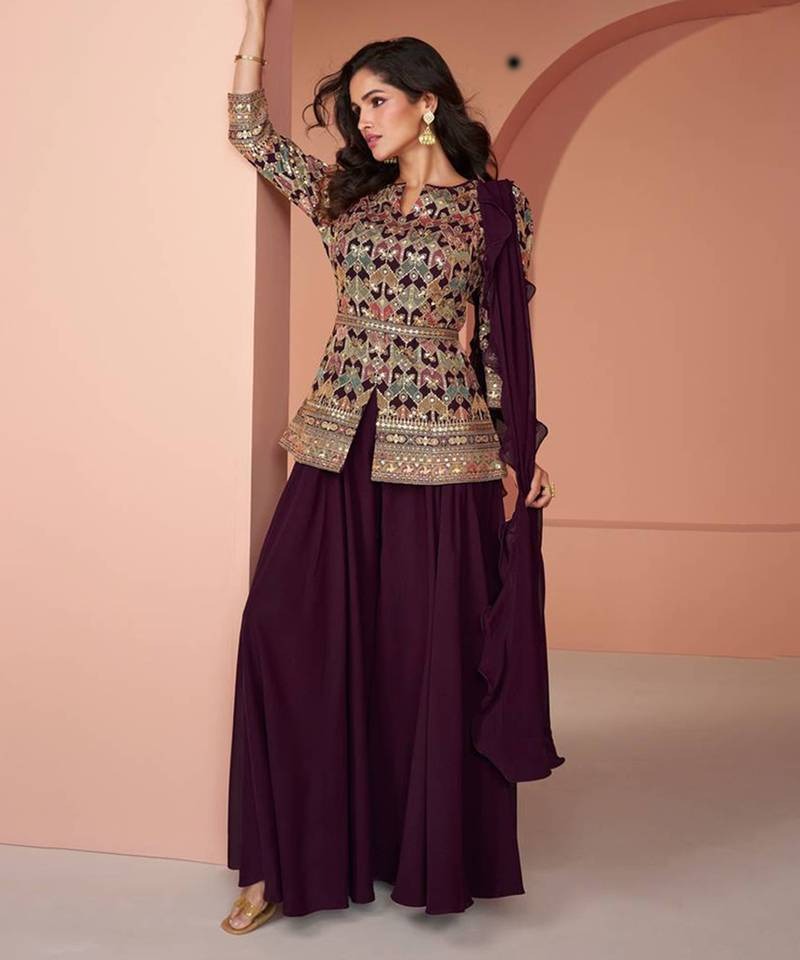
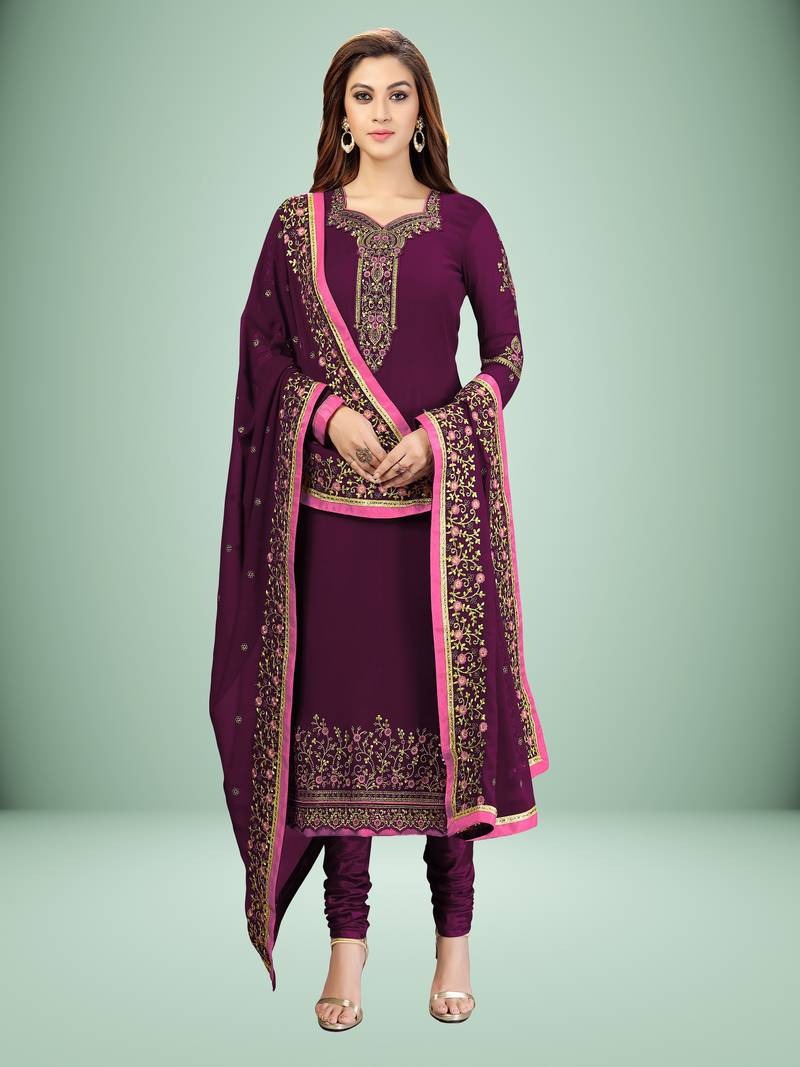
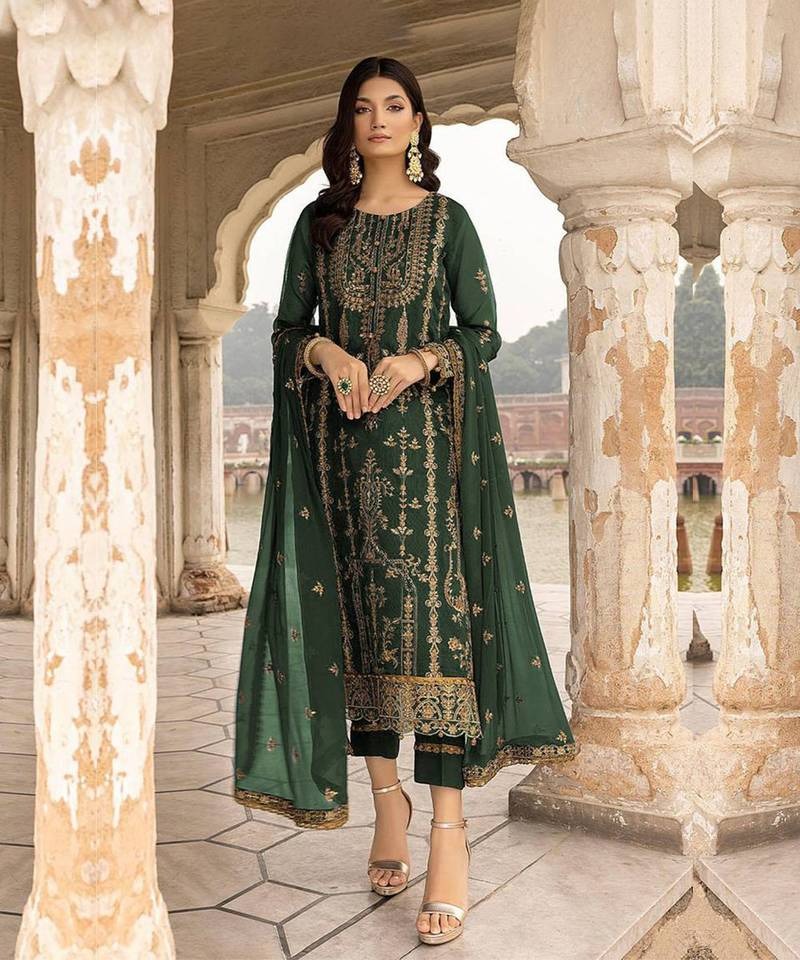
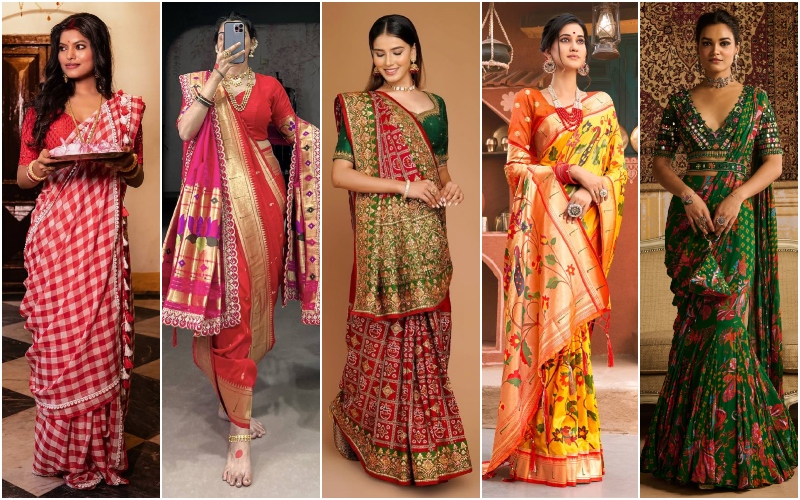
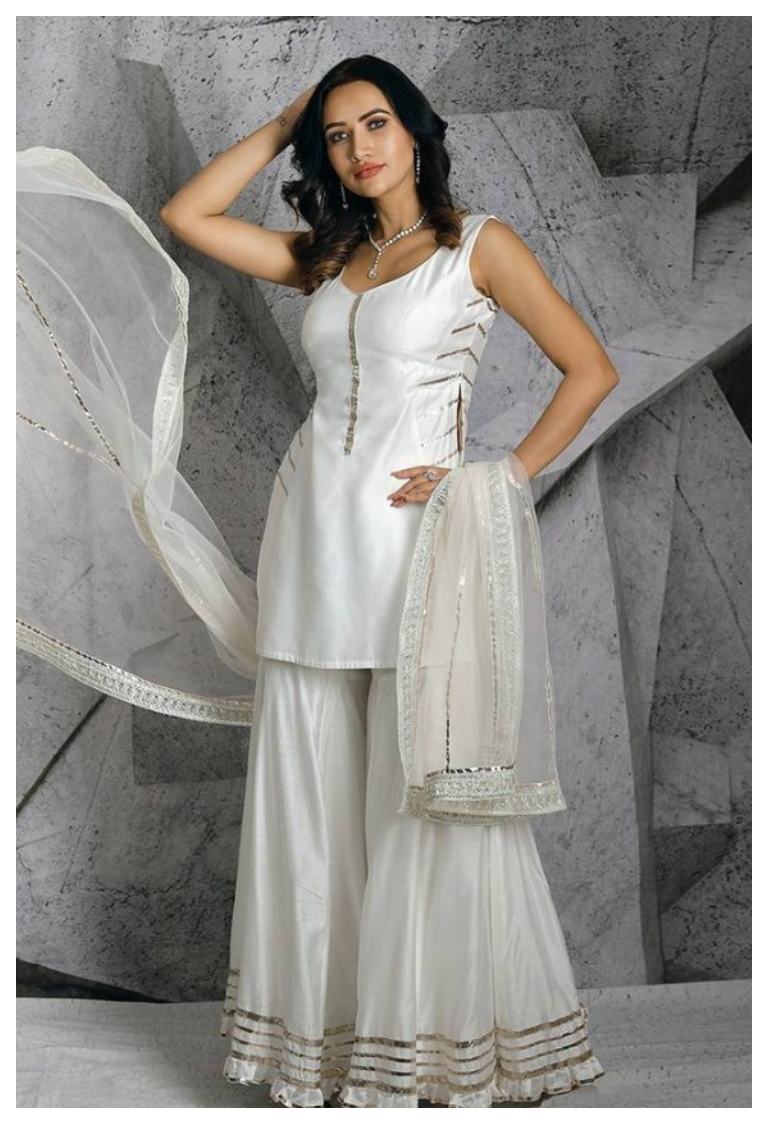
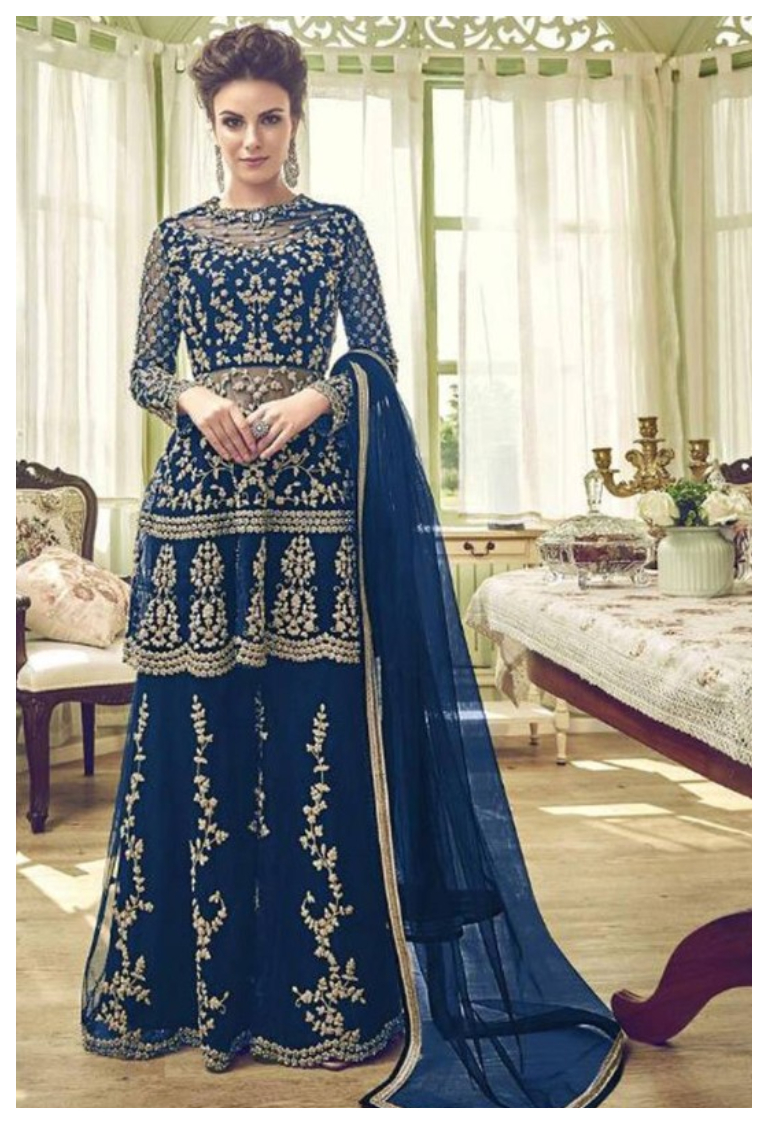
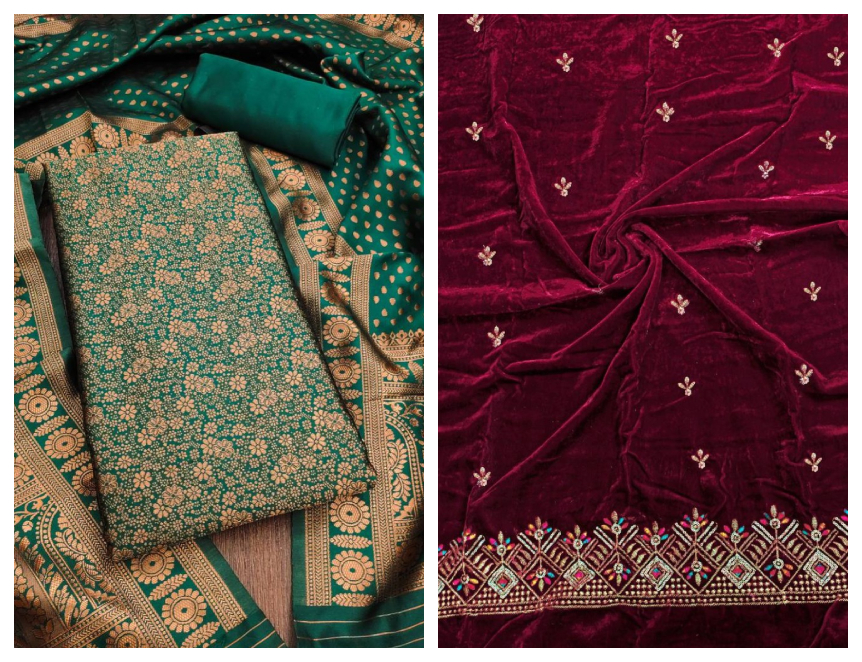
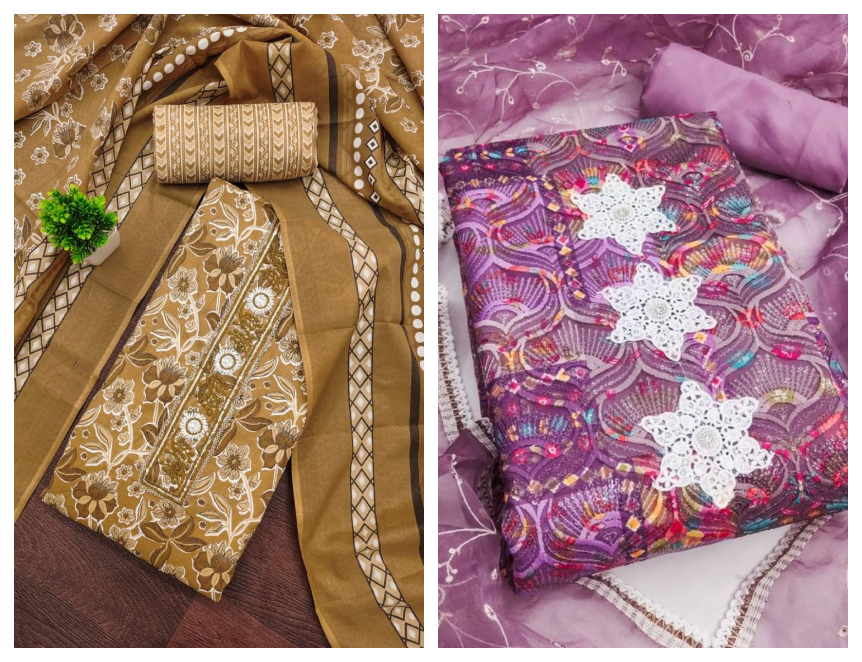
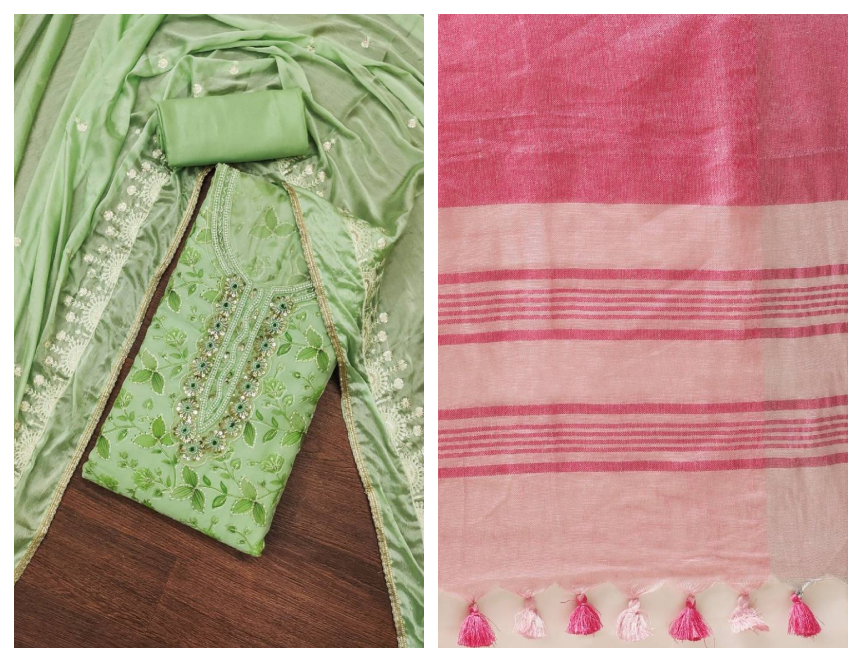
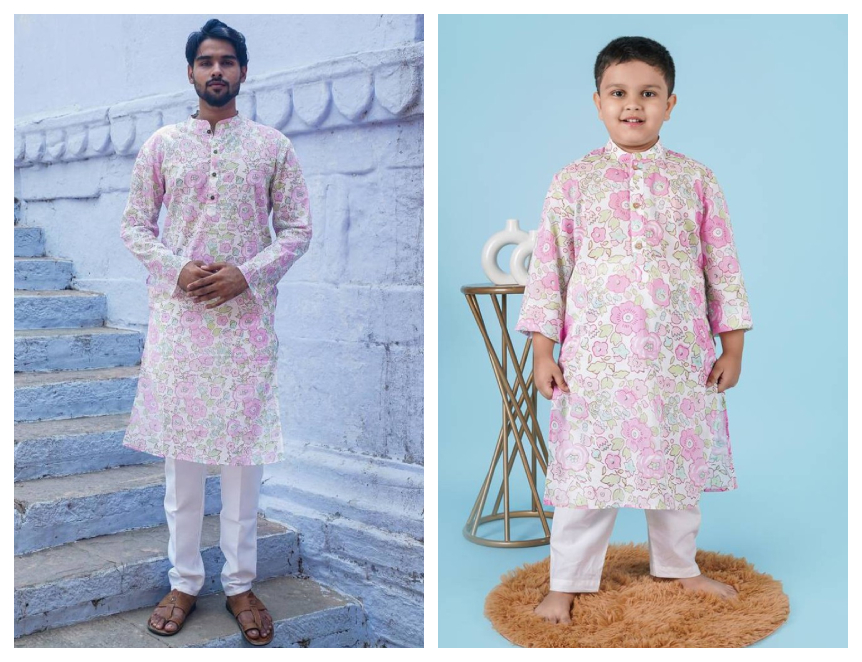
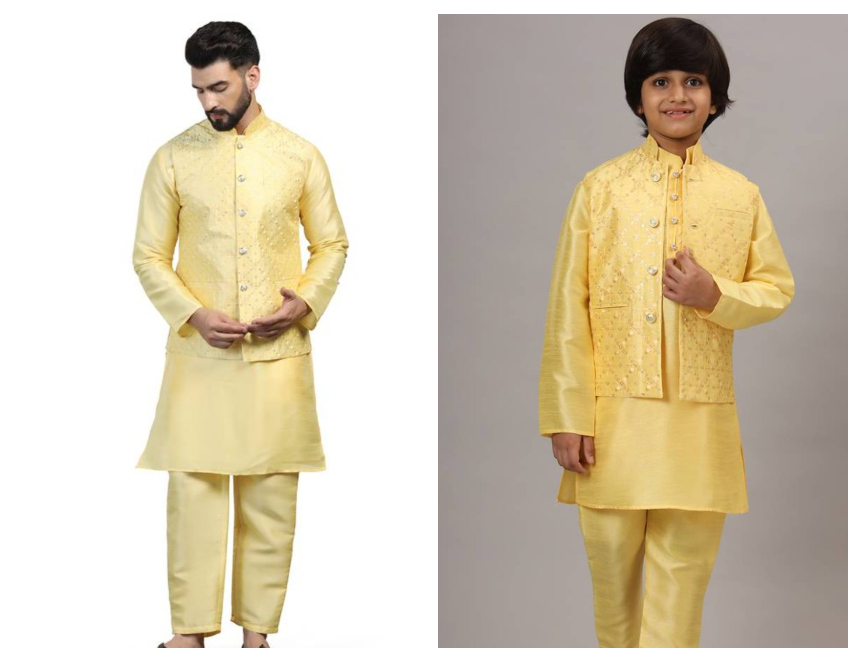
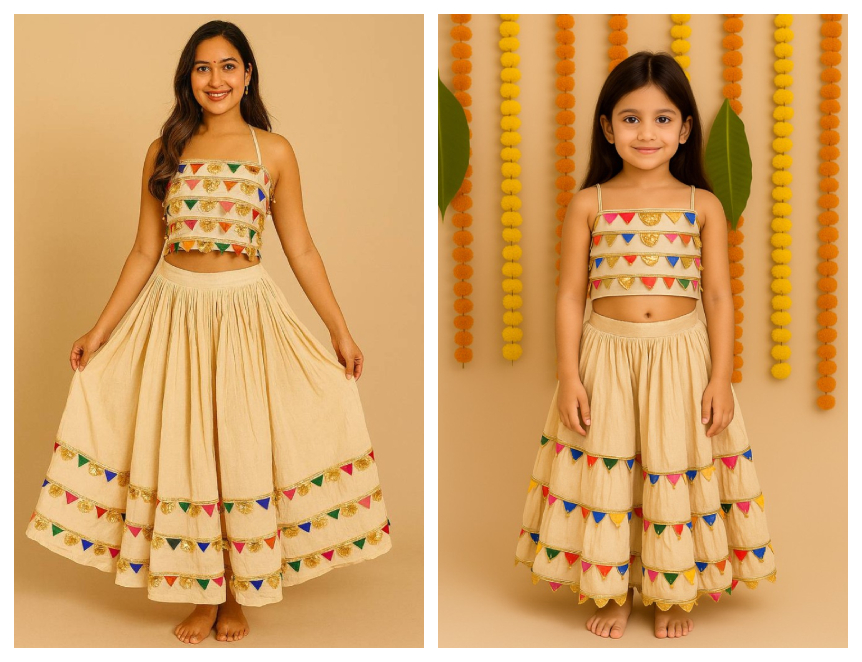
The saree is the identity of an Indian woman. It is associated with India’s culture and values that have passed down through generations. Be it everyday wear to special occasions, the saree has always held a special place in a woman’s life. Over the years, the sarees have evolved in terms of style, fabric, and even draping.
In this blog, we explore how the saree has transformed over the years.
The Origins of the Term Saree
The origin of the term Saree is very simple, and it comes from the Sanskrit term sati or satika. This meant a strip of cloth. However, these also found an account back in 300-100 BCE in the Sanskrit and Buddhist texts. They have mentioned that this saree was considered an unstitched garment. Archaeological findings from the Indus Valley Civilisation have also mentioned sarees.
The sarees were considered a symbol of elegance in the Mughal period. During this period, the women preferred fabrics like silk, muslin, and brocade. What made these sarees attractive is the gold and zari work embroidery.
Apart from gold and zari, chikankari work also flourished during the Mughal rule. Unlike gold and zari work, these embroideries were done using threadwork. Similarly, vine patterns and persian inspired motifs were also popular during the Mughal era.
Colonial Impact on the Indian Saree
The British colonial period has seen significant changes in the saree culture. During this, the sarees had to change as per Victorian norms. There were no changes in the design of the saree but the way Indian women wore it.
Earlier, women wore sarees without a blouse. However, the British introduced the culture of blouses. After this, the blouses with net sleeves, Peter Pan collar and even boat neck became popular. The fabrics that were used heavily during the 19th century were cotton and silk.
Iconic Saree Styles of 1950 – 1990 India
The sarees during the 1950s to 1990s were heavily influenced by India’s social, economic, and cultural shifts. The phase of independence saw sarees in very simple designs made mainly of cotton, khadi and linen. These fabrics not only kept them comfortable and were a symbol of their quest for independence.
Chiffon and georgette sarees with thread and sequin work became a status symbol during the 1960s. These sarees were made more popular by Bollywood actresses.
In the 1970s, women started preferring bright colours, printed patterns and synthetic fabrics. Similarly, sarees turned bold and glamorous, influenced heavily by cinema and television in the 1980s.
Stylish Saree Looks of the 2000s
The 2000s saw a major breakthrough for the saree industry. This was the time when new designers like Manish Mahalotra, Sabyasachi and Tarun Tahiliani were emerging. They put their focus on lightweight fabrics like chiffon, georgette, net and satin. Additionally, they used more sequins, cutdana work and zardozi for their sarees. It was at this time only when pre stitched and ready-to-wear sarees became popular.
How Saree Fabrics Have Changed Over Time?
India’s changing history, climate and technology have a significant influence on the evolution of the saree fabric. Earlier, in ancient India, people used sarees made from natural fibres like cotton and silk. Cotton sustained the tropical climate of India, while silk was used as a status symbol during festivals and ceremonies.
The advancement in weaving technology helped in the development of Banarasi silk, brocade, and fine muslin, often embellished with gold and silver threads. The colonial rule under the British monarchy led to mill-made yarns that made sarees affordable.
Post-independence India saw a revival of indigenous textiles. The textile industry also introduced synthetic fibres like nylon, polyester, and chiffon. So, the saree that you are seeing today is a product of the evolution and experimentation that has been done over the years.
Saree Draping Styles – Then and Now
Saree draping styles have seen quite the evolution over the years. The Nivi draping saree is one of the oldest drapings, which was popularised by Gyanodanandini (wife of Satyendranath Tagore). The belted saree, wherein a kamarbandh was worn around the waist, became popular in the 70s.
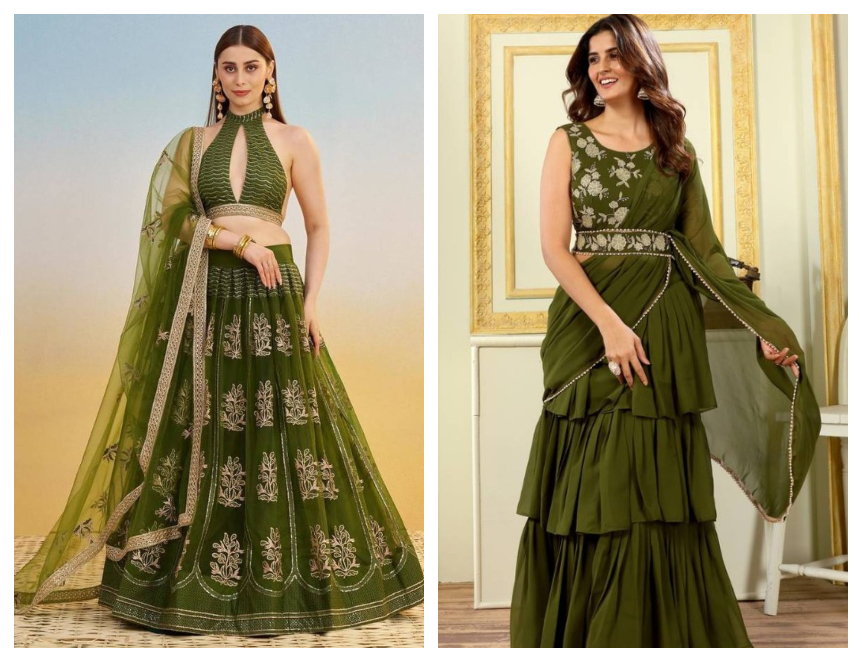
The 80s saw the rise of retro sarees by popular actresses like Mumtaz, wherein the saree was draped in layers. Today, the draping has become contemporary and stylish, with techniques like pant style and mermaid style being popular.
How Pattern, Border and Saree Motifs Have Changed?
One thing that has greatly influenced how we look at sarees today is the patterns and motifs. In ancient India, women used to drape a simple cotton saree without a blouse. The artisans moved to more organic designs in medieval India. They used hand-painting to bring out floral patterns, elephants, peacocks and even temple designs on the sarees.
Embroideries were introduced during the Mughal era. Different forms of embroidery like Chikankari, zardozi, sequin work, and stone work were popular amongst Mughal queens.
Now, saree patterns have become more experimental today. Today, wooden prints have been replaced by digital prints and abstract designs. Similarly, borders have also seen an upgrade, and now minimal saree borders have become very common.
Indian Saree at the Global Stage
It is a moment of pride to see how the saree has travelled all along from India to the global stage. These days, you can spot celebrities donning sarees at international fashion weeks, red carpets and even at film festivals. The craze of sarees is such that international brand Gucci has designed its own version of a saree, which was donned by Bollywood celebrity Alia Bhatt. Other than this, other celebrities like Kim Kardashian, Sophie Turner and Beyoncé have also worn sarees with grace.
Trending Saree Designs in 2026
1. Soft Pastels
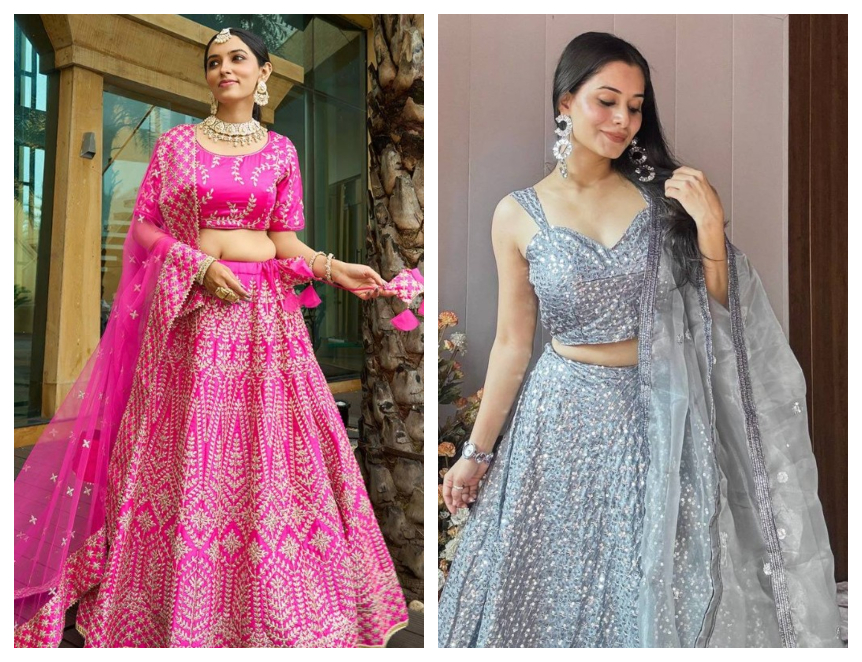
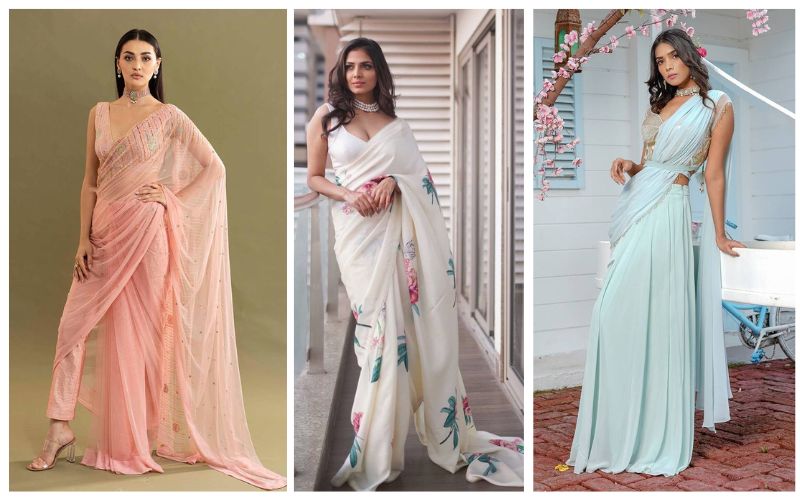
Sarees in gentle pastel shades are everywhere right now. These colours are fresh, and you can wear them during daytime events and office wear also. Some go-to colours for these sarees are blush pinks, mint greens, and powder blues.
Famous designers have introduced pre stitched sarees for women. These come pre-designed with pleats and pallu that you can wear like a skirt in minutes. This saree style eliminates the hassle of pleating and draping.
Comfort is key in current saree trends. Women now like fabrics like organza, chiffon, georgette, linen, and soft cotton blends. These fabrics provide easy draping, making them perfect for women who do not know how to drape a saree.
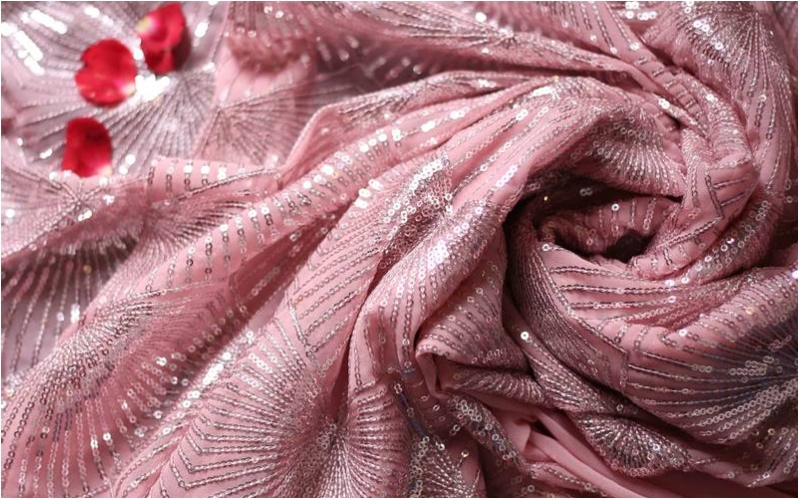
Heavy borders and dense embroidery are no longer popular. Today, designers and even celebrities give more importance to thin borders and delicate handwork. That sequin embroidery, which was popular in the 60s, has made a charming comeback in 2026.
The future of the saree feels exciting and full of possibilities. It is no longer limited to Indian fashion but has become a part of everyday wear and for modern wardrobes. Now, designers focus more on simple fabrics and styles, hence it has become more than just a piece of clothing. The craze of sarees is such that now even young girls are loving this 6-yard drape.
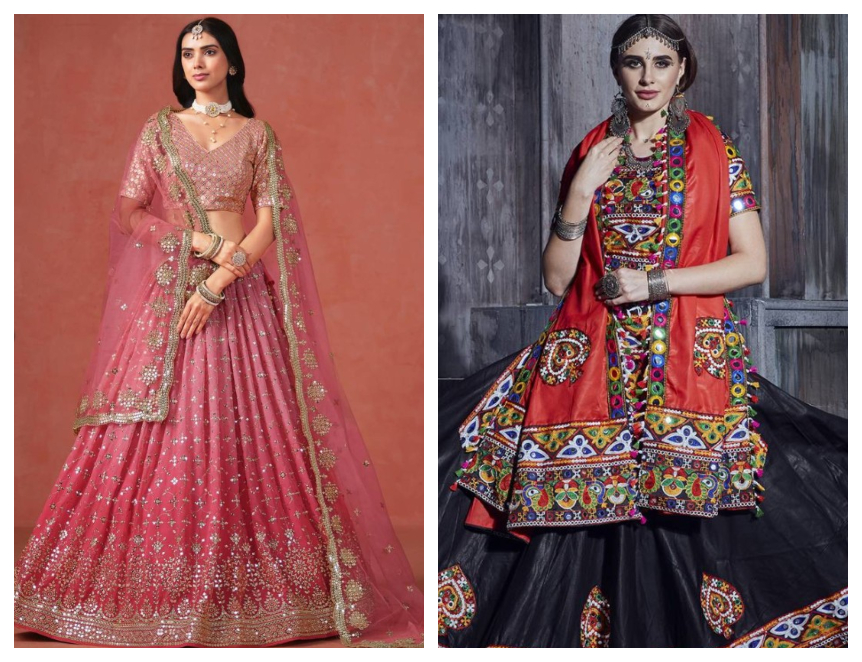
Have you ever wondered if a lehenga choli and a ghagra choli are two distinct outfits or if they are the same, given that they look similar? Then, you are not alone. These days, people use both terms interchangeably and add to this confusion.
So, the answer to this confusion is that yes, both are different. Both have different cultural significance, and even the designs and fabrics used are unique.
This confusion is mainly due to the multiple similarities that both of these have. So, if you are someone who is struggling to find out which one will suit you, then you are at the right place.
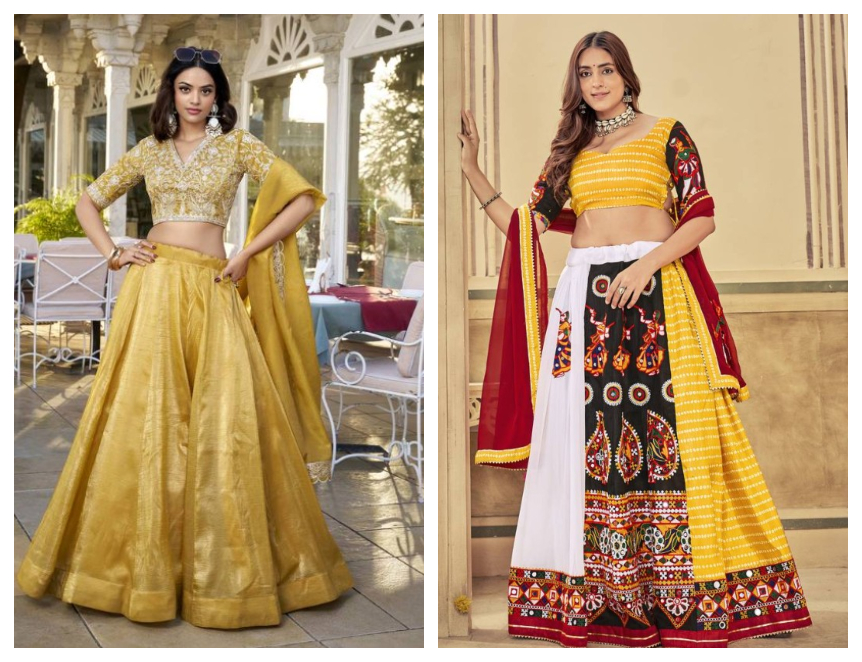
Lehenga vs Ghagra Choli: A Clear Comparison Now you know that while both of these outfits look and share a similar structure, their origin and evolution are very different.
Features
Lehengas
Ghagra Cholis
Origin
Evolved from the Mughal & royal courts, where luxury and status peaked
Originated in Folk and rural tradition to fulfil the need for comfort in daily wear
Skirt style
Neatly structured and has pleats for volume
Mostly free-flowing and highly flared to allow movement
Embroidery
Comes with intricate designs and detailing to make them look extravagant
Usually have minimal traditional designs to keep it light
Fabric
Made of rich-looking and textured fabrics like velvet, silk and organza
Made using breathable cotton and silk blend fabrics
Occasion
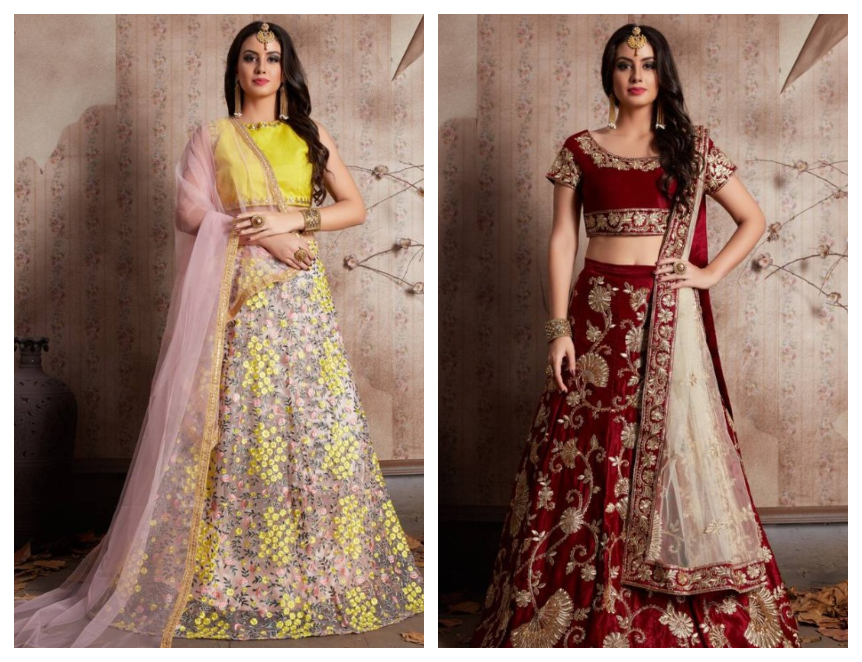
Ideal for weddings, receptions and high-class parties
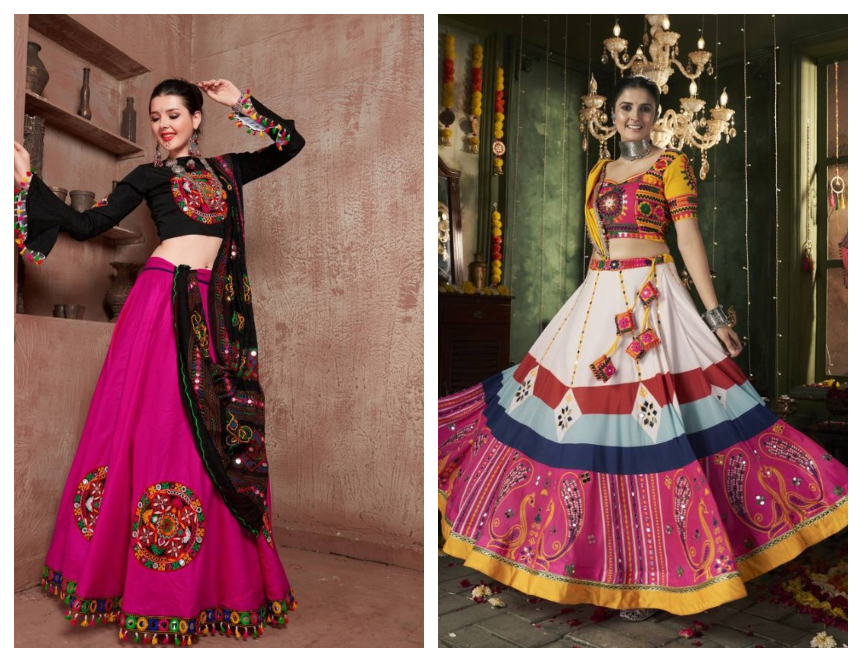
Often worn for traditional events or garba and dandiya dances
Modern Appeal
Are considered high fashion and bridal wear
Lean towards heritage and folk fashion
Cost
Usually expensive
Relatively affordable
Definition of a LehengaCholi
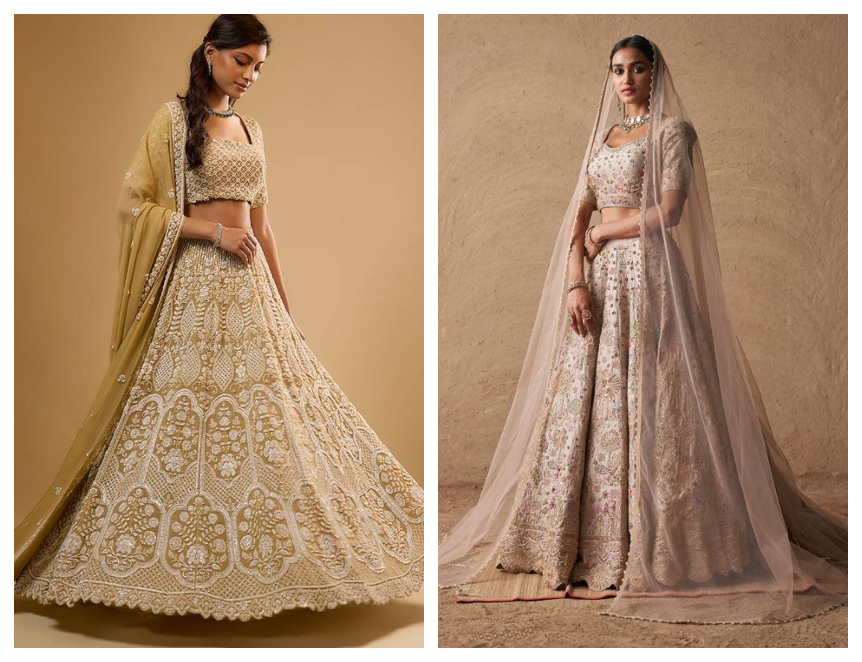
The lehenga has a rich history, and it has been a prominent part of royal families. Its earlier mention was found in Rajasthan, where Rajput queens used to adorn a heavier version of lehengas to look good. However, today it has become a prominent part of the Indian fashion industry.
But what defines a lehenga choli? The answer is it’s kalis; there was a misconception back in time that the kalis in the lehenga defined one’s financial status.
Yes, this is true, and this one myth is prominent till now. Even though today we have can can, big designers like Sabyasachi and Manish Malhotra rely on the kalis for its natural flair.
Understanding the Ghagra Choli
A ghagra choli is a folk-origin outfit defined by its unstructured, circular skirt and deep flare. Unlike lehengas, which developed in royal and ceremonial settings. The ghagra choli is a part of rural traditions from Rajasthan and Gujarat.
Ghagras are usually made from cotton or hand-loom fabrics. It features designs like Bandhani, Leheriya, Block prints, and Mirror work.
How is a Lehenga Choli Different from a Ghagra Choli?
Waistline
The lehenga comes with a defined waistband that gives a proper structure to your waist. It consists of hooks, zippers and even side ties. This helps to keep the heavy lehenga in its place. However, ghagra choli is very lightweight, therefore it comes with a draw string. One simply pulls it up and ties while wearing it
Length
A lehenga has a floor-length height, which is why it is considered an apt bridal wear. Also, to ensure that you do not topple, you have to wear heels with it. However, ghagra is different, and the length varies from knee length to floor length.
Design
A lehenga is always heavy when it comes to design. It features embroidery work with sequin, pearl, stone and even zardozi. Most of this work is done around the hem, its panels and also the waist. But ghagra does not have that much heavy embroidery. In fact, it mostly has prints like Bandhani, block print and even tie and dye.
Overall Look
A lehenga offers a sculpted look, hence it feels very royal. However, a ghagra choli is for an occasion where you want to express more through your attire. It has a flowy shape and flexible look that makes it perfect for festivals and folk performances.
Lehenga vs Ghagra Choli: Which is Best for You?
Choosing between a lehenga and a ghagra choli really comes down to how you want to feel and where you plan to wear it. If you love a grand look but do not want that old touch, then a lehenga is the perfect choice. On the other hand, a ghagra choli feels lighter and more relaxed if comfort is more important for you.
Therefore, the choice is yours, and you should always prioritize the occasion and your personal comfort more.
Why People Get Confused Between Lehenga and Ghagra Choli?
Lehengas and ghagras are often confused with one and the confusion is fairly understandable. The lines have been blurred in the current fashion scenario due to the evolution of both these outfits. Designers are trying to create a fusion that has the charm of both outfits. Here are all the reasons that lead to this confusion:
Similar Three-Piece Structure – Both the outfits come with a long skirt, a blouse and a dupatta. This structure makes both of them look all too similar at first glance, especially to people who are unfamiliar with regional nuances.
Modern Naming Practices – Many designers and retailers often label ghagra-style skirts as lehenga as the term is more globally recognized. This leads consumers to mistake both of these skirts for the same.
Regional Language Differences – The words lehenga and ghagra are interchangeably used in some parts of India, further muddying their actual definitions.
Bridal Fashion Influence – Weddings are growing to be more experimental with each passing year. With such a transition going on, brides are getting more inclined towards lighter, flared skirts inspired by ghagras but styled like lehengas.
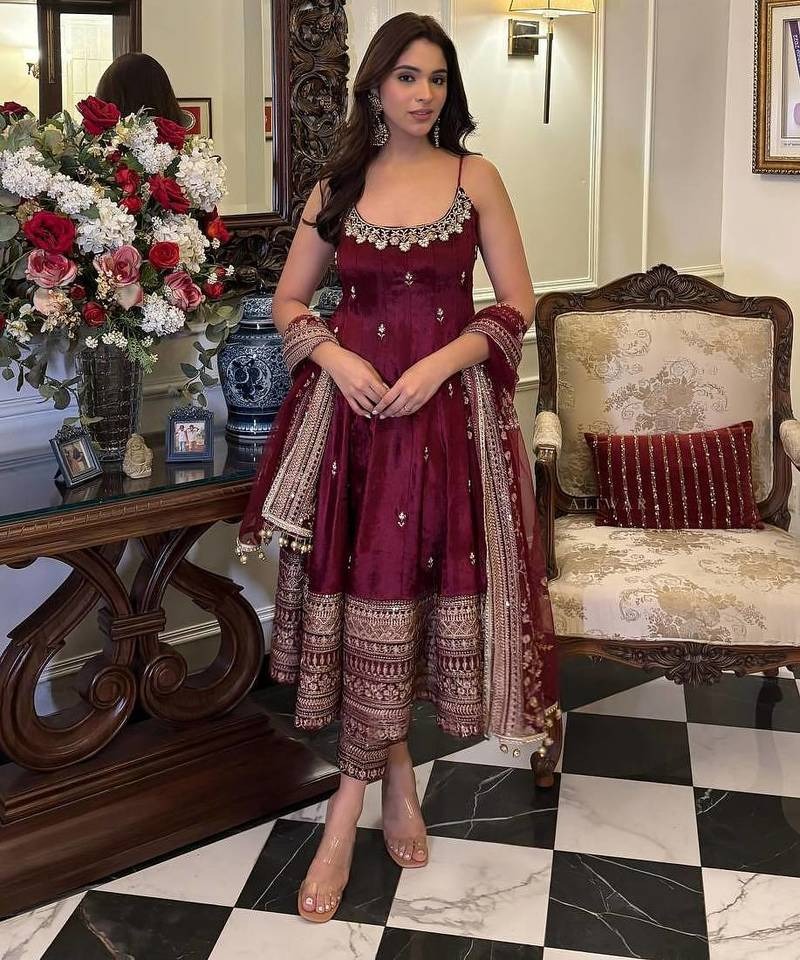
Anarkali salwar suit is an iconic garment that can be found in the closets of almost every woman around the world. This salwar kameez type is renowned for blending traditional heritage with modern trends seamlessly. It is characterised by a kameez that is fitted at the bust and then dramatically flares down towards the bottom. Often worn with churidars, fitted pants, the comfort level of this ensemble is unparalleled.
The word Anarkali literally translates to ‘the flower of pomegranate’– reflecting delicacy, beauty, and femininity. The poetic name captures the essence of the salwar suit very well, invoking images of grace, refinement, and purity. It typically comprises three pieces– a flared kameez, a tight salwar, and a decadent dupatta. Anarkali suits are well known for being very easy to move in and having a magical vertical flow.
This stunning amalgamation of comfort and style has made these suits beloved by women in South Asia. So, it doesn’t matter if you’re new to the salwar suit world or a seasoned shopper looking to explore the Anarkali in detail, this blog is just for you. Today, we will discuss the history, types, fabrics, occasions and more of this enchanting garment in detail. Read along with us to know more.
The Amazing Historical Background of Anarkali Salwar Kameez
The origins of the Anarkali can be traced back to the 16th century, when the Mughals ruled India. It is famously named after a graceful and beautiful courtesan, Anarkali. The attire soon became synonymous with beauty and sophistication. These dresses were mainly worn by the dancers in the Mughal court and were first called Mujra dresses. However, later the name changed to pay tribute to the iconic Anarkali.
In the Mughal courts, the dress was distinguished by its flowing fabric, flared silhouette, and intricate embroidery work. It was also crafted out of expensive and luxurious fabrics such as velvet, silk, and brocade. Embroidery forms such as zari, sequins, jewels, and stones were commonly seen. The Anarkali’s resemblance to the Angarakha, as well as classical Kathak dance costumes, can’t be missed. Initially worn only by royalty and the nobility, the Anarkali slowly steeped into the everyday women’s fashion. Today, the Anarkali is celebrated for its beauty, comfort, and elegance.
How does Anarkali’s Flared Silhouette Work?
The Anarkali is easily distinguishable due to its elegant flared silhouette. But how does it work? The Ghera or flare of the suit is cut in a way that allows it to dramatically flare out from the waist or empire line. This is achieved by using a large number of panels, a wide circular cut or significant pleating. All these elements ensure that the flare creates a graceful fall and is not stiff. The Anarkali also comes with panels or kalis that control volume. These panels are narrow at the top, where they attach to the bodice and progressively widen towards the hemline. Further, the long flowing design from the bodice to the hem serves to create a continuous vertical line. This uninterrupted flow extends the body visually and creates a glamorous illusion of height as well as slenderness.
Types of Anarkali Salwar Kameez
Floor-Lenght Anarkali:
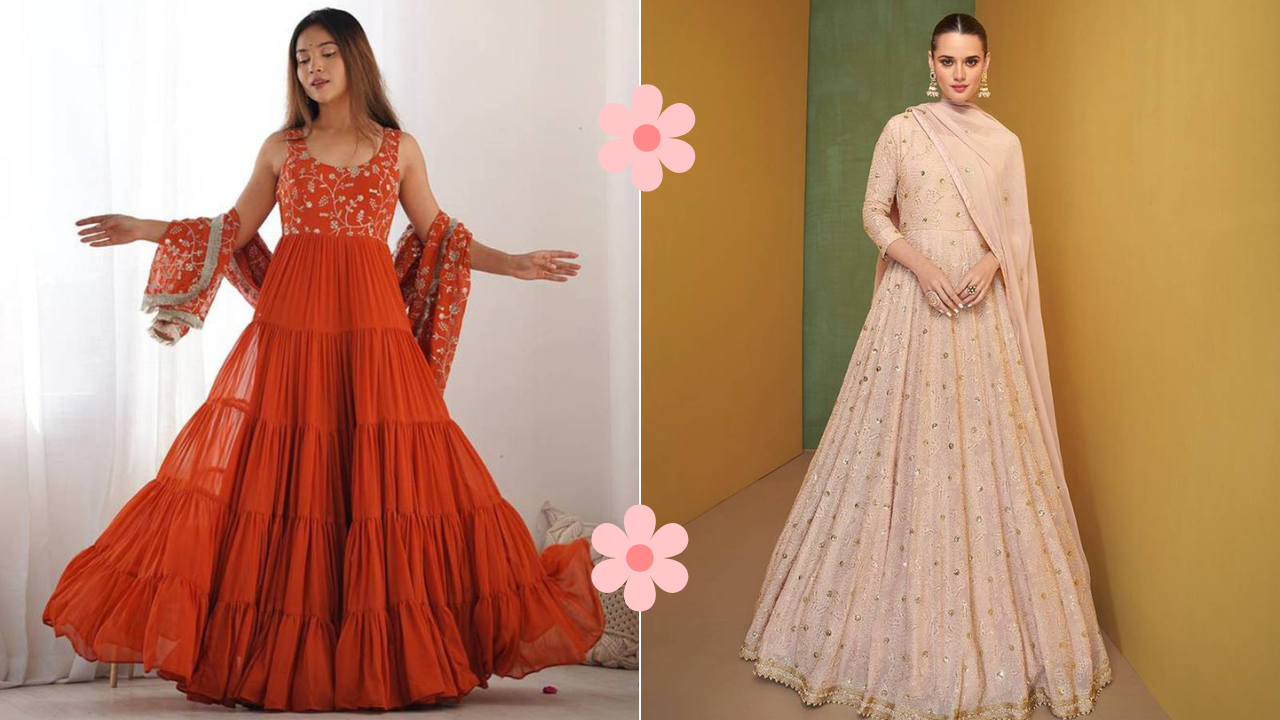
This fabulous Anarkali style comes with a long, flowing top that reaches the floor. It creates a gown-like appearance that is beyond elegant. Often made from flowy fabrics such as chiffon and georgette, it is a top pick for weddings, festivals and parties.
Mid-Length Anarkali:
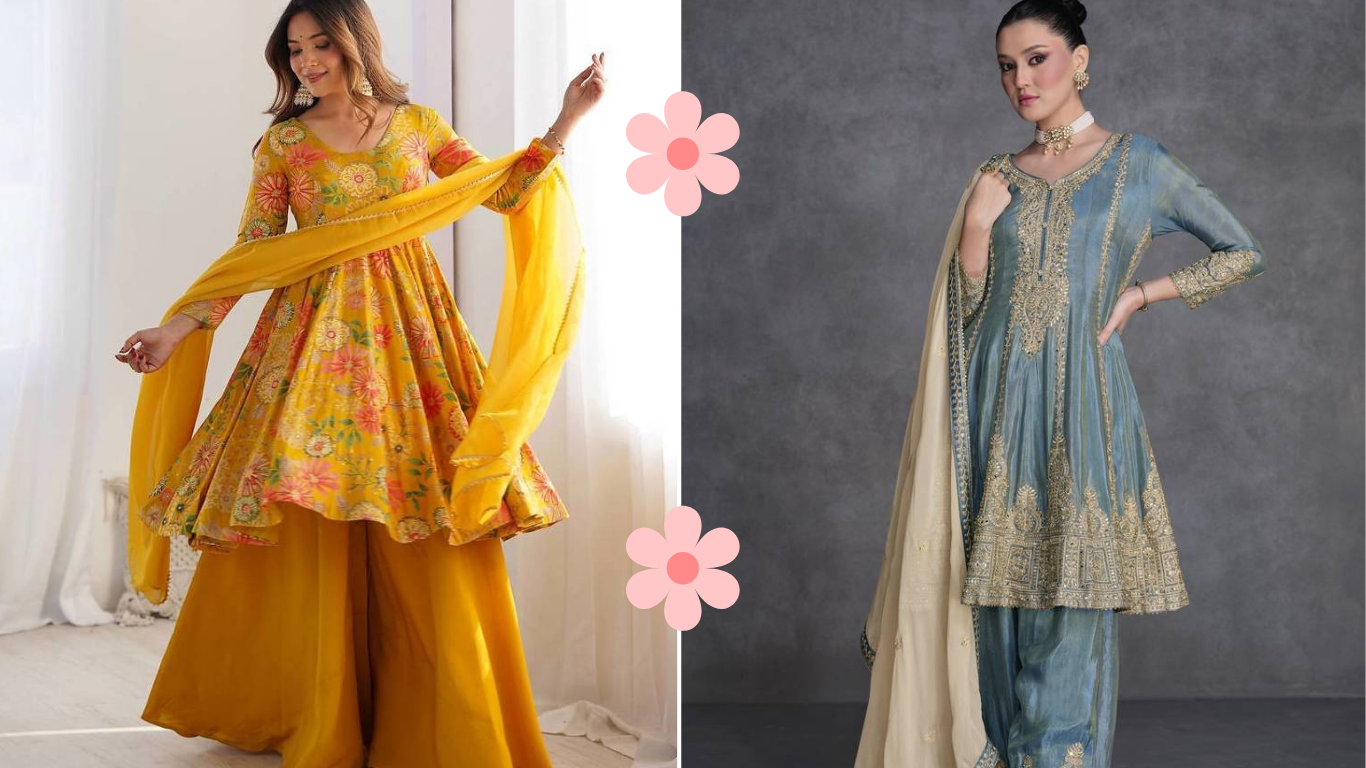
This attire comes with a kameez that falls somewhere between the knees and ankles. Probably the most common Anarkali types, it suits a wide range of body types with ease. It is suitable for both casual and semi-formal events.
Jacket-Style Anarkali:
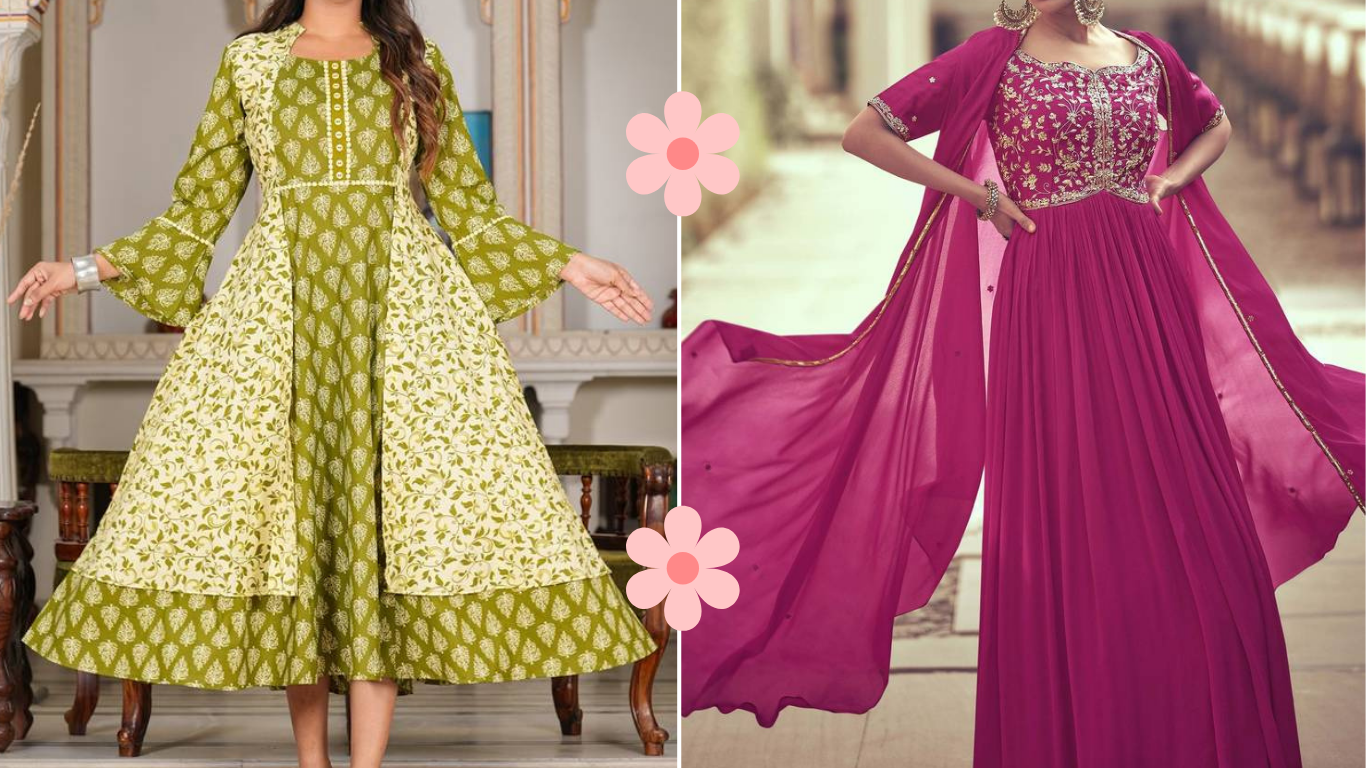
Fashion-forward women are loving this Anarkali style in 2026. This design beautifully combines the traditional charm of the suit with a modern jacket. The jacket can be short, cropped or long. It easily adds a bold statement to your otherwise heritage look.
What Bottoms Can You Pair With Anarkali Suits?
Churidars:
Churidars and Anarkalis make the perfect fashion match. The bottom forms tiny gathers or Churi at the ends, which look absolutely delightful. The simple design of these bottoms ensures that all the attention is on the Anarkali and underlines its elegance.
Straight Pants:
These are structured like a straight pant or trousers. They look absolutely ethereal with Anarkalis. The pants can be plain, embroidered or printed. Their formal appeal accentuates the glamor of the Anarkali.
Palazzos:
This bottom style looks breathtaking with Anarkali tops. A well-fitted Anarkali with a satin or santoon palazzo creates a beautiful look. The Palazzos are not only airy and comfortable, but they are extremely stylish as well.
Fabrics Commonly Used in Anarkali Suits
Flowly Fabrics:
Since Anarkali suits are all about the flare, it is but natural that flowy fabrics like georgette and chiffon will work well with them. They are lightweight and airy, making them perfect for summer occasions. They drape like a dream, giving you an ethereal, flowy silhouette.
Structured Fabrics:
Structured fabrics such as silk and silk blends are a popular choice for Anarkali suits. They offer the ultimate luxury and quality and can be considered a true investment piece. These Anarkali have an eye-catching and unique appearance.
Casual Fabrics:
These fabrics include cotton and cotton blends renowned for their comfort and versatility. These fabrics are natural and breathable and are ideal for daily wear as well as the summer weather. These suits are perfect for running errands, long office hours and intimate gatherings.
All The Best Occasions To Wear an Anarkali Suit
Weddings and Festive Celebrations:
Steal the spotlight with luxe Anarkalis at these grand occasions. Go for fabrics such as silk, velvet, brocade and tissue. Since these celebrations call for ultimate elegance, you can opt for suits with heavy embroidery such as zari, sequins, stone work and mirror work.
Formal Family Gatherings:
Family gatherings such as Poojas or dinners call for glam outfits that are just the right level of understated. Cotton or georgette Anarkalis with minimal embroidery work well for such events.
Evening Events:
For these functions, you can try out contemporary styles that are a blend of traditional silhouettes with a modern twist. Look for asymmetrical hemlines, cape-style Anarkalis, or High slit Anarkalis. Choose embellishments like sequins, metallic accents or intricate embroideries that catch light beautifully.
Why The Anarkali Will Never Go Out of Style
From Mughal courts to the wardrobe of the modern woman, the Anarkali has remained rooted in elegance, style and comfort. The love for this elegant silhouette just keeps growing day by day, and for good reason. Its flared structure never feels restrictive and instead offers a graceful and comfortable fit that is suited for a wide range of occasions. It is also adaptable across generations. Everyone, from little girls to young women and the elderly, can look amazing in it. Apart from this, there are a plethora of styles to choose from. This silhouette works well with minimal as well as ornate designs. You can opt for a lightly embellished cotton Anarkali for office events, or you can go all out and pick an intricately detailed one for weddings or festivals. This attire balances tradition and grace naturally, making it a huge factor in its popularity.
Anarkali– A Glorious Salwar Kameez Style
Many women confuse the Anarkali to be a separate clothing category altogether. However, it is not true. It is just a silhouette in the vast Salwar kameez style. The Anarkali is one of the most popular salwar suit styles that has been beloved by women for ages.
Final Thoughts
The Anarkali is not a garment, but a celebration of age-old Indian tradition revived with modern aesthetics. It’s flare and movement have made it an iconic piece of ethic wear. From the Mughal courts to the wardrobes of modern women, the Anarkali has made quite an impact. Its timeless elegance, ability to adapt to various body types, and versatility have made it a modern favourite. Women keep choosing this suit because there are such a wide range of styles to choose from. The Anarkali caters to all ages, body types and preferences. Hence, when you are choosing an Anarkali, you are choosing culture as well as modern trends– all in one garment.
FAQs
What occasions can I wear an Anarkali suit to?
Anarkali suits are incredibly versatile and suit a variety of occasions, such as weddings, festivals, dinner parties, office meetings, formal ethnic events and more.
What are the most common fabrics used in Anarkali suits?
Flowy fabrics such as georgette and chiffon are very popular. Apart from these, silk, cotton, velvet and rayon are also extensively used.
How to Style an Anarkali Suit?
Pair your Anarkali suit with statement necklaces and earrings, juttis or heels and a potli bag for a well-rounded ethnic look.
How to care for an Anarkali Suit?
Anarkalis in delicate fabrics and those featuring heavy embellishments should be dry-cleaned only. Cotton or linen Anarkalis with minimal adornments can be washed at home with a mild detergent.
The saree is a part of the Indian ethnic wear scene in all its glory. The magical 6 to 9 yards of allure are etched deep in the hearts of every Indian beauty who shares a story with traditional sarees. But did you know that there are over 100 styles in which you can wear a saree? From this sea of styles, one drape makes an exceptional mark. Yes, we are referring to the Nivi saree drape. The pallu of the saree falls over the left shoulder in this quintessential drape. This is what most, if not all Indian women are seen wearing in the present day and it’s the drape that gets the maximum attention. The reason it is very popular is due to its perfect mix of modesty, practicality, and trend. Its simplicity, global appeal, and understated chic have helped its reputation travel far and wide. The Nivi drape is also very easy to wear, and therefore, it becomes the favorite among saree wearers who are wearing it for the first time. There is an even pattern and a graceful drape that enhances the saree without all those complex knots. This style is also quite easy and can be worn effectively with most saree materials like silk, cotton, chiffon, and so on. So, for today, let’s focus on this magical saree drape. Keep reading to learn all about the Nivi Saree drape.
The Rich and Colorful History of Nivi Style Draping
The history and evolution of the Nivi style is as fascinating as the drape itself. This drape has been worn since ancient times for which poetic verses such as Haribhadra’s 8th-century Indian work Samaraichcakaha, written on the draping styles of women, mention the way in which a woman dresses in a sari is samaraiicc sooter ni complete with saakeji denkana daughter who can’t escape by throwing her pallu over his head! Additionally, the Nivi drape is also seen in the Ajanta cave frescoes with folded pleats tucked about and behind the legs. This form is known to have developed in Andhra Pradesh. This is further supported by the Nivi drape’s striking resemblance with the Vesti that also requires pleating and tucking at the waist. In addition, the name of this drāpe was also called Nivi bandha when worn by women at this period, further substantiating it.
It’s believed that the contemporary form of Nivi drape was introduced by Jnanadanandini Devi Tagore, who is often assumed to have been social influencer back in her days. It was rare to see a saree with a blouse before the British period. But the Englishmen forced the Victorian era values in India, and Tagore wore an ensemble that included a blouse, petticoat and Nivi drape. She wanted to blend in while standing out among the Britishers. She was the first to introduce the left shoulder versus right idiotic draping of sari pallu. She also ran an ad in a women’s magazine named Bamabodhini Patrika to promote this draping.
The Nivi drape has a social effect. This was a costume in the colonial days, to show that we were not Brit foolish. Bollywood and other Indian films have portrayed the Nivi draped saree as a symbol of elegance. Even the celebrated painter Raja Ravi Varma chose to paint women in the Nivi style saree, which became an ideal attire for women Republic of India. The Nivi drape is also extremely functional, and, therefore, became the garment to be worn for women who were starting to participate in public spaces like schools, colleges and workplaces. Additionally, in art, cinema and pop culture, the drape is considered as a symbol of femininity, elegance, and panache.
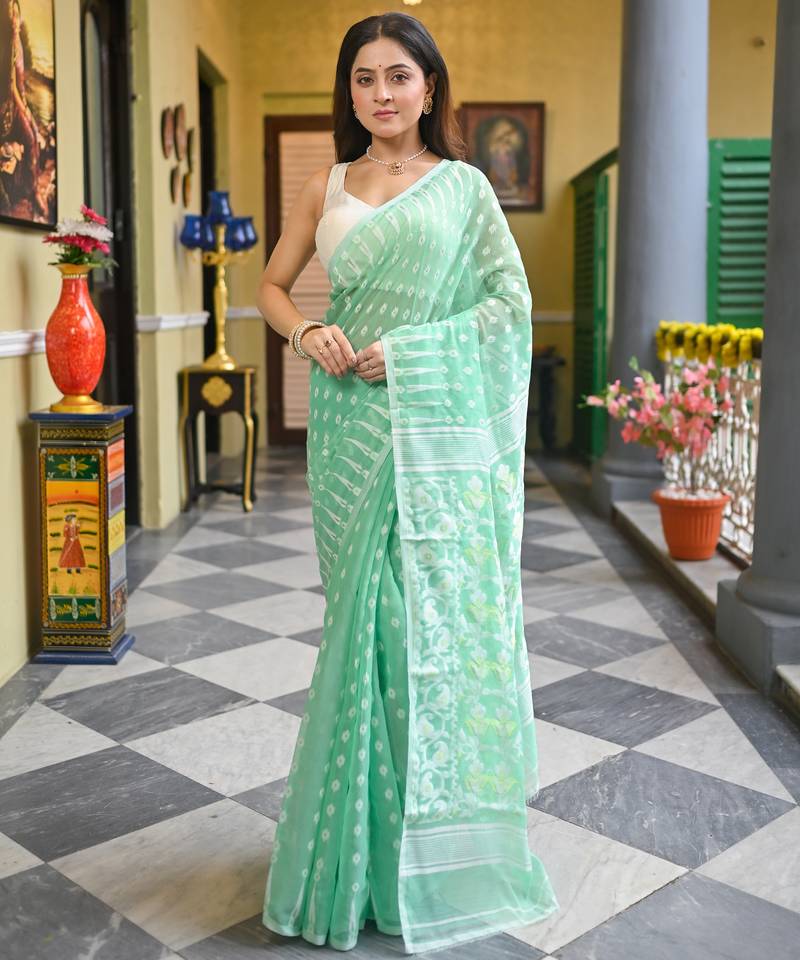
These sarees are the very definition of elegance meeting comfort. Breathable cotton fabrics like Chanderi, Kanchi, or Handloom cotton can be draped elegantly with the Nivi style drape. Various cotton weaves, such as Jamdani and Begumpuri, also work well with this style. Perfect for daily wear and office wear, cotton sarees and the Nivi drape are truly a match made in fashion heaven.
The Nivi style is one of the most common and elegant ways to drape a silk saree. It creates a sleek silhouette that is to die for. This draping style is versatile and can be pleated for both formal occasions or daily wear. The decorative pallu is left flowing over the left shoulder, making it perfect for showcasing rich silk fabrics like Kanjeevaram or Banarasi.
The Nivi style in these light drapes focuses on neat pleats and a graceful pallu tossed over the left shoulder. Small, neat pleats are often made when styling these sarees. The pleats made are also narrower, and additional pins or inner loops are used to prevent slippage.
The Nivi draping style is renowned for its versatility and can be used with various fabrics such as cotton, silk, georgette, chiffon, and more. However, the fabric’s weight and texture can heavily impact the draping style as well as the final look of the saree. Lightweight sarees like chiffon and georgette require more pleats to hold the saree in place. However, heavier sarees like silk and cotton work with fewer pleats as well. Structured fabrics such as cotton or heavy silks will have a more defined shape over the shoulders. On the flip side, lightweight fabrics like chiffon and georgette create a soft and fluid flow for the pallu.
You need to start with the basics. First, pick a saree and blouse of your choice. The saree can be 5.5-6 yards in length. The blouse, a fitted upper garment worn with the saree, comes in a variety of patterns. It can be full-sleeved, half-sleeved, halter-necked, sleeveless, or boat-necked, to name a few.
Petticoat
Also known as the underskirt, this is a full-length skirt that is worn underneath the saree. It is typically made with cotton or satin and has firm ties securing it to the waist. Pick one that matches or complements the saree color.
Pins
Once you pleat the saree, it is secured with a waistband pin or saree pin. Further, safety pins are used to secure the pallu to the shoulder.
The Complete Step-by-Step Guide to Nivi Style Draping
To achieve the perfect Nivi drape, follow the following simple steps. Master the basics so that you know how to drape your saree confidently.
Step 1: Start with the saree’s plain end. Tuck it into the petticoat at the right end. Wrap it around your waist counter-clockwise. Keep tucking until you complete one full round.
Step 2: The next step is to gather the saree in the front and make 5-7 neat pleats. They can be 4-5 inches wide, depending on the saree fabric. Ensure that you align the bottoms of the pleats. Proceed to tuck the pleats into the petticoat, slightly towards the left of your navel. Secure the pleats with a pin.
Step 3: Bring the pallu over your back and neatly drape it on the left shoulder. Don’t forget to adjust the pallu length so that it falls to your knees or calves. Secure the pallu with safety pins. You can also make small pleats on the pallu for structure.
Step 4: Adjust the saree for polish and comfort. Tidy the pleats, check the hemline, and check the saree fall.
The Best Nivi Drape Accessorising and Styling Tips
Choose the Right Jewelry
Instead of randomly stacking up jewelry, go for pieces that bring out the charm of your saree. A choker or layered necklace works like magic. Opt for statement earrings such as Chandbalis or Jhumkas. Choose a dainty Mang tikka if you are dressed up for a wedding or festival.
Select Proper footwear
While high heels and Nivi draped sarees are a match made in fashion heaven, you can also go for embellished juttis or mojaris for comfort.
Pick the Ideal Handbag
It is but obvious that you will need a handbag to carry your essentials when you wear a saree. Go for a bag that complements, not competes with, your saree. Embroidered clutches or potli bags are the perfect ethnic pick.
Go for Classic Hair Adornments
Hair adornments such as traditional hair pins or fresh flowers in your hair can elevate your Nivi drape look instantly. You can even opt for decorative hair clips or embellished barrettes for a contemporary vibe.
Indulge in Saree Belts
Saree belts add structure to your silhouette and refine it with ease. You can go for a metallic or embellished saree belt that matches or contrasts the fabric or color of your Nivi -draped saree.
Different Ways to Style the Pallu in Nivi Draping
Open Pallu Style
In this draping style, the pallu is left open, without any pleats. This style is particularly suited for heavily decorated and ornate pallus. The open Pallu draping works for weddings and celebrations and adds delicate charm and femininity to the look.
Neatly Pleated Pallu
Another stunning way that you can style your Pallu is in the neatly pleated form. In this style, 4-5 small Pallu pleats are made and then attached to your left shoulder with safety pins. The neatly pleated Pallu works well for professional and formal occasions.
Reversed Pallu
Also known as Ulta Pallu, in this style, the Pallu is brought from the back, over the right shoulder, and then across the front. It is often draped with pleats and offers a completely different and fresh aesthetic.
Blouse Styles That Complement the Nivi Drape
The right blouse will act as a statement piece, elevating even the simplest of sarees. When styled correctly, the blouse adds a modern flair to the otherwise traditional look. You can also style the same saree for different occasions by simply switching up the blouse. Here are a few blouse styles that accentuate the Nivi drape:
Elbow-length Blouses
A staple in the bridal trousseau, these blouses offer a larger canvas to showcase the intricate embroidery and embellishments. These blouses, when paired with the Nivi drape, can create an amazing, high-fashion fashion opulent look.
Round Neck Blouses
This blouse style creates a classic, elegant Indian look that is hard to beat. A marriage of simplicity and sophistication, choose a round neck blouse for everyday glamor.
V Neck Blouses
Modern V-neck blouses add instant charm to your Nivi drape. This one is for women who want to add style to their look without trying too hard. You can opt for a sleeveless or full-sleeved V-neck blouse for style and panache.
Common Mistakes to Avoid in Nivi Draping Style
Uneven Pleats: A properly draped saree should have neat, uniform pleats. If they are too broad, then it creates a bulk at the midsection. However, if the pleats are too thin, they become difficult to manage and tend to slip off.
Incorrect Saree Length: The length of the saree is paramount to an elegant, refined saree look. A saree that is too short can ruin the look’s balance. However, if it is too long, it will drag on the floor.
Loose Pallu Placement: The Pallu is the highlight of your saree and hence must be secured properly. A Pallu that is not secured properly will keep falling off and create an adjustment nightmare for you.
Over Pinning or Under Pinning: A common concern while draping a saree is that it might unravel, and can lead to the use of too many pins to secure it. However, too many pins, especially on the parts of the saree that are visible, can ruin the entire look and can also damage the saree fabric. On the flip side, underpinning will not give enough support to the saree’s silhouette.
Pick the Right Petticoat: Your petticoat is the glue that holds your saree together, hence choose it with care. Skip the bulky fabrics and go for a lightweight one in cotton or satin. Ensure that it also fits snugly at the waist and falls straight for proper comfort.
Pin Support: Be smart and strategically use pins to secure the pleats to the petticoat and the Pallu to the shoulder. As visible pins can affect the seamless flow of the saree, explore other options such as hidden pins, fabric tape, or magnetic safety pins.
Fabric Selection: Not all fabrics are suitable for all occasions. If you are draping a saree for long hours, then go for lightweight and breathable fabrics such as cotton, silk, chiffon, georgette, and organza. These not only give you an elegant look but also ensure that you don’t compromise on comfort.
Draping The Nivi Style According to Different Body Types
Petite Body Types
The goal for this body type is to create height. This can be easily achieved by keeping the pleats narrow and neatly aligned. You can also drape the pallu shorter and go for a high-waisted drape to help elongate the frame.
Curvy Body Types
If you have this body type, then choose sarees that naturally highlight your curves. Medium pleats that sit flat work the best for curvy bodies. Tuck the pleats slightly off centre for maximum comfort. It is important that you avoid bulky pleats at the midsection.
Tall Body Types
When styling for tall body types, you should focus on adding volume and balance. While draping the saree, go for wider pleats that add structure. Layered or boxed pleats also work well. Drape the Pallu on the longer end and let it fall loose.
Fabulous Modern Variations of the Nivi Drape
Belted Nivi
This style involves adding a metal or embroidered belt to give structure to the Nivi silhouette. A Nivi drape style upgrade, this one looks fabulous at weddings and festivals.
Butterfly Style
In this variation, the pallu is pleated thinly and draped across the body. This creates a light butterfly effect that looks absolutely gorgeous. This Nivi style is suitable for lightweight fabrics such as chiffon or organza.
Mermaid Style
This modern figure-hugging style builds on the foundation of the Nivi drape and combines it with a mermaid tail silhouette. It is achieved by creating narrow pleats at the bottom and leaving the pallu flowing.
Pre-Stitched Style
This one is for the ladies who love the Nivi drape but lack the skills or time to adorn one. These sarees come completely pre-stitched with pre-made pleats and an attached pallu. You just need to slip into one like a dress, and you are good to go.
Why the Nivi Drape Style will Never Go out of Trend
The Nivi style has been in fashion for decades, and its popularity isn’t going to fade anytime soon. The reason why this drape has garnered so much love and admiration among fashion lovers is because of its classic and adaptable design. It works with all saree fabrics from traditional cottons and silks to contemporary georgettes and chiffons. Hence, this drape can be worn for multiple occasions – from daily wear to weddings and festive occasions. It is also suitable for both simple and ornate sarees. For sarees with elaborate detailing, this style is a great way to showcase their designs. Its minimalistic elegance also ups the glamor of even the simplest of sarees.
Final Thoughts
If you are a saree lover, then you must learn the Nivi saree drape. This versatile, polished drape is a go-to for daily wear as well as special occasions. It is also very easy to master and is often seen as a standard way to drape a saree. However, if you are nervous about draping the Nivi style, don’t worry! Practicing wrapping your saree in this style will help you improve the finish. Last but not least, don’t forget to pick out the right petticoat and blouse as they are the foundation of your saree look. Use pins to secure the drape neatly. Add accessories such as jewelry, footwear, and a stylish bag to elevate the look with ease.
A saree looks flawless at first glance, but the real magic lies in the fabric used. Since the base fabric of the saree decides its fall and how comfortably you can drape it around. Another thing that has a great influence on the saree is the fabric used. Well, these factors together make saree shopping a hectic task.
Hence, it is very important to do quick research beforehand to have a proper understanding of the different types of fabrics. So, we have brought to you this informative blog that discusses the details of different saree fabrics.
1. Natural Fibre Saree Materials
Cotton Sarees
Cotton sarees are breathable and skin-friendly, and we get them naturally from the cotton plant. Citing its natural threads, cotton is extremely comfortable and is one saree which you will find in the wardrobe of every Indian woman. Cotton sarees are widely worn for daily wear and summer seasons as they absorb sweat well and keep the body cool throughout the day.
The next fabric that we get naturally and without which the discussion of saree material is incomplete is the silk saree. Whenever you talk about royalty or something which is a bit different from everyday wear, then silk pops out in your mind. Why so? Unlike other fabrics, silk sarees are blessed with a natural sheen and are highly durable, just like cotton. However, it requires high upkeep as compared to other fabrics.
Flax fibres are the backbone of the linen sarees, which is why these features are under our natural fabric list. These have a very light texture, which is why it is a favourite during warm months. Also, a linen saree looks like a statement piece when you wear it with a blouse with a formal neckline.
Although not common, wool sarees are a must-have for those cold months. These are made with pure wool that provides warmth when it is cold outside. Some other designs that look attractive are the pashmina design.
2. Silk Varieties Used in Sarees
Mulberry Silk Sarees
The first on our list is the mulberry silk saree, which is procured from the silkworm. Since it is produced naturally, it is very difficult to get an original silk saree. Unlike other silk variants, the threads are pretty fine and uniform. This provides a smooth texture and rich look to the saree.
Tussar Silk Sarees
Tussar silk sarees have a slightly coarse texture compared to mulberry silk. However, it has its own place in the heart of a saree lover. Tussar silk has a slightly natural gold tone in its look, which makes it perfect for party wear. Presently, tussar silk sarees in metallic colours like gold, copper and even silver have ruled the market.
A guide on sarees is incomplete without mentioning a bananasi silk saree. Talking about the saree, banarasi silk is somewhat soft, and it includes fabric like Bangalore silk, Crepe silk and even Dola silk. The design features a heavy silk base with detailed patterns, often inspired by floral and Mughal motifs. These sarees are popular bridal choices and are worn on weddings and grand celebrations.
Kanchipuram silk sarees are woven using thick silk yarns, making them durable and luxurious. The saree features a heavy silk body with high thread density. It has a contrast with a wide zari border and a beautiful pallu, which is joined later. Some go-to designs in this saree include temple designs, checks, stripes, and florals woven in pure gold or silver zari.
Mysore silk sarees are made from lightweight and smooth silk fabric that makes them an elegant addition to your saree collection. The body of the saree is plain, and it comes in solid colours. However, its main USP is its narrow gold zari borders and a neatly finished pallu.
Raw silk sarees have a slightly rough texture and a more natural feel. They offer an earthy and organic appearance, which makes them ideal for those who love aesthetics. Some popular designs in raw silk sarees are Banarasi, temple border and even Patola.
Art silk sarees are an affordable alternative to natural silk. These are budget-friendly and easy to maintain, which makes them a must-have for silk lovers who have a budget. However, these lack the softness of real silk and therefore work best for festive wear.
Linen is the gold when it comes to fabrics. This fabric has a beautiful crispness with the softness of silk. Linen is highly absorbent, therefore it easily absorbs sweat in summers which is why it is very popular. Linen silk sarees have light colours that make them apt for formal wear.
Silk cotton saree is a perfect office wear due to its pretty look. These sarees are made by combining threads of silk and cotton. These are less heavy than silk and less stiff than cotton, which makes them perfect for long hours.
Georgette is often confused with chiffon, but the former has a slightly grainy texture. However, similar to chiffon, this is also a fancy fabric and works perfectly for both daily wear and party sarees. The fabric has a very pretty fall, therefore it does not stick to the body. This fabric is suitable for women with a curvy body as it adds structure.
Chiffon sarees are soft, sheer, and flowy, creating a graceful and smooth drape. The fabric feels very light on the body, making it ideal for long events. However, chiffon needs careful handling as it can slip easily. This fabric is lightweight and works best for warm months.
Crepe sarees have a crinkled surface, which provides good grip and prevents slipping. They are comfortable to wear and easy to manage, especially for beginners. Crepe works well for office wear, daily use, and travel due to its practicality.
If you love gloss, a satin saree is something that you must have in your wardrobe. The sarees have a natural fluidity and flow that makes them luxe. These sarees are best suited for evening parties for their beauty. However, you have to be cautious as it creases very easily.
Net sarees are made from a sheer fabric with an open weave. These sarees feature heavy embroidery with sequins, pearls and even rhinestones. However, net fabric is very lightweight and transparent, and therefore it requires a solid lining.
Nylon sarees are known for being strong and stretchable, which makes them durable. They are less prone to wrinkles and are easy to maintain. Nylon sarees are suitable for women who like practical and low-maintenance pieces.
Polyester sarees are budget-friendly and highly durable. They retain colour well, resist wrinkles, and are easy to wash and store. While they may lack the softness of natural fabrics, they are a practical choice for regular use.
4. Sheer and Lightweight Saree Fabrics
Organza Sarees
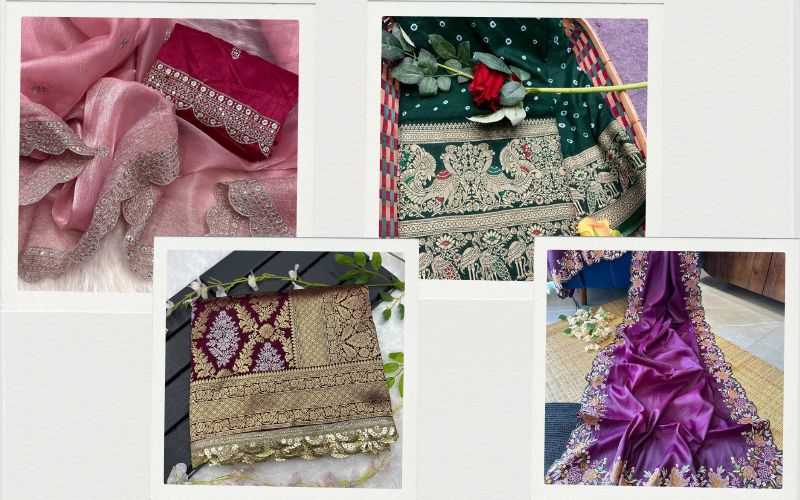
An organza saree is something that never fails to impress a new bride. It has a thin and crisp fabric, which has its own beauty. The fabric has a beautiful fall that makes the pallu look pretty. Also, organza has a very subtle shine that makes it suitable for an ethnic look.
Looking for a royal look? Then, tissue sarees are something that you cannot miss. The sarees are very lightweight and feature a pretty metallic shine. This shine is mainly due to the metallic threads that are woven into the fabric. Tissue is also a very soft fabric; it looks very graceful when you wear it in the right way.
A Kota Doria saree features a square check weave pattern known as khat. The fabric is lightweight, which makes it perfect for hot and humid weather. Kota Doria saree has a fluffy look and in dark cheerful colours, it looks like a dream on a new bride. The USP of this saree is that it is made with pure cotton fabric, so it works beautifully for daily wear and office wear.
5. Traditional Handloom and Regional Fabrics Sarees
Ikat Sarees
You cannot miss ikat design when discussing the premium saree materials. This is made using a yarn-dyeing technique wherein the designers dye the threads before weaving. The result in a blurred and feathered pattern edges the signature of ikat. These are suitable for cultural occasions.
The charm of a jamdani saree is something that is unmatched. This is a pure handloom saree made over a fine muslin base. The saree also features floral and geometric motifs that lend it a delicate appearance.
Coming from the heartland of Madhya Pradesh, Chanderi sarees have made their mark in the saree industry. The sarees are made from a combination of silk and cotton blend. This leads to a subtle shine and a lightweight texture. The saree features small motifs and simple borders, therefore you can carry it to day functions, office parties and festivals.
Paithani sarees are the pride of Maharashtra. The main USP of the saree is its rich silk base and heavily detailed pallu that features peacock or lotus motifs on it. These sarees are a heirloom piece for Marathi women, and they wear them during weddings and religious ceremonies.
The last on our list of the best sarees is a Sambalpuri saree. This is made using the tie and dye technique that leads to a clear and symmetrical pattern all over it. This is a popular saree which you can find in Odisha. The design and look of the Sambalpuri saree is such that it looks beautiful for both work and ethnic wear.
6. Speciality and Modern Saree Fabrics
Velvet Sarees
The first modern fabric saree that we consider is the velvet saree. This saree is known for its thick and plush texture and luxe look. The fabric has a heavy drape, therefore you can wear it to weddings receptions in winter.
Who says denim fabric is just for jeans? Yes, now women prefer sarees made with denim as well. The presence of denim fabric makes it a durable and easy-to-carry fabric. These sarees are for women who do not shy away from experimentation. Just wear denim sarees with contrast blouses to look perfect on a casual outing.
Khadi Sarees
These have been a part of everyone’s wardrobe back in the 80s. But guess what, these are back in trend for their unmatched beauty. These sarees are made from handspun fabric, which makes them different from others. Also, khadi is made with naturally grown fabric; therefore, it is ideal for Indian summers. The fabric grows softer with use and makes it suitable for office wear and daily use.
Modal Sarees
These sarees are made from regenerated cellulose fibre, which we get from the pulp of beechwood. These fibre provides soft and smooth texture to the saree. What makes model sarees different from others is that they drape beautifully on the body, and you can wear them regularly.
Viscose Sarees
Viscose sarees are not made from natural fabric, but rather they are produced from a semi-synthetic fibre. Using synthetic fibre helps to get a silk like appearance. This makes the sarees look beautiful but at a 1/3rd cost of a silk saree. Also, viscose needs gentle washing to prevent fibre loss.
How to Choose the Right Saree Material
Here’s how to select the perfect saree fabric based on practical factors:
Weather and Climate
Weather is one of the important factors to consider when choosing a saree. If you live in a hot or tropical city, then cotton, linen and chiffon are great additions for your wardrobe. Cold climates go well with silk, velvet and wool-based sarees.
Comfort and Wearability
Now, sarees do not need to be always boring and soft. Some sarees are also heavily embellished, which might look good, but sometimes are difficult to carry. Therefore, you should choose sarees which are comfortable to carry and on the skin also.
Maintenance Needs
The last factor to keep in mind when choosing saree material is the maintenance it needs. However, this totally depends on the fabric of the saree. Sarees made of cotton, polyester and blended fabrics are low maintenance; therefore, these are buy-worthy for working professionals. While, silk, organza and embellished sarees need regular dry cleaning. Therefore, you have to be very careful with these delicate pieces.
Saree Fabric Care Basics
Understand Fabric Needs
Each saree fabric requires a different washing method. Cotton and linen sarees can usually handle gentle hand washing in cold water. While silk, chiffon, and georgette should be dry-cleaned or washed very carefully.
Use Mild Detergents
Your sarees are not made for those powdery detergents, as they can build up and develop a white film. Therefore, choose mild liquid detergents as it helps to retain the softness of the saree. Similarly, always choose cold water as it prevents the shrinking of fabric.
Proper Storage
The third factor that keeps your saree new for a long time is proper storage. Never dry it in direct sunlight as it can damage its colour. Similarly, use cotton or muslin cloth bags to prevent moisture buildup.
Careful Handling of Delicate Sarees
There is a unique way to handle every saree as each fabric is different. However, one thing that one can do is to avoid pulling fabric as it can damage its threads. Also, be careful when you iron or heat the saree to retain its amazing shine.
Regular Maintenance
Sarees, which are kept folded for a long time, often develop a smell. However, you should make a habit of airing these sarees to prevent this smell. Experts also suggest keeping some dried neem leaves to prevent insects.
Conclusion
On a final note, having a proper understanding of saree fabrics helps you to make shopping easy. You have an insight into how each material will look and feel, and whether it is perfect for a particular occasion. Understanding saree fabrics makes shopping easier and more satisfying. When you know how each material looks and feels, you can choose a saree that suits the occasion, weather, and your comfort. Every fabric offers a different drape and style. Explore a wide range of sarees in different fabrics on Mirraw and find the perfect saree that matches your style and needs.
Islamic clothing is a dressing style mainly worn by Muslims that follows the codes and conduct of the Islamic religion. While there have been many controversial opinions about it, the essence of Islamic clothing is deeply rooted in modesty and a desire not to draw attention to oneself. Modesty has been the cornerstone of Islam since its inception in the 7th century. Muslim men and women proudly wear this clothing as a show of respect to the principles of their religion. For women, modest clothing includes the Hijab, Abaya, Jilbab, Khimar, Niqab, and Burqa. Thobe, Kameez, and Kufi are some common Islamic men’s clothing items.
However, why is modesty so important in Islam? A fundamental aspect of Muslim teaching, modesty extends beyond fashion – it actually refers to promoting self-respect and humility, both in dress and behavior. The religion’s aim is not limited to personal value, but it sees modesty as a societal norm that needs to be followed to achieve communal dignity. Dressing modestly takes away the attention from the person’s appearance and shifts focus to internal values instead. Thus, a Muslim person is valued for their inner qualities, not just their external appearance, when dressing modestly.
Islam places special emphasis on men and women dressing modestly and behaving with dignity. However, it doesn’t have a set of guidelines that followers must follow. Hence, every culture and country has its own take on Islamic clothing. The differences are heavily influenced by the climate, historical influences, and societal norms. However, many don’t know that Islamic clothing and modest fashion are two different entities. Trendy modest clothing refers to covered, non-body-hugging clothing designed to create a sense of comfort and confidence for people of all beliefs. On the other hand, Islamic clothing is a specific form of clothing that is directed by the Islamic principles to promote Muslim values.
The Fantastic History Of Islamic Clothing
One of the most visible aspects of the Islamic religion is the modest clothing donned by its followers. The roots of this clothing can be tied back to the advent of Islam itself, in the 7th century. At that time, traditional Islamic clothing was heavily influenced by Middle Eastern dresses. They were typically loose-fitting and covered the body from head to toe. The aim of these garments was not just modesty, but also to protect the wearers from the harsh desert climate.
As Islam spread across the world, Islamic clothing evolved as well. It absorbed the local climate, customs, and history of the region. Some major regional influences on the Muslim clothing include:
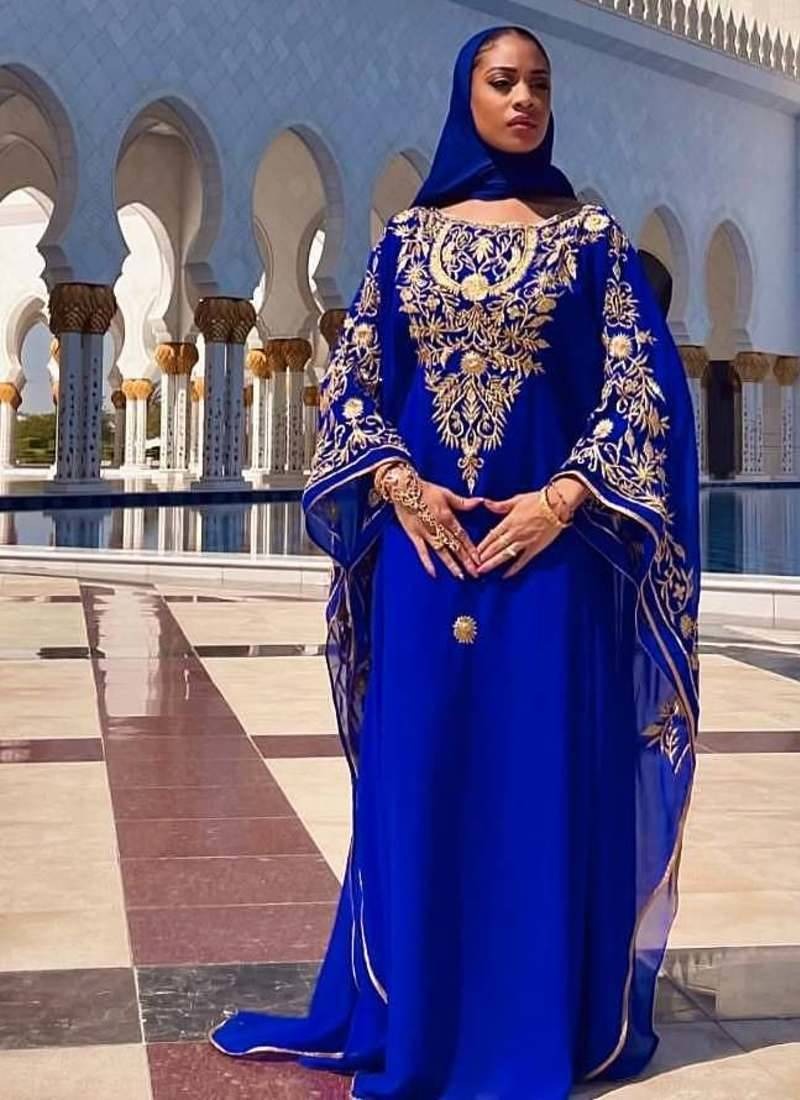
The Middle East: Arabs traditional clothing in the Middle East is renowned for its luxurious yet modest style. TheAbaya is commonly worn in Saudi Arabia and the UAE and features intricate embroidery as well as beadwork. Men wear the Thobe, which is an ankle-length garment usually in white or neutral colors.
South Asia: Typical Muslim clothing in South Asia is known for its vibrant colors, luxurious fabrics, and exquisite craftsmanship. Garments such as Shalwar Kameez, Kurta, Sherwani, and Jubba are popular. There are amazing regional variations as well. Case in point– the Pheran, a loose tunic worn in Kashmir, and Lacha, a sarong-style skirt worn by peasants.
North Africa: North African Islamic clothing is a testament to the cultural diversity of the region. It is defined by the Djellaba, a loose garment that features a hooded design and is unisex.Hijabs and headwraps with colorful fabrics and intricate embroideries are also popular. The Kufi is a traditional African cap worn by men that symbolises religious devotion.
The modern Islamic clothing has beautifully evolved along with contemporary trends while keeping the modesty intact. Instead of being defined by traditional styles, modern designers have adapted this clothing for a modern look. Textiles such as lightweight fabrics, stretch fabrics, and performance fabrics are all the rage now. The popularity of Islamic clothing is such that even non-Muslims have begun to adapt it in forms of Kaftans, Hijabs, and Thobes.
Exploring The World of Islamic Wear For Women
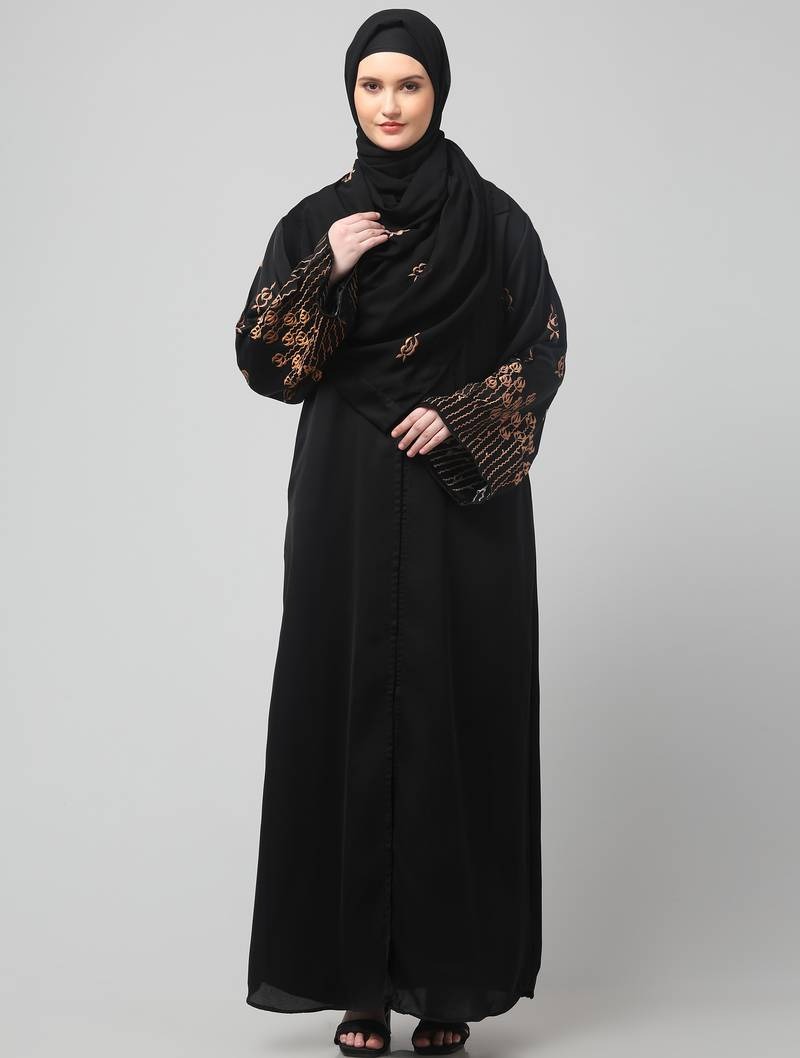
Abaya: The Abaya is a loose overgarment that covers the entire body apart from the head, hands, and feet. Some of the popular Abaya styles are open front, close front, kimono, and layered Abayas. In today’s times, Abayas with intricate detailing on their sleeves, hem, or neckline have become popular. Also, tailored Abayas that offer a fitted look have also emerged. Some common Abaya fabrics include crepe, Nida, chiffon, and georgette.
Hijab: In Arabic, the word Hijab literally translates to curtain. It is a headcovering worn by women in modest clothing. Types of Hijab include the traditional version, which covers your head and neck while leaving the face uncovered, the Niqab, which leaves only the eyes uncovered, and the Khimar, which is flowy and covers your shoulders as well. Some common types of Hijab fabrics are chiffon, jersey, modal, satin silk, and cotton. The way the Hijab is wrapped is also varied. Some popular styles include the classic, the everyday wrap, the professional, the trendy, and the sleek.
Niqab and Khimar: Niqab is a face veil that covers the entire face while leaving only the eyes open. However, it may also be paired with a separate eye veil. It is typically worn with an accompanying headscarf. Khimar, also called plurally as Khumar, is a covering that covers the entire upper body. It can be considered a top and has many styles, such as with sleeves, no sleeves, open neck, without a headband, closed neck, and more.
Jilbab and Burqa: Burqa is a type of Islamic clothing that covers the entire body from the head to the toes. It usually comes with mesh or netting over the face so that women can see through it. On the other hand, a Jilbab is a type of outer garment that is worn over clothes. It can be compared to a long robe or cloak and comes in a variety of styles and colors.
Dailywear Islamic Dresses: Everywear Muslim dresses not only focus on modesty but also on comfort. Some common types of Islamic dresses are Abayas, Salwar kameez, Kaftans, Tunics, Hijab, Niqabs, and Khimars.
Trending Modest Islamic Clothing For Men
Thobe, Jubba, and Kandura: Thobe, which is also called Thawb, is a long, robe-like garment worn by men. It is typically ankle length, has long sleeves, and a loose fit. Some common styles of the Thobe are Saudi, Qatari, Yemeni, and Moroccan. Jubba refers to Islamic clothing worn for prayers or religious gatherings. Imams or elders wear decorative Jubbas for events at the mosque. Kandura is quite similar to the Thobe but is collarless and comes with a decorative cord called tarboosh or igal that hangs from the neckline.
Kurta Pajama in Islamic Wear: The Kurta Pajama is considered to be a staple in a Muslim man’s wardrobe. It offers comfort, modesty, and style. These garments comprise a top (Kurta) and a bottom (pajama) and are supremely versatile. They come in both modern and traditional styles, hence you pick one that expresses your individuality as well as your cultural heritage.
Islamic Caps: Muslim headwear like the Taqiyah and the Kufi are worn as a humble expression of faith rather than for fashion purposes. The Taqiyah is a rounded skull cap that is popular all over the Muslim world. It can be found in a variety of styles– from simple to ornate. Kufi is quite similar to the Taqiyah, but it is worn primarily in Africa. It is usually knitted or crocheted and features bold geometrical designs and elaborate patterns.
Modest Clothing Guidelines For Men: While Islamic women’s guidelines are much talked about, Muslim men’s typical muslim clothing guidelines don’t receive much limelight. Here’s a quick overview of the same:
Wear modest clothing. The attire should be loose enough so as not to hug the body in any shape or form. Many men’s Islamic clothing covers them from the head to the toes.
Transparent clothing is strongly frowned upon. The thickness of the clothing should be such that it doesn’t show any skin color or the shape of the body.
Covering the Awrah, which refers to the body parts from the navel to the knees, is highly important. This also includes covering one’s thighs.
Trousers should be worn below the ankle as it shows respect towards both religion and modesty.
Men are prohibited from wearing feminine clothing. The dress they wear should be completely masculine. This is the reason that they are not allowed to wear gold or silk, as they are considered to be women’s clothing items.
Islamic Clothing For Kids – A Quick Guide
Modest Clothing For Boys: The Thobe remains the most popular Modest clothing in Islam for boys. It can be worn on occasions such as Eid, Jummah, Madrasa, and Umrah. Kurta pajamas are preferred for daily wear. The kufi or Taqiyah is adorned during prayers or formal occasions. In North Africa, boys often wear Gandouras, which is a long, loose-fitted gown. In the Southeast, Baju Melayu, an ensemble consisting of a long-sleeved shirt and trousers, is popular. It is often worn with a samping (Wrapped cloth) and a songkuk (cap).
Islamic Wear for Girls: Muslim young girls usually dress up in a full-length, loose-fitting Abaya. Another popular dress for girls is the Jilbab. Easy-slip-on style Hijabs are a wardrobe staple. Prayer dresses are lightweight, full-length garments designed specifically for Salah. Salwar Kameez is yet another modest yet comfortable option for girls. In Northern Africa, girls usually dress up in Kaftans or Djellabas, a long robe with a pointed hood. Whereas, in countries like Indonesia and Malaysia, kids prefer the Baju Kurung, which features a loose tunic over a long skirt.
How Kids are Taught Modesty Through Clothing: One of the main responsibilities of a Muslim parent is to instill Islamic values in their kids from a young age. Through Islam clothes, young children can learn about self-respect and dignity as well as develop a strong moral compass. Girls from the ages of 4 to 7 can be introduced to the concept of modesty through storytelling and role-playing. For kids aged 8-12, open conversations and practical demonstrations are effective
Eid Clothing Ideas For Children: Eid is undoubtedly the most important festival in Islam. If you are looking for some stylish yet modest fashion in Islam clothing ideas for your kids, we have got you covered. Here are some of the best Eid clothing ideas:
Girls: The little beauties can wear an Abaya, kaftan, gowns, salwar kameez, and lehengas. Go for dresses in luxe fabrics like silk, satin, and velvet. When it’s Eid, you can go all out with the embellishments. Opt for attire bedecked in sequins, zari, or stones.
Boys: Young boys can choose from demure Kurta Pajamas to regal Pathani suits. If they want to dress up in a traditional style, then a Thobe or a Bisht works wonders. Go for lightweight and easy-to-carry fabrics such as cotton, cotton-blends, and georgette.
Occasion-Wise Trendy and Modest Islamic Clothing
Everyday Islamic Wear: Daily wear Islamic attire focuses on modesty, comfort, and self-expression. For women, clothing such as the Abaya, Kaftan, Salwar kameez and Hijab are popular. Men typically wear Thobes and Kurta Pajamas with traditional caps such as Taqiyah and kufis.
For Prayer (Salah): Prayers are an integral part of a Muslim person’s life, and hence some choose to wear specific prayer clothes Islam for the same . For women, Abayas and Hijabs are common choices as they provide full body coverage. They also opt for specialized prayer dresses or two-piece prayer sets. Men usually dress up in Thawbs, kurtas, modest shirts, and loose trousers. Head coverings such as taqiyah (prayer cap), imamah (turban), or Keffiyeh are also recommended.
Ramadan and Eid Outfits: These are the times when one can freely express oneself through fashion. Women opt for modest and elegant styles such as Anarkalis, Sharara, and Palazzos. These outfits are usually paired with Abayas, Kaftans, and capes. Men can pick dresses such as Sherwanis, Kurta Pajama with jacket, or Pathani suits to look modest yet regal.
Wedding Islamic Clothing: Weddings hold a special and important place in Islam. If you are the bride, then bridal abayas embellished with intricate embroidery, lace, or decorative details can help create a stunning, modest look. Kaftans are yet another wedding favorite due to their rich fabrics and vibrant colors. Sherwanis are a classic choice for men for Nikah or Walima ceremonies. Guests can opt for designer kurta pajamas or Pathani suits.
Hajj and Umrah Clothing: In Islam, before a Muslim flies out to Saudi Arabia for Hajj or Umrah, they must enter the state of Ihram. This is a spiritual state that is closely tied to clothing. For men, the Ihram comprises two white seamless pieces of clothing. The Rida is the upper garment that covers the shoulders, while the Izar is the lower garment that covers the body from the navel to the ankles. For women, the rules are just to dress modestly, with attire that covers their entire body, except for the face and hands.
Interesting Islamic Styles From Around the World
Middle East: Middle Eastern Islamic clothing is grand and luxurious. Garments like the Abaya, Hijab, and Thobe are commonly worn. The Abayas in countries such as Saudi Arabia and the UAE are grandiose and embellished with intricate embroidery and beading. Apart from these, Chador– a full body cloak is also seen. Some women also wear a Niqab or a face covering. For men, the Thobe, also known as Dishdasha or Kandora, is popular in these countries. Other garments like the Bisht, Jubba, Omani Dishdasha, Izar, and Keffiyah are commonly worn by men. These clothing ideas are mostly inspired by the loose and comfortable pre-Islamic arabia clothing.
South Asia: South Asian Islamic clothing is renowned for blending tradition with modern flair seamlessly. The clothing here is more colorful with amazing use of fabrics and embroidery. Women usually wear a Shalwar Kameez, Hijab, and a South Asian style Burqa. However, many women opt for a dupatta over the head instead of a formal Hijab. Shalwar Kameez is a popular attire for men as well in this part of the world. Apart from this, Sadri (men’s waistcoat), Perahan Tunban, Chapan, Prayer Cap, and Turbans are also seen.
Africa: Traditional dress of Muslims in Africa is instantly recognizable due to its flowing form and detailed embroidery. Men are often seen wearing a Djellaba – a hooded robe with a long pointed cap called Qob. Apart from this, garments like Macawiis Sarong, Khamees Shirt, Fiqi shawl, Gandoura, and Boubou are popular in the various parts of the continent. Women across Africa are seen wearing colorful kaftans, Takchitas, and layered gowns.
The Western World: Islamic clothing in the Western world is the perfect blend of tradition and contemporary fashion. We can see trends such as vibrant colors, diverse fabrics, and intricate designs in the clothing. Women are embracing black abayas, wide-legged trousers, modern tunics, and flowing kaftans. In menswear, we can see clothing items like the Tech Thobe in London and Two-Piece Jubba sets in South America.
The Fantastic Fabrics Used In Islamic Clothing
Breathable Fabrics: With many Islamic countries having a hot and dry climate, it is highly pertinent that the fabric used for crafting muslim traditional attire be breathable and easy to carry. The fabrics need to be light and airy as well as adhere to the Islamic rules. Some common fabrics used are georgette, chiffon, viscose, Nida, and crepe.
Summer vs Winter Fabrics: For the summer, go with fabrics that are breathable, light, and comfortable. Chiffon, linen, and cotton work especially well for this season. In the winter, you need to choose fabrics that provide warmth as well as elegance. Fabrics such as wool-blends and velvets are the top picks for winter.
Sustainable Fabrics: With ethical fashion being the need of the hour, many designers have turned to using sustainable fabrics in Islamic clothing. We are seeing more and more usage of natural fibres such as cotton, linen, and bamboo. These fabrics are recyclable and cause low environmental impact. Fashion and Islam continue to evolve side by side.
How To Choose The Right Islamic Clothing
Islamic Clothing Guidelines:
Modesty: The Quran states that women must cover all their body parts except for their faces or hands. Some women also cover their faces with a veil or Niqab. When it comes to men, the body between the navel and the knees should be covered. Apart from this, having a bare chest is also frowned upon.
Looseness: In Islam, it is pertinent that your clothing doesn’t show the outline or shape of your body– hence it has to be very loose. Skin-tight body-hugging clothes are a big no for both men and women.
Thickness: See-through clothing isn’t considered modest as per Islamic standards. The clothing must be thick enough that no skin color is visible.
How to Choose Size, Fit, and Comfort?
Traditional modest clothing is meant to hang loosely from the body, not cling to it. Hence, finding the right size, fit, and comfort can be tricky. Focus on the measurements of your shoulders, bust, hips, and arm length. If the clothing feels tight or restrictive at any point, then go for a larger size. A line abayas, Empire waist cuts, batwing sleeves, and straight cut Jilbab are your best option if you want that perfect fit. For maximum comfort, choose the fabric of your clothing with care. Some popular picks include cotton, lawn, crepe, and Nida.
Islamic Clothing For Different Body Types:
Pear-shaped body: The goal with this body type is to add dimension to the top while balancing the hips. Your best picks include A-line abayas, gathered under the bust styles, and wide sleeves.
Apple-shaped body: If you have this body type, then you would want to create a vertical flow and take away attention from your waist. Straight cut or flowy abayas, open front abayas, and lightweight fabrics with drape all work to enhance your figure.
Hourglass body: Almost all Islamic clothing styles flatter you as you have a balanced figure. Best choices for you are A-line cuts, wrap styles, and fluid fabrics like crepe and Nida.
Shopping For Islamic Clothing Online – The Best Tips
Choose a Reputable Online Store: Check how long the platform has been in business and read reviews online on Google, the brand’s website, and social media.
Understand Your Size: Measure yourself thoroughly with a measuring tape and then compare your measurements to the website’s size chart.
Check Product Descriptions carefully: Photos can only tell you so much. If you want to shop online smartly, then go through the product description carefully.
Understand the returns and exchange policies: After all, you dont want to be stuck with something that you don’t like. Go for websites that offer flexible returns and exchanges.
FAQs
What is traditional Islamic clothing?
Traditional Islamic clothing is attire that adheres to the rules of Islam. These include the Abaya, Burqa, Hijab, kaftan, and more for women and the Thobe, Kufi, Jubba, etc. for men.
What type of clothing do Muslims wear?
Muslims all over the world wear modest, non-body-hugging, and non-sheer clothing.
What are the popular types of Islamic clothing for women?
Islamic clothing such as the Abaya, Kaftan, Burqa, Jilbab, Shalwar Kameez and more are popular for women.
What fabrics are best for Islamic clothing?
Fabrics that are lightweight and breathable are the best picks for Islamic clothing. Some picks include cotton, linen, Nida, crepe, chiffon, and georgette.
How do I style a Hijab fashionably?
A hijab can be styled fashionably by selecting lightweight fabrics, going for colors that match your undertone, and pairing it with elegant, modest outfits. The Hijab wrap should be neat and relaxed, and you can even add accessories to it for extra shine.
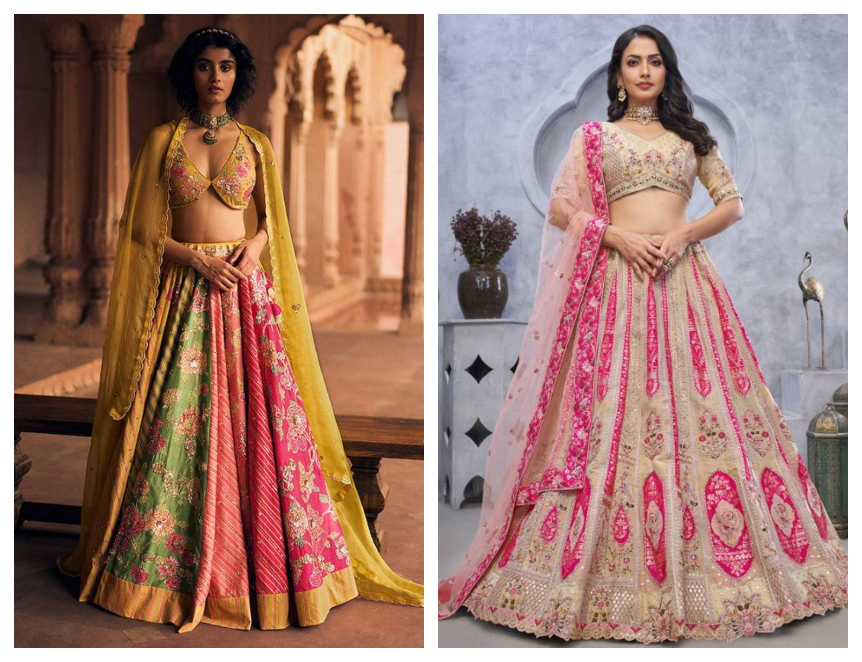
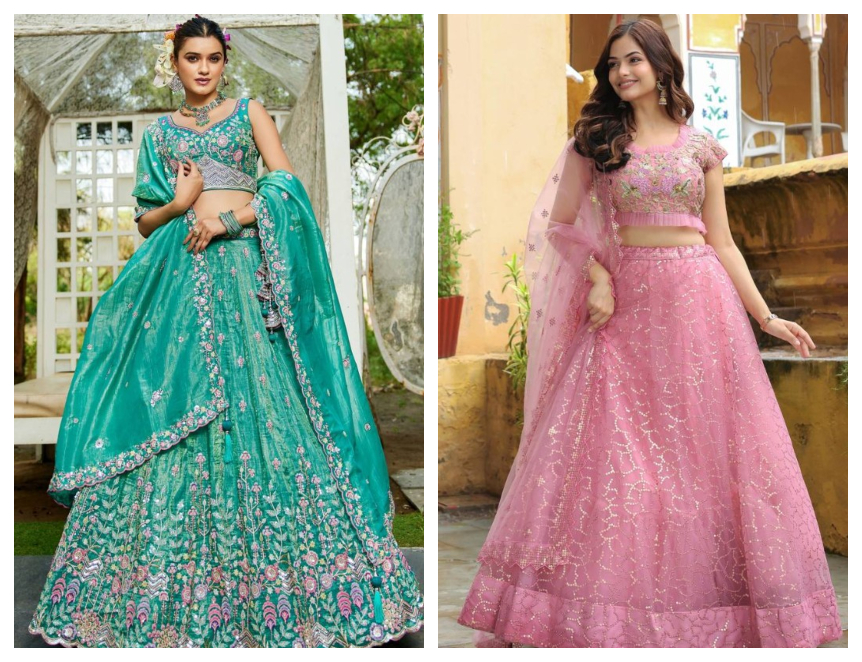
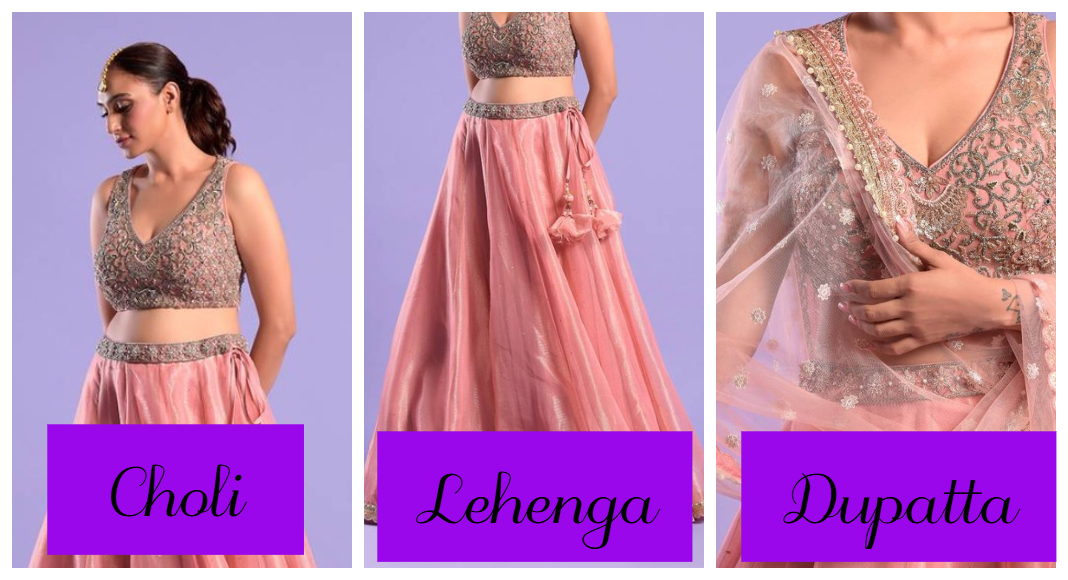
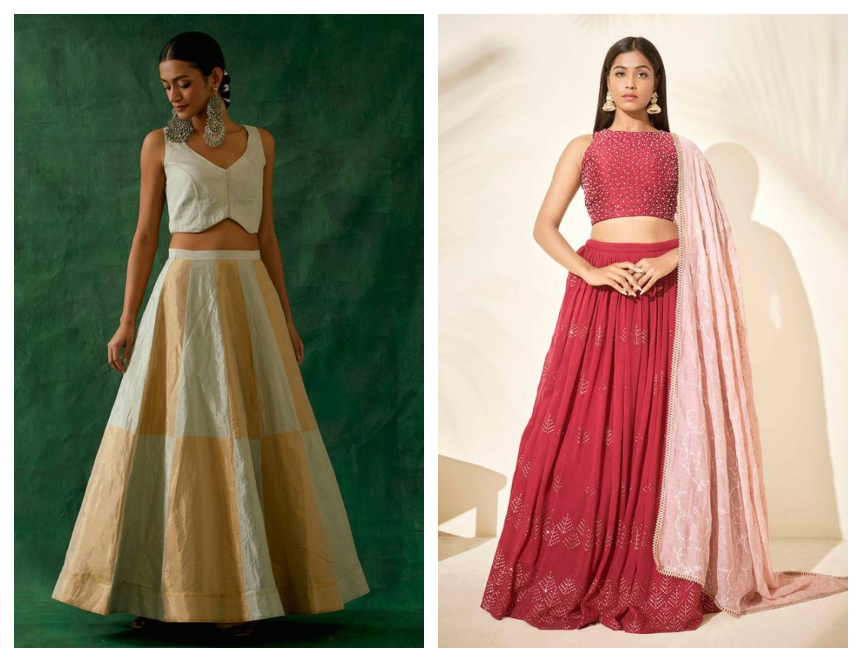
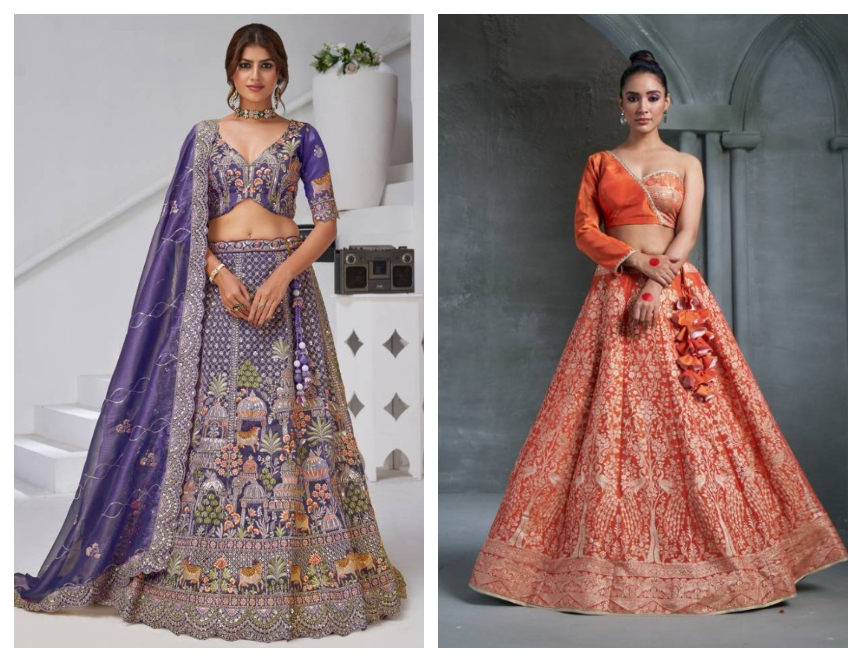
The lehenga is undoubtedly one of the most iconic Indian ethnic garments. Found in the closet of almost every woman around the globe, we can safely say that it is the face of Indian fashion. This three-piece attire comprises a blouse (choli), a lehenga skirt, and a dupatta. This amazing ensemble is renowned for its versatility. In today’s day and age, women can be seen donning the lehenga to every occasion, from weddings to parties. However, did you know that the lehenga isn’t a recent addition to ethnic fashion? You would be surprised to learn that the lehenga dates back almost a 1000 years. Its roots can be traced back to Ancient India. However, the lehenga of old age and contemporary lehengas have differences. Time, cultural shifts, and history have left a mark on the lehenga design. In this blog, we will journey through time and look at the history and evolution of the lehenga in detail. Read along to know more.
Exploring The Origins of the Lehenga Dress
Historical sources reveal that the lehenga has been around since the Indus Valley civilization, which existed around 2800 BC. There is evidence that both men and women wore garments that went on to inspire the modern lehenga in this period. Proof in the form of paintings and sculptures is plenty. It first consisted of the Antriya, a lower garment from which the modern lehenga skirt emerged. The Stanapatta or breast band was used to cover the chest area. The contemporary blouses find their foundation in this garment. Finally, there was the Uttariya, which was a veil to cover the shoulders, that went on to inspire the dupatta.
The Mughal Influence on the Lehengas
The Mughal empire, which spanned from the 16th to the 19th century, had a profound impact on lehenga fashion. They were pioneers in introducing luxurious fabrics, intricate embroidery, and elaborate designs. Luxe fabrics such as silk and velvet became commonplace. These beautiful fabrics were richly adorned with gold and silver threadwork. This era also saw a merger between the Persian and Indian styles and gave birth to the still iconic Anarkali suit. Layering as a concept was also introduced, with dupattas and shawls becoming more prominent.
The Impact of the Colonial Era on the Lehenga Dress
The British colonial rule reinvented the lehenga with lace, pastel hues, and delicate fabrics. The lehenga dress became softer and lighter. New fabrics and designs were adopted, while still keeping the essence of the lehenga intact. The ensemble became manageable enough for daily wear. The lehenga choli’s designs became diverse and had a huge Western influence. New patterns and styles were introduced. The use of synthetic fabrics such as polyester and nylon became popular. Along with these fabrics, embellishments such as sequins and beads also became common.
The Cultural Revival of the Lehenga in Post-Independence India
A major shift in the lehenga trends could be seen in Post Independent India. This era saw a revival of indigenous crafts and motifs. There was a strong push towards reviving traditional Indian textiles and the Handloom industry. Designers celebrated the rich Indian heritage through lehengas and made them accessible for daily wear. Bollywood also started playing a major role in the lehenga fashion during this period. Today, the lehenga is a beautiful testament to the Indian spirit and culture. Carefully balancing iconic heritage with modern styles, the lehenga has become an ethnic wear must-have.
Beyond Borders – The Contemporary Lehenga’s International Appeal
The charm of the lehenga is no longer limited to India, but it has been entrancing the entire world recently. Carefully blending heritage with modern flair, the lehenga has transcended geographical boundaries and has become a global garment. Lehengas with their opulent fabrics, bright colors, and artistic craftsmanship have become an international fashion favorite. This ensemble is being worn to everything from a wedding in London to a party in Delhi. Designers also keep the lehenga silhouette fresh by reinventing their fabrics, styles, and cuts frequently. Thus, the lehenga is at the forefront of the Indian ethnic wear revolution that is taking the world by storm.
Trending Lehengas Styles that Should be On Your Wishlist
Sharara Lehengas: A perfect blend of the loose silhouette of the sharara pants with the lehenga skirt – this one is as elegant as they come. Modern brides prefer this style as it allows them comfort along with style.
A-Line lehengas: Universally flattering yet elegant, the A-line lehenga is evergreen. With its fitted waist and soft flair, it is perfect for daytime celebrations or office parties.
Circular lehengas: If you want instant drama with every step that you take, this lehenga is tailor-made just for you. Its flared silhouette adds the perfect hint of opulence and grandeur.
Mermaid Lehengas: Fitted till the knees and then softly flaring out, this lehenga accentuates your curves like no other. Fashionistas around the world are loving this style because of the glamour it oozes.
Saree lehenga: This unique garment beautifully merges two iconic pieces together – the saree and the lehenga. Easy to carry and versatile, the saree lehenga also creates opportunities for experimenting with draping styles.
The Contemporary Lehenga – A Perfect Blend of Tradition and Fashion
In today’s times, lehengas have evolved with the modern sensibility. However, it has managed to keep its traditional essence intact. They can be styled for various occasions. We see everything from luxe bridal looks to lightweight partywear styles. Designers are experimenting with various fabrics such as georgette, chiffon, and net to come up with fresh new looks. We are also seeing modern technologies such as digital printing and 3D embellishments being incorporated in lehenga styles. Today, the lehenga has transcended geographical boundaries and is celebrated all over the world. Lehengas by designers such as Sabyasachi, Rahul Mishra, and Anamika Khanna have been showcased on international fashion runways. This lehenga craze doesn’t seem to be stopping anytime soon, and this charming garment will continue to evolve.
What Does the Future of the Lehengas Look Like?
In the upcoming years, sustainability and handcrafted designs are going to take the center stage. Lehengas in handloom fabrics, with eco-friendly dyes and ethically sourced materials, are going to be huge. Additionally, online shopping is going to become the top-most platform for lehenga shoppers. Innovative silhouettes like asymmetrical cuts, mermaid styles, column skirts, and bubble hems are going to become mainstays. Bold prints and colors will enhance the modern lehenga even more. Cholis with modern necklines like halter neck and off shoulder will become commonplace. Thus, tracing this rich and colorful history of the lehenga, one thing is clear – The lehenga is not just a piece of garment, it is an emotion in itself. With heritage, culture, and innovation woven into its fabric, the lehenga is a truly special ensemble that deserves a special place in your wardrobe.
The salwar kameez is one of the very few Indian ethnic outfits that charmingly balance style with comfort. This three-piece outfit has managed to capture the imaginations of millions of women across the globe. Comprising a tunic top (kameez), loose pants (Kameez) and a dupatta, the salwar kameez is the very definition of comfortable elegance brought to life. Its origins can be traced back to the 12th century during the Delhi Sultanate period. An interesting fact about this ensemble is that it was originally a unisex garment, with both men and women adorning it. Gradually, especially in the Punjab region, women exclusively adopted the salwar kameez because of its practicality, comfort and style.
On paper, the salwar suit might seem like a simple garment, but in reality, it comes in a plethora of styles and silhouettes. Some popular ones include– Anarkali, Patiala, Punjabi, Palazzo, Churidar, Sharara and straight cut styles. Initially seen strictly as traditional wear, the salwar suit has beautifully evolved to fit into the wardrobe of the common woman. In 2026, the popularity of this outfit is such that it is considered to be a daily wear and office wear staple. However, there are more ornate styles that are suitable for festivals and weddings– the versatility of this attire is unparalleled. Are you looking for a comprehensive guide to this magnificent garment? You are at the right place. In this blog, we will explore everything that is there to know about the salwar kameez. Read along to know more.
Salwar Kameez– The Epitome of Effortless Elegance
Salwar suits are the prime choice for daily and office wear since they embody the concept of everyday elegance naturally. Since most salwar kameez suits are crafted from breathable materials like cotton, georgette, chiffon and more, they offer an ease of movement like no other garment. They are comfortable for long hours– perfect for those office meetings or running errands. Their anatomy is such that it effortlessly balances structure with flow. The elegance doesn’t just come from their amazing designs, but from their classic fit. These garments focus not on heaviness but on minimalistic style and charm.
Trending Salwar Kameez Styles Everyone Should Know About
Anarkali Salwar Kameez:
Probably the most popular Salwar Kameez style, the design and silhouette of this suit are unmatched. It features a cinched design at the bust and then gracefully flares down towards the bottom. It is usually paired with churidars, leggings or straight pants. The dupatta is draped over the shoulder stylishly. The Anarkali’s silhouette is such that there is a defined grace in every movement that you make. These suits often feature heavy embellishments like zari, pearls, sequins, mirrors and more. This heavy design makes them suitable for weddings and festivals– occasions when you want your fashion to blossom.
Straight Cut Salwar Kameez:
Everyday elegance has a new meaning with this salwar suit style. It features a straight kurta that has little to no flare. Its silhouette can be fitted or slightly loose. The length of the kurta also varies. It can be knee-length, calf-length, and even ankle-length. It adds a touch of demure elegance, making it suitable for everyday wear. Many women also choose this style for office wear, as it beautifully blends comfort with style.
Patiala Salwar Kameez:
The pride of Punjab, this Salwar suit style exudes vibrant charm and effortless style. The highlight of this suit is its heavily pleated salwar that is often paired with a short kurti– ensuring all the focus is on the salwar. The Punjabi kudi look is incomplete without this suit. The Patiala suit is designed with a comfort-first approach, making it easy to wear. Although the suit is deeply ingrained in the Punjabi culture, it also suits modern sensibilities. This makes the Patiala suit and interested mix of culture and style.
Sharara Salwar Kameez:
Who can forget Kareena Kapoor’s baby pink Sharara suit in Bole Chudiya? We sure can’t! It comprises flared, wide-legged pants that almost resemble a skirt. The pants are fitted at the waist and then gracefully flare down from the knees. The kurta is often short or mid-length to match the opulence of the pants. These suits are especially popular for festivals and weddings. They are a lightweight and easy-to-manage alternative to lehengas and sarees, which makes them a big hit with women worldwide.
Palazzo Salwar Kameez:
A relatively contemporary salwar suit style, the palazzo salwar kameez has quickly become a favorite in the fashion world. It comes with wide-legged bottoms, just like shararas, but they aren’t as flared. The bottoms are paired with a kurta or kurti and are in patterns such as straight cut, A-line, short or long. An ethnic look for the modern woman, this suit is perfect for work, brunches with friends or Sunday family dinners. The USP of the palazzo salwar kameez is how breathable and relaxed it is. You can clock in your 9-5 in style with these suits.
Punjabi Salwar Kameez:
This North Indian attire has been wowing women since a very long time. It comprises a short to mid-length kameez paired with pleated baggy bottoms. It is renowned for its use of vibrant colours such as yellow, red, green, blue, pink and more. Since it is so deeply tied to the North Indian culture, wearing one of these outfits is like immersing yourself in the amazing culture and heritage. Because of their high energy, these suits are popular for festive as well as celebratory use.
Churidar Salwar Kameez:
A favourite of the women of now, this salwar kameez comes with a tightly fitted salwar. The hallmark of this salwar is its length, which is longer than the leg and creates soft folds also known as churis. To craft these bottoms, stretchable materials like cotton blends, Lycra, and silk blends are used. This suit is known for its structured appearance and refined look. The beauty of these suits is that they are suitable for both daily wear and occasion wear.
Pakistani Salwar Kameez:
This beautiful style variation of the salwar suit is the national dress of Pakistan. Supermely elegant, comfortable, and versatile, women wear it as daily wear as well as for special occasions like weddings and festivals. The Pakistani salwar kameez emphasises understated elegance and clean tailoring. It comes with minimal embellishments and structured silhouettes. Fabrics such as cotton, lawn, Khaddar, linen, chiffon and silk are commonly used to craft these stylish suits.
How To Choose The Right Salwar Kameez
Occasion-wise: The occasion that you are choosing your salwar suit plays a huge role in your selection. If you are looking for something for daily wear, then options like palazzo and patiala suits in cotton, chiffon or georgette work well. However, if you are attending grand occasions like weddings or parties, go for Anarkali suits or Punjabi suits in silk or velvet.
Duration of the event: If you are dressing up for short events like birthday parties, family dinners or get-togethers, then straight cut, A-line, or printed salwar kameez work well. However, if you are attending longer events like weddings, then Anarkalis in floaty fabrics such as chiffon or Patiala suits in cotton blends are the right pick.
Ease of Comfort: If you are looking for comfortable options, then cotton, silk and organza Churidar, Pakistani or straight cut suits are the perfect pick. However, if you aren’t afraid to dip your toe in statement silhouettes, then Indo Western suits, heavily embroidered Anarkali suits, cape suits and jacket suits should be on your wishlist.
Personal Style: Its very easy to get lost in the maze of what is trending currently. However, not all trends suit everyone. While picking a salwar suit, the focus should be on your personal style, not on the trends. If you choose a trending silhouette that doesn’t work for your body, you will end up with a look that doesn’t just look off but also makes you feel uncomfortable. Go for salwar suit picks that are truly and totally you to leave a lasting impression wherever you go.
A Short Salwar Kameez Fabric Guide
Lawn: This fabric is made out of 100% cotton yarns that are tightly knit together, giving it a polished look. Lawn is best picked for daytime events and summer gatherings. It is light, looks fresh and is extremely breathable. Go for salwar kameez suits with colorful prints or light embroidery.
Cotton: Another favorite in the salwar kameez world, cotton is a versatile fabric that works for almost all occasions. You can style it for short events, lunches, and get-togethers. It gives off a very neat and comfortable appearance that is elegant and classy. It is also easy to wear, and you can adorn it for long hours without any hassle.
Chiffon: This soft, flowy, elegant fabric is a perfect choice for family dinners and brunches with friends. Luxurious suits such as Indo-Western and Anarkalis are often fashioned out of it. Go for a chiffon salwar kameez with light embroidery on the neckline or sleeves for a refined look.
Georgette: This fabric comes with a slightly textured, graceful drape that looks absolutely ethereal. Best suited for semi-formal events like office dinners, award ceremonies, and receptions, the charm of georgette is unparalleled. A straight salwar kameez with a smattering of embroidery is ideal for all occasions.
Hues Of Beauty– Top Salwar Kameez Colors
Pastel Shades: Pastel colors like mint green, baby pink, powder blue and lavender never go out of trend. They look fresh and light. Suits fashioned out of lawn, cotton or chiffon look like a dream. Go for suits in pastel shades with silver or white embroidery and a sheer dupatta for a truly luxe look.
Jewel Tones: This color family comprises hues such as emerald green, ruby red, sapphire blue and deep purple. The elegance of these shades is such that they instantly uplift even the simplest of salwar kameez cuts. You don’t need suits decked up with heavy embroidery in these shades, as even the simplest embroidery looks amazing. Ideal for evening events, semi-formal gatherings and small wedding functions, pick one of these hues if you want to stand out with ease.
Earthy Tones: With the understated elegance trend taking over the salwar suit world, earthy tones like olive, beige, dark brown, rust and taupe are all the rage at the moment. These shades are evergreen and versatile and suit almost every skin tone. They are also easy to accessorize and you can dress up your earthy-toned salwar suit with a statement dupatta or classy earrings.
The Best Occasions To Flaunt Your Salwar Kameez
Daily Wear: The salwar suit is a top pick for dailywear amongst women who are looking for outfits that are stylish as well as easy to wear. They are great for homewear, running errands, casual meet ups or college days. You can go for cotton or lawn suits in simple cuts or prints.
Semi-formal events: The versatility of the salwar kameez is such that it works well for semi-formal events such as family gatherings, birthday parties, get-togethers, and office events. A straight cut or A line suit with light embroidery in chiffon or cotton serves to add easy style.
Weddings: Salwar kameez is a versatile and stylish choice that works across all wedding ceremonies. You can pick out a yellow cotton suit for Haldi and a lightly embellished chiffon or organza suit for Mehendi. For sangeet go for jewel-toned ensembles with mirror work or sequins. On the wedding day, suits in silk or georgette with zari or threadwork work well.
Festive Events: Festive occasions such as Navratri, Diwali and Eid call for vibrant colors and fun silhouettes. You can pick out decadent Anarkalis or Patiala suits in silk, chiffon or velvet. Go for embroideries such as zari, sequins, mirror work or aari work to add extra shine to your look. Pair with a heavy sheer dupatta to complete the festive vibe.
Thus, the charm of the salwar kameez is never-ending. There are so many styles, colors and silhouettes to choose from. However, remember that comfort is paramount. Always go for a suit that doesn’t just speak to you but also keeps you comfortable for hours. While many women focus on designs, the true elegance comes from picking the right silhouette. With that being said, exploring salwar kameez styles like the Anarkali suit, Straight cut suit, Pakistani suit and more is encouraged so that you have a holistic view of the salwar kameez world. Thus, the right salwar kameez style is not the most stylish, but one that speaks your language of comfort, beauty and sophistication.
FAQ
How do I style a salwar kameez for a modern/Western look?
Opt for cigarette pants or ankle-length trousers instead of the traditional salwar. You can also try layering your suit with a blazer or a denim jacket. Kitten or block heels exude modern glamor. Get creative with your dupatta. Drape it like a scarf or wrap it around your neck.
How to choose the right salwar kameez size when shopping online?
Ensure that you know your key measurements. These include the bust, the waist, the hips, the shoulders, and the sleeve length. Match your measurements to the sizing charts on the website carefully. Consider the fabric as well as some fabrics like Lycra, cotton blends, and knits offer stretch.
What are the best salwar kameez styles for different body types?
For pear-shaped bodies, A-line suits and Anarkalis work well. If you are apple-shaped, then panelled and flared styles will suit you best. For hourglass women, fitted salwar kameez and Angrakha-style suits look the best.
What kinds of embroidery and prints are trending on salwar kameez in 2026?
In 2026, embellishment trends such as digital prints, embroidered hemlines, fine thread and resham work, zari, dabka and metallic embroidery are major.
Where can I buy designer salwar kameez online?
If you are looking for a trusted platform to shop designer salwar kameez online, then you should definitely check out Mirraw. We offer thousands of salwar suits at competitive prices and best quality. We also ship internationally to countries such as the US, the UK, Australia, and Canada.
The evolution of the lehenga, which is an essential piece of Indian culture, has been gradual. Its charming look and ethereal design have failed many high-end garment pieces. Talking of its history, well, lehengas are believed to be 1000 years old and were worn mainly by the royalty in medieval India. However, with revolution, it became a part of the wedding culture, thus entering the house of a common man. The design features a choli, a skirt, and a dupatta. These days, brides take two dupattas, one on the shoulder and another on the head. However, lehengas with a single dupatta look great for casual occasions also.
In this blog, we will go deep into the beautiful world of lehengas and walk you through the history and evolution of lehengas. We shall also learn how it has transcended geographical borders to become a global fashion icon. Read along to know everything there is to know about it.
Understanding The Lehenga – The Basics
What is a lehenga has a very simple answer. Well, in layman’s terms, it is a traditional Indian attire that features a skirt, a choli, and a dupatta. The design and pattern vary from region to region. For example, sequin and stone work lehengas are more popular in Northern India. While thread and mirror work define the lehengas of Gujarat and Rajasthan. It is popularly worn during festivals, weddings, and parties.
Lehengas can be anywhere from simple and basic to heavily embroidered and ornate. Some popular fabrics used to craft the lehenga are cotton, silk, georgette, and chiffon. It is widely said that no Indian wedding or festival is complete without the lehenga. However, this attire has come a long way from its humble roots.
Today, the lehenga is seen on international runways and is being adorned by global superstars like Beyoncé and Kim Kardashian.
Breaking Down The Lehenga – Key Elements
The Lehenga (Skirt): This is one of the most important parts of this ensemble. The craze of this is such that women are ready to splurge lakhs for it. Well, the design is simple, it features a long skirt which goes up to the floor length. It has a flare that comes with different numbers of kalis. The upper part of the lehengas is crafted with fabrics like silk, georgette and even cotton. While, it is stuffed with can can skirts and even cotton lining for the dramatic flare. Further, the drawstring or nada allows for adjustments and comfort.
The Choli (Blouse): The Choli, or the blouse, is worn on the upper portion of the body. It can be matched or contrasted with the lehenga skirt. The proper fit of the blouse is paramount, as it can play into the overall look and feel of the whole outfit. The cholis come in various designs and styles. Earlier, modest styles were popular. However, in modern times, mid riff baring luxe cholis are common.
The Dupatta (Scarf): Lastly, the component of the lehenga that completes the look elegantly is the dupatta. This is a decorative veil or drape that is pinned to the shoulder. Its pattern can range from simple designs to highly embroidered and decorative looks.
A Walk Through the History and Evolution of Lehengas
The history of the lehenga is rich and interesting, spanning centuries. Its evolution is also deeply rooted in the culture of the Indian subcontinent. We can trace the fashion steps of the lehenga to Ancient India. During these times, women commonly wore long skirts called Antariya coupled with a waistband and a draped cloth.
The lehenga saw its first major upgrade in the Mughal era, where luxe fabrics such as silk and velvet were introduced. Apart from this, rich embroideries like zari also became commonplace. The lehengasfrom this period were also known for their rich colors. In this era, pairing the skirt with a fitted choli and a dupatta became popular – laying the foundation for the modern lehenga choli.
During the British Raj, regional styles such as the mirror work, tie and dye, and folk work lehengas emerged. The lehenga became even more structured. Its crescendo multiplied, with it being worn for daily wear as well as festive wear. The silhouette of the lehenga became modest and demure.
The post-Independence era was all about embracing Handloom fabrics such as Khadi and cotton. This period also gave birth to the concept of the designer lehengas. Many women, especially brides, embraced lehengas in rich fabrics, intricate embroideries, and stylish cuts.
The modern lehenga displays a careful balance of traditional heritage and modern glamor. These amazing features have made it a wedding and festive wear staple.
Lehenga – From Indian Roots To International Runways
In 2026, the lehenga is not just limited to the Indian fashion scene. It has, in fact, taken over the international runways and fashion as well. There are several reasons for this takeover. Some of them include:
The Bollywood Influence: Lehengas have been featured in Bollywood films for ages now. From Madhuri Dixit’s pink and red lehenga in Hum Aapke Hain Kaun, to Deepika Padukone’s Mughal-inspired lehenga in Bajirao Mastani, women have been forever drawing influence from them. Since these movies are also popular abroad, international audiences are also getting a glimpse of the lehenga and emulating the styles.
Celebrity Weddings: Who can forget Anushka Sharma’s baby pink wedding lehenga or Priyanka Chopra’s monochrome red bridal lehenga? These high-profile weddings gave rise to several lehenga design and color trends.
International Runways: The humble lehenga has taken over the international runways of London and Paris fashion weeks as well. Designers like Falguni Shane Peacock, Manish Malhotra and Sabyasachi have all showcased their creations to an international audience.
The Difference Between a Lehenga and a Ghagra Choli
Lehenga: This ensemble is majorly popular in Northern India and is worn to weddings and festivals. It is heavily embroidered with zari, resham, pearls, sequins, and other embellishments. It also comes with multiple layers and can be extremely flared.
Ghagra: This attire is traditionally worn in Rajasthan and Gujarat, sometimes as daily wear or during folk dances. It is usually simpler and comes with printed patterns, tie dye, and mirror work. The whole vibe of the ghagra choli outfit is light and casual.
Lehenga Cut Styles That Are Trending in 2026
A-Line: The silhouette of this style resembles the letter A. It is fitted at the waist and then gracefully flares down towards the floor. Simple and classic, this cut is evergreen.
Flared: This cut is for the women who love to add drama to their look. It provides maximum flare and is very voluminous – perfect for twirling for Instagram reels.
Mermaid: This modern style is all the rage right now. It features a skirt that is fitted to the knees and then flares out stylishly. If you want to accentuate your figure, the mermaid-style lehengas are for you.
Paneled: This lovely cut comprises several vertical panels called Kalis stitched together. Colorful and bright, the paneled lehenga provides a dash of extra volume and panache.
Amazing Regional Styles – Lehengas From Every State
Rajasthan: Lehengas from Rajasthan are renowned for their bright colors and playful prints. You can often see Gota Pati work as well as Lehriya prints on them. They are often made from cotton or silk – an apt choice for the hot desert climate. Some regional variations include Jaipur style and Bikaner style.
Gujarat: Gujarati lehengas are celebrated for reflecting the state’s vibrant folk traditions and festive spirit. They are both eye-catching and highly functional. Some popular Gujarati embroidery styles are the Gamthi work that involves small mirrors and colorful thread embroidery, as well as Mirror work (Abhla).
Punjab: Punjabi lehengas showcase an interesting interplay of bold colors, comfort, and folk inspired designs. The Phulkari-inspired embroidery is a popular adornment. It comprises stunning floral motifs and bright threadwork, looking beyond gorgeous.
South India: South Indian lehengas have their own distinct style that combines South Indian aesthetics with the classic lehenga silhouette. The most popular garment is a Langa Voni or Pavadai Davani, a two-piece garment that resembles a lehenga dress.
Uttar Pradesh: This magnificent state is home to the classic lehenga embroidery form of Chikankari. Fine threadwork is done using white or colored threads on the lehengas. This technique uses a variety of stitches, such as taipchi, bakhiya, and hirkka, to achieve the detailed look.
Rich Fabrics: Luxurious fabrics such as raw silk, velvet, and Banarasi brocade have a special charm. These fabrics are opulent and hold heavy embroidery beautifully. This makes them a top pick for bridal and wedding lehengas.
Lightweight Fabrics: Combine rich luxury with ease of movement by choosing a lightweight lehenga fabric like georgette, chiffon, and crepe. These fabrics not only look glamorous, but they are also easy to carry – perfect for festivals or parties where you will be on your feet a lot.
Trendy Fabrics: Stay on top of trends by picking out one of 2026’s most talked-about fabrics. Fabrics like organza, net, and tissue are all the rage currently. Choose a lehenga dress in one of these fabrics and be the most stylish person in the room for the evening.
Zardozi: This embroidery style involves making intricate patterns using gold or silver threads. Its emergence can be traced back to Persia; however, it was popularized during the Mughal era. Motifs such as floral, Paisley, and geometric designs are popular.
Mirror Work: Tiny mirrors are stitched into the fabric of the lehenga in this embroidery style. The mirrors reflect light with every movement, turning your lehenga into a visual masterpiece.
Chikankari: Originating from Lucknow, this embroidery is extremely beloved. Chikankari lehengas feature intricate patterns using white or colored threads. It involves a multitude of hand stitches like the taipchi, bakhiya, phanda, and hirkka to give you a culturally rich look.
Resham: The Resham embroidery is truly one of a kind. It makes use of vibrant and colorful silk threads to engrave embroidery in styles such as Zardozi, Phulkari, and Kutch work. Popular for bridal and festive lehengas, the elegance of this embroidery is unparalleled.
By Necklines: Necklines are having a major moment in 2026. Gone are the days when necklines used to be simple and unassuming. Styles such as sweetheart, plunging V-neck, and high-neck halter cholis are shining this year.
By Sleeves: The choli sleeves also have a major upgrade this year. Trends such as dramatic cape sleeves, romantic puff sleeves, and sleeveless corset styles are becoming the norm in choli fashion.
By Back Designs: The back of the choli is an important yet often overlooked part of the choli. However, in 2026, this narrative is changing, and we are seeing the fashion touch even on the backs. Think amazing styles like Deep dori backs, latkans, and sheer lace details – Stylish and elegant.
Dreamy Pastels: Soft and romantic pastel shades are all the rage now. Hues like baby pink, powder pink, baby blue, and peach fuzz are the talk of the town.
Rustic Earthy Tones: Earthy tones are another color palette that is a favorite this year. Shades like terracotta, burnt orange, olive, beige, and cream are garnering much love.
The Classics: The shades of red, pink, and ivory are considered classic for a reason – they never go out of style. 2026 has witnessed the resurgence of these evergreen shades in the wedding and festive scene.
A Complete Guide on Choosing a Lehenga According To Your Body Type
Pear Shape: Women with pear-shaped bodies have wide hips and a defined waist. The goal is to add volume to the upper part of your body while balancing the lower half. A line or high-waist lehengas work like a charm for these body types. You can also go for a flared circular lehenga in soft fabrics.
Apple Shape: Apple shape bodied women are heavier on the top half of the body, with an accentuated bust and slim legs. High-waisted lehengas and panelled lehengas are a perfect fit for this body type. Absolutely avoid low-waisted lehengas and tiny crop tops that expose your midriff.
Petite Shape: For petite women, looking taller is the goal. This can be achieved by wearing medium flared lehengas, short and fitted blouses, as well as lehengas with vertical embroideries.
Hour Glass Shape: Women with this body type are truly blessed, as all lehenga types look good on them. They can pick choices such as fitted or mid-waist lehengas, structured blouses, and full flared lehengas.
Lehenga Dupatta Draping Styles That You Should Know About
The Classic Shoulder Drape: This draping style involves draping the dupatta over one shoulder. It is then pleated in the front for a classic and evergreen look.
The Butterfly Drape: This style showcases thin pleats that sit low on the waist. It exudes a sleek and feminine silhouette.
The Double Dupatta: A popular bridal style, this look involves two dupattas. One dupatta is draped across the shoulder, and the other sits over the head – extremely chic and wedding-appropriate.
Mehendi: The vibe of the mehendi is fun and colorful. Vibrant lehengas in yellow and green suit the occasion the best. Pair with some floral jewelry for added panache.
Haldi: Haldi calls for lightweight lehengas that are easy to move in. Go for georgette or chiffon haldi lehengas that exude glamor while ensuring ease of movement.
Sangeet: Shimmering mirror work or sequined sangeet lehengas are ideal for this event. Metallic colors, such as gold, silver, and copper, look best on the dance floor.
The Wedding Day: Heavily embroidered lehengas in red or pastel pink are the classic choice. However, if you want to try something different, then navy blue, lavender, and mint green are some choices you should explore.
Reception: At the reception, you can let your hair down and experiment with your wedding choices. Indo-western looks like lehenga gowns, cape-style lehengas, and jacket lehengas in jewel tones are popular.
Festivals: Festivals are all about colors, celebrations, and all-around merriment. Lehengas that perfectly match the festive spirit include ones with traditional prints and lightweight fabrics such as cotton. Pairing these looks with oxidized jewelry adds an extra dash of style to your look.
Jewelry: Your jewelry can make or break your lehenga look, hence choose it with care. For weddings, you can opt for Polki, Kundan, or temple jewelry, depending on your vibe. If you are dressing up for a festive occasion, then go with statement Jhumkas, choker necklaces, and a delicate maang tikka.
Footwear: Wedding events and festivals require you to be on your feet for long hours. Hence, you need to be comfortable without compromising on style. If you want to tie into your ethnic look, then embellished juttis are the best pick. However, if you want to try something contemporary, then embroidered wedges and heels are an option as well.
Potli Bags: No lehenga is complete without a stylish bag. It not only looks chic but is a practical way to carry your essentials. Go for embellished potli bags with mirror work or sequins. A pro tip – match the design and color of the bag to the embroidery of your lehenga.
How To Store and Clean Your Lehenga With Care
Store it the right way: Storing your lehenga carefully ensures its longevity. Store flat in a cotton or muslin bag to preserve the embroidery. If you are hanging your lehenga, ensure you only use padded hangers.
Clean with Caution: Heavily embroidered lehengas, like wedding or bridal lehengas, must only be dry cleaned. Light cotton or linen lehengas can be washed at home, but only a mild detergent should be used.
Pest Control: Wrap neem leaves in a tissue and place them in the lehenga bag. Cloves, black peppercorns, and bay leaves can also be used. You can also use silica gel, as it absorbs moisture and prevents fungus. Place 2-3 bags with your lehenga and replace them every few months.
Sarees are not just clothes; they are part of India’s story. For centuries, the beautiful drape has been designed, which you know as Indian ethnic wear. You could say the sarees are literally woven into the cultural emotions and everyday life of India.
The history goes all the way back to the Indus Valley civilisation, almost 5000 years ago. That makes the saree one of the oldest garments still worn in India Today. What’s even more amazing is that it has evolved without losing its soul. From the early days of simple unstitched pieces of fabric to modern versions like lehenga sarees and pre stitched sarees, the style has changed, but the essence remains the same.
And that is the only reason why the saree holds so much relevance today, and it is so prominent. It balances traditional comfort and personal style in a way very few garments can. Over the years, it has embraced influences from every corner of India, from the rich Banarasi weave of the north to the luxurious Kanjivaram silk of the South. Another reason the saree is loved by women is its versatility. They are naturally free size and flattering on every type of complexion and shape. They actually give you the freedom to experiment and express all principles.
Additionally, sarees are really comfortable, often made from breathable cotton, elegant, and many other fabrics that look beautiful can also feel wonderful on your skin. So when you wear a saree, you are not just dressing up, you’re actually carrying centuries of craftsmanship, culture, and heritage. In this Indian saree guide, you can dive deeper into the world of sarees, their history, styles, fabrics, and why they continue to hold such a special place in your heart.
What is a Saree?
A saree is an unstitched strip of fabric that is cinched at the waist by pleats, and the other end is draped over the shoulder like a stole. It is worn with a blouse or a choli and leaves the midriff completely bare. While there is no fixed saree length, modern sarees usually follow a standard saree length. The common length is 5.5 meters, often seen in everyday wear sarees. Sarees of 6 meters are also popular for styles that require more fabric. Some traditional and regional sarees are even longer. The width of the saree typically ranges from 1.1 to 1.2 meters, providing ample coverage from the waist to the shoulders.
The history behind the etymology of the saree is also fascinating. The word saree is derived from the Sanskrit word śāṭī[ (शाटी) which refers to an unstitched piece of garment worn by women in ancient texts. The expression then evolved in the Prakrit languages as sāḍī or sāṛī. This designation is commonly used in North India, Punjab, and Maharashtra. In Southern languages like Kannada, Tamil, and Telugu, terms such as āḍe, cheera (Telugu), and pudavai (Tamil) are prevalent.
What are Ceremonial Sarees?
Every special occasion deserves a special outfit, and ceremonial sarees are the best picks for the same. These sarees are special and reserved for events like weddings, rituals, and important life events. They come with rich fabrics, elaborate designs, and heavyweight. Some of the most popular ceremonial sarees are Kanjeevaram, Banarasi, and Paithani. These sarees are also culturally significant, carrying symbolic meanings tied to prosperity, purity, and devotion. Their key features include rich fabrics such as silk, brocade, or heavy woven textiles. They often come in meaningful colors, such as red, green, orange, blue, and more. These colors perfectly capture the essence of the special occasions. Ceremonial sarees are also adorned with rich motifs like flowers, temple-inspired designs, and geometric patterns.
The Amazing Components of the Saree
The Saree Fabric: This is the main body of the ensemble. It is unstitched and is 5.5 to 6 meters in length. It is often made from fabrics such as silk, cotton, georgette, chiffon, and more.
Blouse (Choli): The blouse is the fitted top worn with the saree. It usually comes in various styles like round neck, V neck, halterneck, boat style, and more. The design, color, and make of the blouse have a major impact on how your saree looks.
Petticoat (Underskirt): This is an underskirt worn beneath a saree. Usually crafted from comfortable fabrics like cotton or cotton blends, it helps secure the saree pleats and hold the drapes. It also serves to add shape to the saree silhouette.
The History Of the Saree and Its Cultural Significance
The saree is one of the oldest attires that is worn today and has a rich history spanning more than five millennia. Its roots can be traced back to the Indus Valley civilization (2800 BCE), where figurines and seals depict women wearing strips of cloth resembling a saree. As the Vedic period dawned, the saree evolved. During this period, the saree was a three-piece garment, comprising antariya (lower garment), uttariya (upper cloth), and stanapatta (chest band). Over time, these elements merged to form the saree that we know today. During the medieval period, regional saree styles like Banarasi, Kanjivaram, Pathani, etc. started to gain prominence – adding to the cultural significance of the ensemble. In India, the saree holds deep symbolic meaning. It is often worn during important life events such as weddings, religious ceremonies, and festivals. The colors, motifs, and fabrics used in making the saree also carry special meanings representing prosperity, purity, and good luck.
The Interesting Evolution of the Saree
From the simple unstitched pieces of fabric of the earlier days to the contemporary fusion styles, the saree has undergone quite an evolution. The significant change happened during the colonial era, when the British made wearing blouses mandatory. They also introduced new fabrics such as georgette, net, and chiffon to suit the hot Indian climate. Trade with Europe made way for Western influences on the saree. The prints and designs changed. European elements such as shorter lengths, contemporary prints, and different draping styles became commonplace. Women also started experimenting with the draping of the saree with drapes such as the Nivi drape, Seedha Pallu, and Bengali style, becoming popular. Today, the contemporary saree comes in luxe fabrics, stylish silhouettes, and Indo-Western elements.
The Complete Saree Guide – Fabric Edition
1. Natural Fabric Sarees
Cotton Sarees: Made from cotton fabric, these sarees are breathable, lightweight, and comfortable. They are mostly used for daily and office wear.
Silk Sarees: Crafted from the luxurious silk fabric, these sarees are renowned for their opulence and grace. Some common types of silk sarees are Kanjeevaram, Banarasi, Paithani, and more.
Linen Sarees: A great alternative to cotton, linen sarees are known for their rustic charm. Style these for brunches with friends. Low-key celebrations or official meetings.
Wool Sarees: These sarees are warm and soft and made from wool or wool blends. A great pick to stay warm in colder climates while still looking elegant.
2. Blended Fabric Sarees
Cotton Silk Sarees: Want the regality of silk as well as the comfort of cotton? Go for cotton silk sarees. These are ideal for casual as well as semi-formal occasions.
Art Silk Sarees: These sarees are made up of artificial silk and give the glow of silk while being an affordable alternative for the same. They are commonly used for festive wear and daily wear.
Tussar Silk Sarees: Made from wild silk, the Tussar silk sarees are renowned for their rich texture, natural sheen, and breakable fabric. Their beauty is further increased by the traditional handwoven patterns that adorn them.
Matka Silk Sarees: These sarees are crafted from Matka silk that has a textured, rustic appearance. They are durable and lightweight– ideal for casual and semi-formal occasions.
3. Lightweight Fabric Sarees
Chiffon Sarees: Known for their lightweight and sheer texture, chiffon sarees offer a soft drape and elegant fall. They are extremely popular for parties, weddings, and formal occasions.
Georgette Sarees: Another contemporary favorite, georgette sarees are known for their elegant vibe. They are slightly textured and completely lightweight.
Organza Sarees: These sarees are hotly trending right now. They are sheer, crisp, and delicate. Their delicate transparency, structured drape, and elegant sheen have made them a fashion favorite.
Crepe Sarees: Characterized by their slightly crinkled texture, crepe sarees are another amazing contemporary pick. They offer a graceful drape and elegant flow– perfect for high-class parties and celebrations.
4. Shiny Fabric Sarees
Satin Sarees: These are smooth, glossy sarees crafted from the satin fabric. Popularly known for their luxurious sheen, soft texture, and elegant drape, they make the perfect cocktail party attire.
Tissue Sarees: Made from a blend of silk and metallic threads, these sarees are lightweight and shimmering. They come with a sheer, translucent texture, making them the go-to pick for festive and wedding wear.
Net Sarees: Crafted out of the net fabric, these sarees are popular for being lightweight and sheer. They are often embellished with stones, sequins, and beads, giving them an extremely glamorous look.
Velvet Sarees: These luxurious sarees are made from velvet fabric. They are renowned for their plush texture, rich appearance, and heavy drape. If you want to add easy glam to your look, this saree is the one to pick.
5. Synthetic Fabric Sarees
Polyester Sarees: The polyester fabric is known for its wrinkle resistance, easy maintenance, and affordability. Sarees fashioned out of polyester are durable and lightweight, making them a wardrobe must-have.
Nylon Sarees: These sleek sarees are made from nylon fabric. They are valued for their durability, easy-care nature, and affordability. They are an elegant and practical choice for daily wear.
Rayon Sarees: The rayon fabric is derived from wood pulp and bamboo, and rayon sarees are extremely soft and breathable. They offer smooth texture, fluid drape, and come in vibrant colors, making them another daily wear favorite.
6. Handloom Sarees
Khadi Sarees: These rustic sarees are well known for their simplicity, elegance, and eco-friendliness. Made from hand-spun yarn, these sarees celebrate India’s traditional craftsmanship.
Jamdani Sarees: Originating from Bengal, the Jamdani sarees are made with fine cotton or silk. They also feature intricate geometric and floral patterns, making them a classic choice for festive wear.
Banarasi Silk Sarees: The queen of sarees, the Banarasi silk sarees are the epitome of grace and elegance. Often chosen as bridal wear, these sarees aren’t mere clothing but pieces of art come to life.
Paithani Saree: The pride of Maharashtra, the Paithani sarees are incomparable. They are well known for their rich, vibrant colors, intricate zari work, and distinctive peacock and floral motifs.
Colors: Trending saree colors currently encompass a huge palette. We are seeing everything from light pastel shades to glamorous jewel hues. Earthy tones like beige, olive green, and brown have also made a major comeback.
Designs: Right now, the fashionistas are going forward with the less-is-more approach. Minimalistic trends such as minimal borders and clean pallus are a hit.
Blouses: This year, the major focus is on the blouse. Statement blouses, such as corset style, halter neck, and sequin blouses, are garnering major love.
Fabrics and Drapes: Leaning even more into the minimalism trend, light fabrics with soft drapes are the talk of the town this year. You can see fabrics such as organza, georgette, and chiffon trending because of their soft feel and excellent drape.
How To Drape a Saree (Nivi Style)
Step 1: Start by putting on the blouse and the petticoat. Ensure that the petticoat is snug, as it will give support to the saree.
Step 2: Take one end of your saree and tuck it into the right side of your petticoat. Wrap it around your waist completely.
Step 3: The next step is to make the pleats. Make around 5-7 pleats, each 5 inches wide, and tuck them at the center of your saree.
Step 4: The remaining fabric should be wrapped around the waist again, ensuring that it gives a smooth fall.
Step 5: Drape the pallu on your left shoulder. It can be worn pleated or loose as per your preference.
Step 6: Make sure that your saree reaches the floor by adjusting it. Lastly, secure the pleats and pallu with a safety pin or saree pin
Fabulous Saree Draping Styles That You Should Know About
Nivi Style: This is the most common draping style. It is draped with pleats in the front and the pallu on the left shoulder.
Bengali Style: This drape comes with no pleats. The wide pallu is draped around the body and over both shoulders.
Gujarati Style: In this style, the pallu comes from the back to the front over the right shoulder. The Gujarati drape style is especially popular for festivals like Navaratri
Nauvari or Kasta: This draping style from Maharashtra is worn like a dhoti with pleats tucked into the back. This saree style is draped without the petticoat, and the saree is nine yards long.
Coorg Style: This distinctive draping style comes with no pleats. The saree is instead wrapped around the body twice, and the pallu is thrown over the shoulder.
Mekhela Chadar: This draping style originated from Assam and comprises the Mekhela (lower garment) and the Chadar (upper garment). The Mekhela is gracefully wrapped around the waist, while the Chadar is draped over the shoulder elegantly.
Angrakha Drape: This Angrakha style is very unique and involves wrapping the pallu around the body in a criss-cross manner– resembling the panels of an Angrakha.
Mermaid Style: This modern draping style involves draping the saree tightly around the hips and legs, accentuating your figure.
Double Saree Drape: This style involves draping two sarees together for a voluminous look. It creates a stunning layered look that looks absolutely ethereal.
Pinkosu Style: In this draping style, the pleats are arranged at the back instead of the front, and the pallu is draped over the front shoulder exquisitely.
North Indian Sarees: The northern part of India is a treasure trove of beautiful sarees. Saree styles like the Banarasi, Chikankari, Bhagalpuri silk, and Pashmina sarees all originate from here.
South Indian Sarees: Beloved Indian sarees such as Kanjeevaram, Mysore silk, Kasavu, and Pochampally Ikkat are from the South of India.
Eastern Indian Sarees: East India has given birth to exquisite saree styles such as Baluchari, Tant, Bomkai, Sambalpuri, and the Assam silk saree.
West Indian Sarees: The western states of India, like Maharashtra and Gujarat, are home to beautiful sarees such as Bandhani saree, Patola saree, Leheriya saree, and Paithani saree.
Central Indian Sarees: Sarees such as Chanderi and Maheshwari can trace their origins to the central Indian state of Madhya Pradesh.
Some lesser-known sarees from states: Many Indian sarees are underrated and deserve more love and attention. Some examples include the Kotpad saree from Odisha, the Garad Korial from West Bengal, the Sungadi from Tamil Nadu, and the Khana from Maharashtra.
Modern and Contemporary Styles: The changing trends in fashion have given rise to many modern saree silhouettes. Some popular examples include the dhoti sarees, pant-style sarees, lehenga sarees, and pre-draped sarees.
Beyond Borders – Sarees From All Over The World
Bangladesh: The national attire for women in Bangladesh is the saree. While most women choose to wear the Dhakai Jamdani weave, other variants like the Dhakai Banarasi saree, Rajshahi silk, Tangail sari, Tussar silk, and Katan sari are also very popular.
Sri Lanka: The Kandyan-style saree is renowned for being the national dress of Sinhalese women. This style, which is also known as Osariya, consists of a blouse that covers the midriff completely. The pallu of the saree is neatly pleated instead of being free-flowing.
Nepal: Nepal is home to a very special type of saree draping known as Haku Patasihh. In this style, the sari is draped around the waist, and the pallu is replaced by a shawl.
Pakistan: Sarees are very popular in Pakistan and are often worn to showcase class and status. Some common types of sarees adorned are Phulkari, Kota Doria, Banarasi, and Ajrak.
Some Lesser-Known Facts About the Saree
In ancient India, the saree was actually a unisex garment, worn by both women and men. Gender specific clothing came into play much later.
For a long time, sarees were worn without blouses. It is only during the colonial period, when the British made wearing of the blouses compulsory, that the blouse became mainstream.
Some sarees like the Kanchipuram, Banarasi, and Patola can take anywhere from six months to years to weave.
Each region in India has its own distinct weave. From the Banarasi in the north to the Kanjeevaram in the south, each saree style is a hallmark of regional identity and pride.
Sarees are extremely versatile and can be styled in countless ways. Switching up the draping style, blouse, or pleats can completely transform a saree.
In many regions of India, the color of the saree represents a woman’s marital status. For example, white for widows and red for newly married women.
Sarees are also wearable stories with many motifs and symbols on the saree depicting local religious stories, mythology, and culture.
Sarees have also inspired global fashion immensely, with international designers borrowing elements like drapes, pleats, and borders.
Originally, the saree had no fixed length and was woven based on a wearer’s height and purpose. The modern 5.5- 6 meter length only became popular after industrial weaving was introduced.
Tips On Choosing The Right Saree
Choose according to the Occasion: For daily wear, go for simple cotton or linen sarees. Light silks, cotton blends work well for office wear. Banarasi and Kanchipuram sarees should be reserved for special occasions, such as weddings. For parties, go for glam fabrics like net, satin, and chiffon.
Be Mindful of the Weather: For hot climates, breathable fabrics such as cotton and muslin are the best choice. For cooler temperatures, silks and velvets work well. Georgette, crepe, and chiffon are suitable for all climates as they are easy to manage.
Opt for Colors that Suit Your Skin Tone: If you are warm-toned, then red, orange, mustard, and gold bring out your glow. However, if you have a cool tone, then opt for blue, green, purple, and silver. Colors like pastels, beige, peach, and pink suit women with a neutral tone very well.
How To Care For and Store Sarees
Hand washing only works for cotton and daily wear sarees. However, if your saree is ornate and composed of fabrics such as silk or velvet, it is best to get it dry cleaned.
Always remember to dry the saree in the shade and avoid direct sunlight.
While ironing, use a low or medium setting. Always iron on the reverse side of the saree to avoid damaging the embroidery and embellishments.
Refold sarees every three-six months to avoid creases.
Store sarees in cotton or muslin bags to let them breathe. Avoid plastic covers completely as they can trap moisture.
Check the authenticity of the fabric. Look for hallmarks and silk marks to ensure that the saree you are buying is genuine.
Be mindful of the length and borders of the saree, as you don’t want the saree to be too long or too short.
Go through the product images carefully.
Compare your choice of saree on various platforms for price, quality, and offers. Sometimes the same product is available on different websites, giving you a variety of choices.
Look for customer images and reviews as they will give you a clear idea of how the saree looks in real time.
Pick trusted platforms for your saree shopping as they give quality assurance and have accurate product information.
FAQs
1. Is it sari or saree?
Both these terms are correct. While sari is the original term derived from Sanskrit, saree is the common English spelling.
2. How many types of Indian sarees are there?
While the number isn’t fixed, it is generally accepted that India has over 100+ different types of sarees.
3. What is the standard length of an Indian saree?
The standard length of an Indian saree is anywhere between 5.5 and 6 meters.
4. Which type of saree is best?
No saree can be considered the best technically. The best saree totally depends on the occasion, personal style, and preference.
5. Which saree is the queen of the saree?
Luxurious sarees such as Banarasi saree and Kanchipuram saree are often considered the queens of sarees.
6. Which saree is more expensive?
Sarees with intricate handwork, zari, rare weaving techniques, and traditional craftsmanship are typically more expensive. Some examples include the Banarasi silk saree, Kanjeevaram silk saree, and the Patan Patola saree.
7. Which type of saree is soft?
Cotton, chiffon, georgette, linen, Mysore silk, Kanchipuram silk, and Tussar silk sarees are very soft.
8. What is the difference between handloom and machine-made sarees?
Handloom sarees are hand-woven on traditional looms. On the contrary, machine-made sarees are produced on power looms.
9. Where can you buy Indian sarees online?
While shopping for Indian sarees online, only go for trusted platforms. Mirraw is one such online platform that offers thousands of sarees at the best prices and quality.
10. How can you get the best price when buying sarees online?
Look for seasonal discounts, offers, and free shipping to get the best deals while saree shopping online.
Indian jewelry is beloved across the world for its rich cultural heritage, varied styles, and beautiful designs. This guide to indian jewelry takes inspiration from the diverse culture of India. Hence, from north to south, from east to west, the jewelry styles are different and dripping in culture. However, what exactly is Indian jewelry? The definition is not as simple as jewelry made in India. It denotes jewels that have been shaped by thousands of years of history, regional influences, and religious traditions. They are beloved for their intricate craftsmanship, stunning designs, and use of precious metals like gold and silver.
Indian jewellery has been the beacon of Indian culture and tradition across the world. These jewels aren’t mere ornaments but a testament to the identity, tradition, and spirituality of the country. They are a symbol of tradition and heritage, with many pieces being passed down through generations. They quietly speak of stories, history, and ancestry. Also, many Indian jewels are adorned with religious motifs like deities and sacred symbols, making them spiritually significant as well.
Another amazing dimension of Indian jewelry is how beautifully it has evolved over generations and traditions. From simple designs of the Vedic period to the detailed designs of the regional kingdoms, this jewelry has changed its shape, form, and meaning effortlessly. Today, let’s take an in-depth look at all the aspects of Indian jewelry. If you are looking for a comprehensive guide to indian jewelry, you are at the right place. Read along as we go down the cultural lane and explore Indian jewelry in detail.
The Amazing History Of Indian Jewelry
The history of Indian jewelry is colorful and rich. Its roots can be traced back to the Indus Valley civilization, where ornaments were made of gold, silver, shells, beads, and terracotta. The Vedic period brought a fresh new meaning to jewelry. It transcends being beyond decoration to something that represents spirituality. The Mughals had a major impact on jewelry, with them introducing jewelry techniques such as Polki, Kundan, and Meenakari– Styles which remain popular even today. The colonial era saw a strong European influence, with Western ornaments like bows, crowns, and wreaths becoming commonplace. Modern Indian jewelry is a perfect balance of tradition and modernity. Click here to know more about the complete history of Indian jewelry.
Elegant Types of Indian Jewelry That You Should Know About
The world of Indian jewelry is vast and deep. The varieties are just staggering. Today, in this guide to Indian jewelry, we will discuss some must-have jewelry pieces that should be on your shopping list.
Exquisite Hair and Head Jewelry
This jewelry type adds extra sparkle to your hairstyle and is commonly worn during weddings, festivals, or parties. They are often crafted from gold, silver, or alloys. Decorations like pearls, gemstones, Kundan, Polki, or Meenakari are commonly seen. Some popular types of hair and head jewelry include:
Maang Tikka
Matha Patti
Passa
Hair Chains and Juda Pins
Stunning Ear Jewelry:
Earrings have always held a special place in the realm of Indian jewels. From daily wear to festive wear, there is a pair of earrings for all occasions. They not only frame your face beautifully but also add panache to your outfit. Here are some popular types of ear jewelry:
Jhumkas
Chandbalis
Stud Earrings
Ear Cuffs
Kan Phool
Bali Earrings
Hoop Earrings
Must Have Nose Jewelry:
Nose jewelry is a beautiful but overlooked piece of ornament, which has the power to change your entire look. Women have been wearing nose jewelry for centuries now, and they hold a deep cultural significance. In many cultures, wearing a nose ring signifies that she is married. If you are shopping for stylish nose jewelry, some popular selections are:
Nose ring (Nath)
Nose Studs
Maharastrian Nath
Bridal Nose Rings
Modern Nose Jewelry
Beautiful Neck Jewelry:
It is safe to say that no outfit is complete without a matching necklace. From tiny pendants for daily wear to heavy Polki or Kundan pieces for bridal wear, the variety is staggering. You can style them for daily and office wear as well as for weddings and parties– You can pick one based on the design that you like. Some of the best neck jewelry picks are as follows:
Necklaces
Chokers
Rani Haar
Lariat Necklaces
Temple Necklaces
Layered Necklace Sets
Stylish Hand and Arm Jewelry:
Hand and Arm Jewelry is an essential part of Indian jewelry. It signifies beauty, social status, and marks important occasions. They delicately frame your fingers, hands, and arms, serving a dash of elegance. The popularity of this jewelry is on the rise, especially with Gen Z women and brides. If you are on the lookout for beautiful hand and arm jewelry, then here are some popular picks:
Bangles
Kadas
Bracelets
Armlets
Haath Phool
Rings
Trendy Waist Jewelry:
Did you think that Indian jewelry only comprised earrings and necklaces? Think again! Waist jewelry is the newest trend on the block. However, these pieces aren’t just stylish but are also culturally significant. Mainly worn as bridal jewelry or for festive occasions, the waistbands serve to add another stylish dimension to your look. Some popular picks include:
Kamarbandh or Vaddanam
Gold Waist Belts
Bridal Waist Chains
Cute Foot Jewelry:
Adorn your beautiful feet by opting for some foot jewelry. These pieces are well known for their delicacy and style on your feet. Perfect for daily wear as well as festive wear, these add an often hidden layer of style to your look. If we were to pick our favorites, they would be:
Anklets (Payal)
Toe Rings (Bichiya)
Ghungroo Anklets
When it comes to Indian jewelry, the selection is enormous. If you would like to know in depth about any of these styles, click here.
Types of Materials Used In Making Indian Jewelry
The materials used to craft Indian Jewelry can be segregated into three types: precious metals, semi-precious metals, and artificial metals. When it comes to precious metals, gold, silver, and platinum remain popular. These jewelry pieces are sturdy and regal. However, they are on the more expensive side. Semi-precious materials include Kundan. Polki, Meenakari, Lac, and Navratna jewelry. These are stylish yet pocket-friendly and come in a plethora of styles. Lastly, artificial jewelry is beloved by women all around the world for their versilatlity, pocket-friendliness, and wide variety. These come with selections such as artificial jewelry, oxidized jewelry, brass, and alloy jewelry, as well as beaded jewelry. For an in-depth guide to Indian jewelry, look at the various materials used in Indian jewelry, click here.
Regional Influences On Indian Jewelry
India is a country full of diverse cultures, and this influence can be seen in the jewelry as well. From east to west, from north to south, the jewelry varies in shape, design, materials, and more. Here in this guide to Indian jewelry, tak a look at how regional cultures have influenced jewelry in India:
North Indian Jewelry:
The jewelry from northern India is renowned for its Mughal influences. Infact Mughal inspired jewelry that is popular all over the world comes from this Indian region. There is also Kundan and Polki jewelry which is highly popular. Punjabi bridal jewelry from North India also steals hearts with ease.
South Indian Jewelry:
South Indian jewelry is renowned for its intricate detailing, use of metals, and spiritual motifs. Temple jewelry is highly popular for weddings and festive occasions. Chettinad jewelry is known for its bold designs, heavy gold work, and temple-inspired motifs.
East Indian Jewelry:
East India has blessed us with stunning jewelry types like the Bengali jewelry, Odissi jewelry, and tribal jewelry from Odisha. These types are popular for intricate detailing, fine craftsmanship, symbolic motifs, and strong cultural identity.
West Indian Jewelry:
Western parts of India, like Maharashtra, Gujarat, and Rajasthan, have their very own distinct jewelry forms. These styles are known for their bold designs, vibrant colors, and intricate designs. One of the key elements of this jewelry is the use of gold or silver with uncut gemstones.
Tribal and Folk Jewelry:
These jewelry types are known for their raw and bohemian look. They include styles such as Gond, Warli, Bangara, and Santhal jewelry. These types are trending right now because of their fresh and unpolished look. If you want to learn in detail about the regional influences on Indian jewelry, click here.
Indian Bridal Jewelry– A Benchmark of Perfection
The Complete Bridal Jewelry Set:
Indian weddings are incomplete without the bridal jewelry set. This set comprises necklaces, matching earrings, maang tikkas, bangles, and rings. Indian brides are decked head to toe with charming jewels, adding to the shine of the wedding.
Jewelry for each wedding function:
Indian weddings are beloved for being a multi-day affair. Thus, not all jewels suit all occasions. Here in this guide to Indian jewelry, look at a quick guide on selecting appropriate jewelry for each wedding function:
Mehendi: The vibe of the mehendi is light and festive, hence choose jewelry that isn’t too heavy. Jhumkas or Chandbalis are perfect. Add on a maang tikka and some bracelets or bangles. Rings or haath phools complete the look. Go for floral jewelry as it suits the mehendi theme perfectly.
Haldi: Haldi is all about vibrance, colors, and merriment. Pearls and bead jewelery matches the function perfectly. Choose lightweight earrings like Jhumkas or Chandbalis in pastel colors. You can also add in funky rings and bracelets.
Wedding ceremony: You can go all out with your jewelry on this occasion. Think– the complete bridal set with necklaces, bangles, heavy earrings, and head accessories.
Reception: Receptions are all about subtle glamor, hence you can go for an understated jewelry look. Jewels such as statement chokers, designer earrings, and full stacked bangles work wonders.
What are the subtle regional differences in wedding jewelry?
There are intricate differences in the wedding jewelry across India owing to regional influences. Kundan and Polki dominate North Indian jewelry trends. Whereas in Rajasthan, uncut diamonds, Borla, and Meenakari work are popular. In Mahrastrian jewelry traditions, a Naath or nose ring is prominent. Matha patti or side head jewelry is commonly seen in Gujarati weddings. South Indian jewelry is known for its grandeur and temple-inspired elements.
Gold vs Artificial Bridal Jewelry
While Indian weddings are incomplete without gold jewelry, today the trends are shifting towards artificial bridal jewelry. Gold jewelry is valued for its purity, durability, and long-term investment value, making it perfect for heirloom pieces that can be passed down through generations. On the other hand, artificial jewelry is lightweight, cost-friendly, and comes in a variety of designs. In this guide to Indian jewelry, click here to explore Indian bridal jewelry in detail.
What are some popular Indian Jewelry craftsmanship and techniques?
Indian jewelry is renowned for its expert craftsmanship and intricate techniques. One of the most popular techniques is the handcrafted jewelry that is painstakingly done by hand by artisans with traditional techniques that are passed down through generations. Filigree work involves the twisting of metal wires into delicate lace-like patterns, while stone setting techniques comprise setting precious and semi-precious stones to improve durability and sturdiness. Meenakari is a technique of adding vibrant colors by fusing glass powder on metal surfaces. In the lost wax crafting process, detailed custom shapes are created by casting molten metal into wax molds. Repousse and Granulation add texture by using raised metal forms and tiny beads to create detailed patterns. To know more about different types of Indian jewelry craftsmanship and techniques, click here.
Indian Jewelry– Symbolism and Cultural Meanings
Indian jewelry transcends being just ornaments; it has deep cultural meanings and symbolism intricately entwined within it. Gold represents prosperity, new beginnings, and purity, making it the metal of choice for weddings and festive occasions. Symbols tied to religion, such as Om, lotuses, and deities, are often used for protection and spirituality. Navratna and Zodiac symbols channel the auspicious energy of planets and are thought to bring good luck to the wearer’s life. In India, jewelry also has a marital symbolism, with married women donning ornaments such as the Mangalsutra and wedding rings. Apart from this, jewelry is also heavily used in festivals and cultural occasions to denote celebration and tradition. Click here for more information on the Symbolism and cultural significance of Indian jewelry.
What are the latest trends in Modern Indian Jewelry?
Indian jewelry is constantly evolving and is being shaped by the latest trends. The most talked about trend in Indian jewelry right now is minimalism. Women are discarding heavy pieces in favor of lightweight and simple jewels. Indo-Western jewelry that combines Indian heritage with Western designs is also huge now. Focus right now is also on sustainability and ethical jewelry with recycled metals, responsibly sourced gemstones, and lab-grown stones are the talk of the town. Celebrities have always had a huge influence on jewelry trends, with women wanting to emulate jewelry trends of their favorite actresses and social media stars. The trends are also shifting to personalized jewelry, with pieces like customized name necklaces and bracelets gaining traction. Click here to know in detail about the latest modern jewelry trends.
What is the difference between Indian and Western jewelry?
Design Differences: Indian jewelry tends to be more ornate, symbolic, and richly detailed. Western jewelry tends to focus more on clean lines and minimalism.
Cultural Significance: Indian jewelry is deeply rooted in cultural significance and has deep meaning. Whereas Western jewelry is more fashion-driven
Usage and Styling: Jewelry in India is often adorned for festivals and weddings and is designed to complement ethnic wear as well as western wear. However, Western jewelry suits formal occasions and daily wear. It goes well with Western wear such as dresses and suits.
Materials and Craftsmanship: Indian jewelry is mostly made with gold, silver, and alloy metals, whereas platinum and white gold can be seen in Western jewelry. Click here to get an in-depth guide to the difference between Indian and Western jewelry.
How to Choose the Right Indian JewelryAccording to Face Shape?
Face shape: If you have a round face, go for long vertical pieces like jhumkas or chandbalis. Women with oval faces are lucky, as most jewelry styles suit them. If your face is square, rounded designs such as circular earrings and hoops look good on you.
Outfit type: For heavy Indian ethnic wear like lehengas or sarees, pick out decadent Polki or Kundan sets. For western wear, delicate pendants and tiny studs work well.
Occasion: Weddings and festive events call for exquisite pieces like Kundan chokers and long haars. If you are dressing up for a casual event or for daily wear, go for small jhumkas, thin chains, and bracelets.
Budget: If you are looking to splurge, then investing in heavy gold, silver, or diamond pieces is a good idea. However, if you are shopping on a budget, then artificial jewelry looks and feels just as good as real jewelry. Click here for more info to explore further tips on investing in the right jewelry type.
How to Care for and Store Indian Jewelry?
Caring for and storing Indian jewelry properly ensures that it remains shiny and new for a long time. Gold and silver jewelry should be cleaned with mild soap and soft cloths. Store traditional Indian jewelry in separate soft-lined boxes to prevent damage and scratches. Prevent tarnish by keeping your jewelry away from moisture, perfume, and chemicals. Partake in regular jewelry maintenance like checking clasps, restringing beads, and indulging in professional cleaning for longevity. Check out more of our jewelry cleaning and caring tips here.
Buying Indian Jewelry Online – Everything You Need to Know
It is important to pay special attention while buying Indian jewelry, afterall you are making an investment – large or small. Check detailed product descriptions, images, and customer reviews. Ensure you verify authenticity and hallmarks to ensure that the jewelry you are buying is real, or get knowledge by reading a complete guide to Indian jewelry. Avoid fitting issues by referring to the size guides provided by the website. Also, review returns and exchange policies thoroughly. Finally, always go for a trusted platform with secure payment gateways to purchase your products. Click here to view our detailed online jewelry shopping guide.
FAQs– Frequently Asked Questions
Q.What is the most popular Indian jewelry?
A. Jewelry such as Kundan, Polki, and Temple jewelry is highly popular in India
Q.Which jewelry is worn daily in India?
A. Easy-to-wear jewelry such as pendant necklaces, hoops, Jhumkas, and bracelets, is worn daily in India. Married women wear the Mangalsutra and wedding rings to denote their marital status daily as well.
Q.Why is gold important in Indian jewelry?
A. Gold is the queen of all the metals used in crafting Indian jewelry because of its strong ties to spirituality, auspiciousness, and culture.
Q.What is traditional Indian bridal jewelry?
A. Traditional Indian bridal jewelry comprises a choker, long necklace, maang tikkas, and stacked bangles.
Q.Is artificial jewelry better than gold?
A. The answer totally depends on your purpose of buying the jewelry. If you are looking for heritage pieces that will last you for a long time, then invest in real gold. However, if you are looking for lightweight jewelry on a budget, then artificial jewelry is better.
Finding the right salwar kameez when you are plus size is about more than just the color or cut, it’s all about the fabric. Fabric influences how the outfit drapes, how it moves with you, and how comfortable you feel throughout the day. Pick the wrong material and even the most beautiful design can feel off. Choose the right one, and you will feel confident, comfortable, and stylish.
Why Fabric Choice Matters More than you Think
Drape and Fall
A fabric that falls well will hug you in the right places and flow in the others. When it is too stiff or too clingy, it can highlight areas you might prefer to subtly minimize.
Comfort
You will be sitting, standing moving possibly for hours. Fabrics that breathe, that don’t stick or feel heavy, give you comfort and use. For example, cotton is hypoallergenic and suitable for individuals with sensitive skin in plus size salwar kameez.
Shape and Structure
The right fabric can give your outfit structure, helping to define lines or create movement rather than making everything look shapeless. Some fabrics flow, others don’t.
Maintenance and Durability
A good fabric lasts in color, resists heavy creasing and does not feel cheap. This matters in plus size fashion, as you will want things you can wear repeatedly.
So, when you pick your next salwar kameez, pausing to check the fabric is a smart move.
Fabrics that Flatter and feel Good for Plus-Size
Here are some fabrics you will find in plus-size silver companies’ collections and why they are well-suited:
Cotton and Cotton Blends
Cotton remains a favourite for a good reason. It’s breathable, comfortable, and works for everyday wear. With blends like cotton viscose or cotton lycra, you get a stretchy flow which helps with plus-size fits. For example, a cotton plus-size salwar suit with a nicely draped kameez and straight or flare bottom can look smart, stay cool and let you move freely.
Georgette or Chiffon
When you are looking at salwar suits for special occasions, georgette or chiffon can be beautiful. They can add movement and also elegance. But the key is good lining: sheer or thin fabrics without proper lining might cling or highlight areas you would rather have flow.
Soft Silk and Blended Silk
For festive functions, you can consider soft silk blends. These give a richer look while still maintaining good drape. So, for plus size salwar suits, where you want elegance, comfort a soft silk blend is a smart choice.
Fabrics to Approach Carefully and Why
No doubt many fabrics work well, but there are also fabrics you should either avoid or wear with caution when choosing plus size salwar suits.
Very stiff fabrics can add unnecessary bulk and might feel restrictive.
Thin clingy fabrics that hug every curve and do not drape can make you feel highlighted in all the wrong spots. Avoid unless well-laid out and designed properly.
Poor quality polyester or non-breathable synthetics might trap heat, stick to skin, or feel uncomfortable after a while.
Extremely glossy satin for everyday wear might show lines or movements more obviously and might not breathe as well.
The key takeaway it’s not just the name of the fabric, but how it is used, the cut, the lining, the weight and the finish. When buying, always check how the fabric behaves when you move, sit, stand walk. That will tell you more than just reading the labels.
Practical Tips for Buying and Wearing Plus Size Salwar Kameez Fabrics
Here are some handy tips to help you choose what to wear and care for your fabric and outfit.
Check the Weight and Drape
Always hold the fabric and see how it falls. If it is stiff and holds awkward shapes, it might not be the most flattering. A medium-weight fabric that flows yet has a strong enough feel is ideal.
Consider the Color and Print with the Fabric
Some fabrics show prints and colors better than others. For instance, rayon or viscose might showcase a bold print beautifully. Cotton might suit subtle prints. If you are going for a heavy elements silk blend is the perfect choice.
Look for Stretch or Ease
Especially for bottoms, a little ease or an elastic or soft waistband helps. When it comes to the top, look for stretchier fabrics or those with good flow that help movement and comfort. Choosing A plus size salwar kameez is not just about size; it’s all about feeling good from the inside out. The fabric you pick plays a huge role in that. When you choose fabrics that drape well, that let you move freely, that add grace, you will find that your outfit truly becomes an expression of who you are, not a compromise.
Sharara sets are a staple addition to the Indian wedding wardrobe. Well, there are a lot of reasons for this popularity. However, the major one is its royal look, which is important for weddings in India. Amongst all the fabrics, velvet and satin have made a mark for themselves due to their beautiful appeal. These provide the right kind of warmth which is needed at night. So, if you are an upcoming bridesmaid, then we have got some exclusive sharara sets that you can shop for.
Trendy Sharara Set for Night Weddings
Sharara sets have become an important part of the wedding wardrobe due to their amazing design. If you are thinking of getting one for yourself, then here are some go-to trendy designs you can try.
This sharara set uses rich and soft velvet that gives a beautiful look. The sharara pants have a light flare that moves smoothly, and the zari borders add a golden shine without looking too heavy. The kurti matches the velvet texture and carries small zari motifs that highlight its beauty. Pair it with a lightweight dupatta in chiffon or georgette that you can easily carry for long hours. The combination of velvet and zari creates a classic night-wedding outfit that stands out beautifully under evening lights.
This design features pretty velvet that already looks luxurious, and the mirror work adds a bright sparkle. The sharara pants are kept simple so the shine from the kurti becomes the main focus. The kurti has scattered mirror pieces that reflect light and create a festive look without overdoing it. A matching dupatta with small mirror details completes the set. The soft velvet with the silver shine making this sharara ideal for sangeet or cocktail nights.
The design highlights pearl detailing on the kurti and dupatta, giving the outfit a soft, graceful shine. The sharara pants have a smooth flare, allowing the velvet to fall neatly. The pearls are placed in small patterns that make the outfit look refined rather than heavy. The mix of velvet and pearls creates a balanced design which is rich in colour but gentle in look.
This sequin sharara set is designed for those who want a striking night look. The sharara pants are made from velvet or satin, giving a smooth base. The kurti is the main highlight, covered with sequins that catch light from every angle. The sequins are arranged in neat patterns so the outfit looks stylish. The dupatta is kept simple to balance the shine.
This sharara is perfect for winter weddings. The main focus is the detailed thread embroidery on the kurti, using shades of gold, beige, or maroon to create floral or geometric patterns. The sharara pants are plain velvet, allowing the embroidered kurti to stand out. The dupatta carries small embroidered motifs that tie the whole set together. The threadwork makes this outfit great for someone who prefers classic, detailed designs over sequins or mirror work.
This sharara set is made of satin fabric, giving it a soft, natural shine. The fabric flows smoothly and feels light, making the outfit comfortable for long celebrations. The kurti may feature embossed or foil-printed designs that add texture without adding weight. The sharara pants have a gentle flare that enhances the satin glow. The dupatta is usually sheer, letting the golden tones stand out.
Stone-Work Velvet Sharara
The sharara features stone work around the kurti’s neckline and yoke, adding a gentle sparkle that looks beautiful in evening lighting. The sharara pants are plain velvet with a wide flare that gives the outfit a grand feel. The dupatta often has scattered stones or a thin border to match the kurti. The mix of velvet and stones creates a refined, elegant look that is perfect for night weddings or receptions.
Identifying fabrics is an underrated skill that every fashion lover should hone. After all, dupes and mislabels are common in the marketplace. This is especially true for luxe fabrics such as silk and velvet. Since you are paying such a high price for them, it is important to check the authenticity of the same. You don’t want to end up with the wrong fabric when you are expecting something else. Hence, identifying fabrics is paramount.
What Methods Can You Use to Identify Fabrics?
There are various ways that you can identify fabrics; however, the most common are the visual and burn tests. You can take in the appearance as well as the feel of the fabric. For eg, Cotton feels soft and slightly rough. It has a matte appearance and wrinkles easily. On the other hand, silk feels smooth, cool, and drapes easily. Its appearance has a natural sheen, and it has a fine texture. Another popular way to determine the fabric is by doing the burn test. Take a small lump of fibres from the fabric and hold it against a heat source. You can observe how the fibre burns. Cotton burns quickly and emits a yellow flame. However, silk burns slowly and self-extinguishes
How To Detect Fabrics by Touch?
The touch test is one of the most trustworthy and commonly used methods to identify a fabric. It involves running through the surface of the fabric using your hands. Different fabrics feel different to the touch.
Cotton: Cotton feels soft and breathable; however, it can be a bit rough to touch.
Silk: Silk is renowned for its smooth texture. Real silk also feels cool to touch.
Wool: Wool is warm as well as soft.
Linen: Linen is famously crisp to the touch, and it also feels textured.
Polyester: This man-made fabric is smooth and can feel slippery as well.
Viscose: This fabric feels soft and silky.
How to differentiate fabrics by look?
Visual inspection can tell you a lot about the fabric if you look closely. Several differences in the visual characteristics of the fabric allow you to tell them apart easily.
Polyester: The polyester fabric is extremely shiny and wrinkle-resistant.
Cotton: Cotton is well known for its matte appearance and wrinkles easily.
Silk: Naturally shiny and featuring a fine texture, this fabric can be easily identified.
Viscose: While viscose is also shiny, it is not more so than silk. It also drapes very well.
Wool: Wool is extremely elastic and has a fuzzy feel to it.
Linen: Linen wrinkles quickly and has natural slubs covering it.
How does the burn test help in distinguishing fabrics?
Doing a burn test is another easy method of differentiating fabrics. Simply pull off a few fibers from the fabric and hold them over a flame. Not all fabrics burn equally, thus helping you separate them out with ease.
Cotton and Linen: These natural fibers burn quickly and emit a yellow flame. The burning smells like paper, and the fiber leaves behind soft gray ash.
Silk and Wool: Silk and wool burn slowly and often self-extinguish. They smell like burnt hair, and their residue is in the form of a small black bead.
Polyester and Nylon: These are man-made fabrics that are spun using chemicals. When burnt, they melt and emit a chemical odor. Their remnants are usually in the form of a hard plastic bead.
Viscose: Viscose tends to burn quickly and has a paper-like smell to it. It leaves behind a light ash residue.
In the changing world of men’s fashion for ethnic wear, the kurta pajama still reigns. And whether it’s a celebration with the family, or maybe a wedding, or just a gathering for the holidays, this outfit brings comfort and culture and a bit of elegance to your look. But fashion doesn’t stay still, and the kurta pajama has evolved in some daring new ways. It’s both modern and true to tradition, as seen with some fresh new designs and cuts and different textures.
As we approach 2026, men’s fashion shows off exciting blends of the charm from times past and today’s fashion and sophistication. From simple light shades to the very finest embroidery, and with styles from both the East and the West, kurta pajama trends will be redefining ethnic fashion like we’ve never seen before.
Let’s explore some of the kurta pajama styles trending for 2026 that every man in India should own.
1. The Luxe Silk Kurta Pajama
Silk is seeing a comeback in 2026, and this isn’t just for weddings but for festive and semi-formal occasions. Luxurious Banarasi silk kurtas, or maybe dupion silk, and then there are chanderi silk kurtas. These often have simple threadwork, and borders made of zari are also quite popular. They add a bit of royal charm and keep things subtle and beautiful at the same time.
Styling Tip:
You should pair an ivory silk kurta or maybe a golden one, with a churidar pajama in a contrasting color, and include a stole to top it all off. To complete your look, consider adding embroidered juttis and a classy watch. Perfect for gatherings with family, as well as prayers, and engagements.
2. Asymmetric & Angrakha Kurtas
The year 2026 is looking to have some shapes unlike what we’ve seen before. Asymmetric hemlines along with Angrakha kurtas are at the top of trends. With some inspiration from designs of the Mughal empire, Angrakhas are seeing reinvention with tie-ups and draping, as well as fabrics that have multiple layers. And the outfit has both style and structure making it perfect for an event later in the evening.
Style Inspiration:
Find a solid-tone Angrakha kurta, maybe a deep maroon, olive green, or navy blue, and you can wear this with tapered trousers instead of traditional pajamas. And if you include embroidered buttons or statement brooches you’ll achieve that high-fashion look and feel.
3. Minimalist Linen & Cotton Kurta Pajamas
Linen and cotton kurta pajama sets are wardrobe staples for men who prefer both comfort and understatement. But this year it is more than just beiges and whites: earthy tones, and some neutral shades, and light pastels like sky blue and mint green, along with the color peach, are also making it big this year. The breathable materials are wonderful for weddings in summer and festivities during the day.
Pro Tip:
Keep your appearance effortless; pair your linen kurta alongside slim fit pants along with some mojaris. You also can add a Nehru jacket with a print to create a casual and yet still smart impression.
4. Printed and Patterned Kurtas
Printed Kurta pajamas are making their full comeback! The year 2026 is looking like a revival of printed pajama sets, and brands are experimenting with geometric designs, Ajrakh designs, and Mughal prints. The prints help show India’s cultural range.
Style Tip:
Select a kurta with a hand-block print, made out of cotton. Pair this alongside some pajamas or maybe a contrasting churidar. Or perhaps for a festive appearance, consider a floral printed kurta having a rich hue, royal blue or mustard maybe. Finally, pair these alongside ethnic loafers with a stole, maybe just something simple.
5. Indo-Western Fusion Kurtas
If you love silhouettes from modern fashion, yet on an ethnic background, this trend may have been made just for you. These kurtas feature drapes, mandarin collars, sharp cuts, and buttons made out of metallic material. It is suitable for groomsmen or nights when having cocktails and brings an advantage to fashion on a worldwide stage.
Styling Tip:
You could consider wearing a kurta draped at the front alongside dhoti style bottoms or maybe some cigarette pants. For a look like the stars, layer this outfit with a jacket of some kind with great structure. The hues midnight blue, charcoal grey, or bronze will all have a must-try feeling this year.
6. Embroidered Elegance
This year, weddings and festivals are having their lists dominated by embroidered kurta pajamas. Intricate zari detailing, threadwork, sequins and embellishments made out of mirrors, are all coming in hot this year. And, the artfulness adds the most royal look but isn’t too much.
Occasion Wear Idea:
Choose for events in the daytime an embroidered kurta pajama sets that is pastel, or for evening functions one in a deep tone – green like emerald, or a wine color, and finish with contrast stole, and dhotis or maybe churidars. That will make you look royal.
7. Short Kurtas for Casual & Festive Wear
Short kurtas, they are an important modern staple. Suited for both casual occasions as well as any parties or get-togethers that have a holiday feeling, they look quite great when they are styled casually when combined alongside jeans, chinos, and just simple straight pants. Designers have brought in some bold colors and minimal embroidery to make this the best year for kurtas so far!
Style Tip:
Consider something like a mandarin collar, and wear trousers of white for that very fresh look and youthfulness, or go with sandals, leather ones of course! Or loafers, in order to match comfort and appearance.
8. Layered Kurta Pajama Sets
The method of layering remains a way of dominating fashion on an ethnic level this year. Be it the pairing with bandhgala, asymmetric overcoat, and even perhaps, Nehru jackets, layering certainly elevates how one presents oneself instantly. Designers, through working alongside varying kinds of material ranging from brocade, velvet, and silk provide depth, in addition to an outfit’s sense of affluence.
Style Tip:
Select, if one so desires, a set that’s in contrasting shades, maybe jacket-patterned on the exterior plus strong shades for a set, either one upon the beige color, or perhaps maroon paired alongside one with creme. Suitable for dinner receptions and gatherings for celebration because this can create the expression both stately or new.
9. Pastel Power
Past is far from where we stand, within which people wore the deepest shades. This one sees everyone welcoming what looks very close for just a total rush! In other cases something that is light like perhaps being beige or blush will provide for some degree trend because not just provides look classy but likewise guarantees for best images because it ensures lighting becomes amazing, at all instances throughout that sunny day.
Style Note:
Perhaps when wanting could start at something which happens to contain light colors followed from it a scarf, possibly even simple clothing which ensure polished overall display.
10. Dhoti-Style Kurtas
No matter what’s hip throughout the period, dhoti’s just never go from elegance; nevertheless upon period comes revolution! Try making a match where the top contrasts everything else plus adding dupatta which brings forth more fashion too! And should that just not simply suit go on out with the top boots just like that, since style.
Styling Tip:
Consider, let’s suggest a sort that includes pre-fitted models while having quite distinct tops that include scarfs- each giving elegant and timeless aesthetic sense, or mayhap adding those awesome boot like coverings when going down, those might definitely bring back traditions.
Want your next vacation or festive occasion to be extra memorable? Dress up in matching family outfits! These ensembles are not just mere pieces of clothing but they are memories wrapped up in colorful threads and patterns. They are not just photo shoot worthy, but they are also a great way to showcase your family unity. From casual to festive, there is a plethora of fashions for you to explore. You can choose from twinning lehengas and kurtas for weddings, as well as same sarees and kurtas sets for occasions like Diwali or Navratri. Are you ready to create an Insta-worthy family moment? Read along as we take you through the colorful journey of family matching outfit ideas.
Fabulous Father-Son Matching Outfit Ideas:
Do you want to twin with your little munchkin? We have just the right ideas for you listed below:
Kurta Pajama Sets: Perfect for occasions like pujas and festivals, these sets are a great way to create a memorable memory with your little one. You can go for kurta pajama sets in the same color, fabrics, and embroidery. Let your little boy reflect your style and sophistication with these looks.
Sherwani and Jodhpuri Suits Combo: Look picture perfect as you match with your kid in an elegant Sherwani or Jodhpuri suit. These attires are suitable for weddings and special occasions. Coordinating fabrics such as silk, velvet, or brocade adds an extra touch of sophistication to the look.
Twinning Nehru Jackets: If you want to coordinate your outfit with your son but don’t want to go overboard, we suggest you have a look at matching Nehru jackets. These jackets can be styled with contrasting or coordinating kurtas. Fathers can go with finely embroidered kurtas, and sons can opt for a playful printed mini version of the same.
Stylish Mother-Daughter Twinning Ideas
Wearing matching outfits is a great way to showcase your mother-daughter bond and create special moments. Look for some inspiration for the same? Here are some elegant ideas:
Matching Lehengas: What can be more adorable than a mother and daughter wearing coordinated lehengas? Play around with the same colors, fabrics, or embellishments for a cute look. These outfits are perfect to be worn to weddings or festive occasions.
Saree and Lehenga Combo: Mother can opt for an opulent saree, while the little one can dress up in a mini lehenga crafted from the same fabric and color. This combination can be a go-to option for festive as well as cultural events.
Matching Anarkali Dresses: Elegance redefined, Anarkalis are perfect for all age groups. This makes them a perfect option for mother-daughter twinning. Matching Anarkails in the same color or embroidery makes for fabulous festive wear.
Fun Family Matching Outfit Ideas – All the Best Tips
Matching family outfits transcends just being a trend – they are a great way to have fun with fashion and create stellar memories. It doesn’t matter if you are styling yourself for a photoshoot or a festive occasion; matching family outfits are a perfect way to embrace the togetherness of your family. Here are some ideas for the same:
Matching Kurtas and Lehengas: One of the easiest ways to get that amazing family twinning moment is to match kurtas and lehengas. Fathers and sons can opt for kurtas in shades such as red, maroon, or festive yellow. At the same time, the daughter and mothers can dress up in lehengas in the same shades. These balanced looks symbolize unity and harmony. Not to mention, the whole family will look stylish and elegant.
Same Fabric Outfits: To achieve a cohesive look, go for outfits in the same fabric. Opt for cotton or linen for photoshoots and vacations, while silk and velvet work best for festive events and weddings. To illustrate, for a Diwali party, mothers can wear a silk saree, and the daughters can dress up in a silk lehenga. Fathers and sons can join in the fun by wearing silk kurta pajamas.
Nehru Jackets and Dupattas: An understated yet excellent way to look put together as a family is to coordinate little elements of your attire. Matching jackets, such as Nehru jackets and dupattas, give that cohesion without looking too matchy. Dads and sons can go for stylish Nehru jackets with solid colored kurtas, while moms and daughters can add a dupatta in the same fabric or color. Appropriate for formal events and parties, this look ensures you truly look like a family come together.
Thus, family matching outfits are not just another trend – they are a celebration of harmony, familial bonds, and togetherness. So, for your next family outing, be it for a wedding or a festive occasion, be sure to pick out matching family outfits. You will not just look beyond amazing, but will also go home with loads of memories and amazing photos!